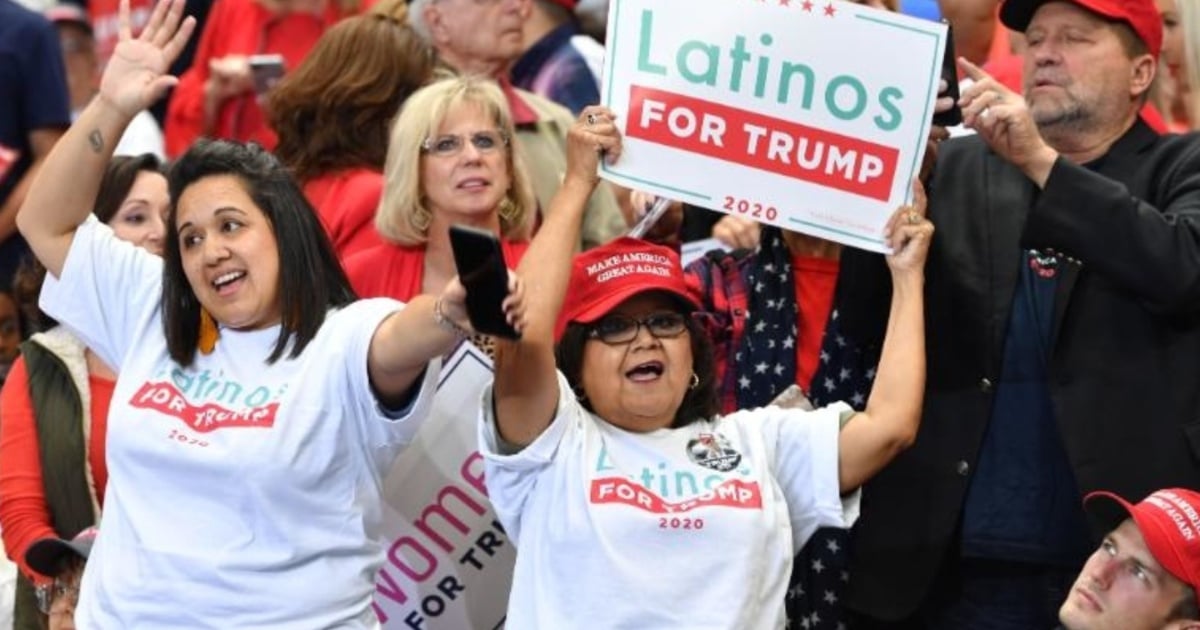
At least one-third of Latino voters who backed former President Donald Trump in the most recent elections now express regret over their decision.
Surveys released by Somos Votantes and Somos PAC, and reported by EFE, indicate that this dissatisfaction primarily stems from economic conditions and unfulfilled promises.
The polls, unveiled during a virtual press conference on Friday, reveal that a significant portion of Latino voters assigns blame to the Republican Party for economic frustrations, citing the rising cost of living and stagnant wages as critical issues.
According to the findings, as reported by EFE, Trump's popularity plummeted to its lowest point in the last quarter of the year, with a rating of -26, compared to -12 in February.
During the same timeframe, his overall job approval stood at -28, while his handling of the economy was rated at -30, based on data from these organizations.
This decline also appears significant among key demographics: the report highlights that independents have become "completely opposed," disapproval is growing among younger voters, and Latino men—considered crucial to his 2024 victory—are distancing themselves from Trump.
"It's not just a bad quarter for Trump among Latino voters; rather, it's a documented collapse that's been ongoing for a year with no end in sight," stated Melissa Morales, founder and president of Somos Votantes and Somos PAC, as quoted in the report.
Survey respondents suggest Trump's decisions show a "disconnect" from economic priorities.
While half of Latino voters believe inflation and the cost of living should be top presidential priorities, only 14% feel that he and his party are concentrating on these issues.
Notably, one of the Trump Administration's highlighted policies—tariffs on other countries—is perceived as a "major burden" by the Latino community: two out of three respondents said it adversely affects them by driving up prices.
Additionally, 68% rated the U.S. economy as "poor," with 63% believing it is worsening.
Political Impact and Healthcare Warning The EFE report positions these findings on the cusp of the 2026 midterm elections, which will see the entire House of Representatives and one-third of the Senate up for grabs, suggesting Latino disillusionment could lead to a potential electoral shift.
During the same press conference, Americans for Tax Fairness (ATF) released a study warning that nearly five million people—including one million Latinos—could lose their health insurance if Affordable Care Act (ACA) subsidies expire at the end of the year.
These are not isolated surveys; a wave of recent polls shows declining support from Latino voters—a key bloc that was instrumental in Trump's 2024 win.
According to a survey by the Associated Press-NORC Center for Public Affairs Research conducted in October 2025, only 25% of Hispanic adults have a "somewhat" or "very" favorable view of Trump, down from 44% earlier in the year.
His approval among Hispanics has also plummeted from 41% in March to 27% in October. Another survey by UnidosUS, representing the Latino community, reveals that about 70% believe the country is on the wrong track, attributing this to Trump.
Understanding Latino Voter Discontent
Why are Latino voters regretting their support for Trump?
Many Latino voters feel disillusioned due to economic challenges such as rising living costs and stagnant wages, along with unmet promises by Trump and the Republican Party.
How has Trump's popularity changed among Latino voters?
Trump's popularity has significantly dropped among Latino voters, with his ratings reaching their lowest levels in recent surveys, indicating a substantial decline in support over the past year.
What impact could Latino voter discontent have on future elections?
Latino voter dissatisfaction could lead to a shift in the upcoming 2026 midterm elections, potentially affecting the balance of power in Congress and the Senate.