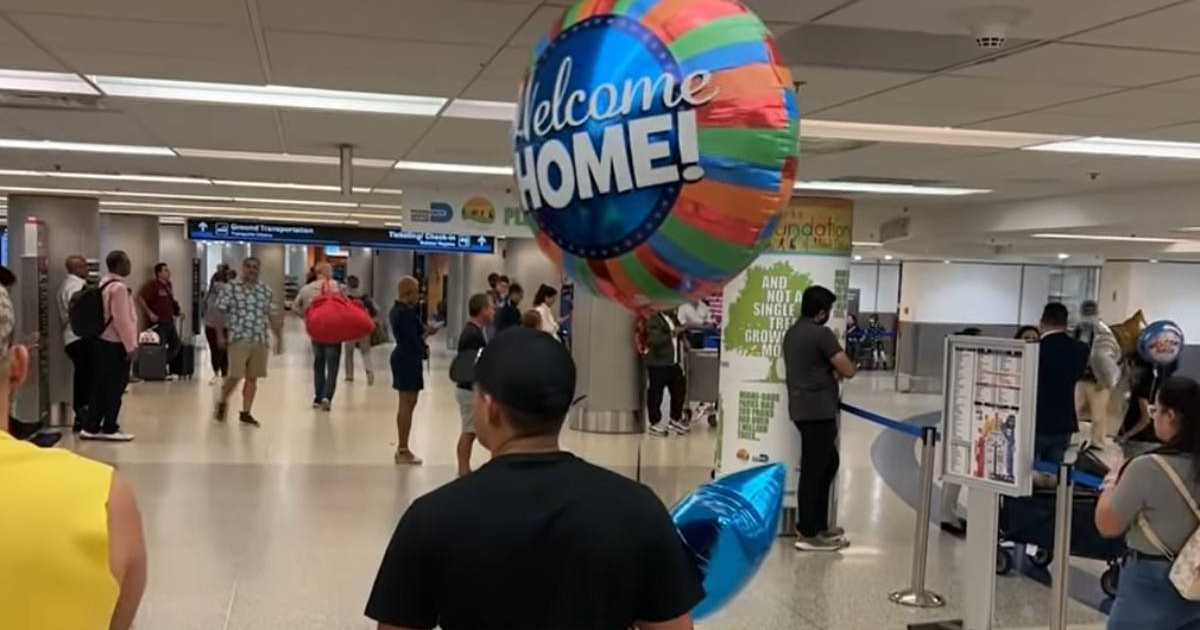
The recent announcement of the termination of the Family Reunification Program (FRP) has sparked a wave of outrage among Cubans both on the island and abroad. Many have expressed their discontent through messages that convey frustration, a sense of injustice, and fear of losing the opportunity to reunite with children and other family members.
Following the decision made by the administration of former President Donald Trump, numerous individuals took to CiberCuba’s social media to voice their personal grievances regarding a policy they believe leaves them with little hope of reuniting with loved ones.
Many comments highlighted the unfairness of penalizing those who have diligently followed legal channels for years. One reader expressed indignation that people who "did everything by the book" are now suffering due to others' misuse of the system. Another urged that specific immigration categories be exempt, emphasizing the immense pain of being unable to bring their children.
Some users interpreted the program's cancellation as part of a broader strategy aimed at increasing deportations. One commentator described it as yet another move in an increasingly restrictive immigration policy, while others recalled that many Cubans had supported the president politically, only to find their hopes dashed.
Among the lamentations, there was also self-reflection. A reader noted that for years, Cubans enjoyed certain migration privileges used as political tools, which are now obsolete. Another mentioned a "thankless" population that has ended up paying the price for misguided political alliances.
Additionally, some redirected the blame toward the governments of origin. One user argued that no country is obligated to guarantee reunification in the United States, citing Cuba’s failure to improve living conditions, which forces people to emigrate.
Amidst the confusion, several readers called for clarity between the termination of the parole program and the ongoing traditional family petitions, noting that clear communication is often lacking. Nonetheless, the overarching sentiment was one of despair, depicting years of waiting abruptly cut short and families feeling the reunion slipping further away.
Impact on Immigration Policy
The Trump administration's complete abolishment of the FRP has dealt a significant blow to Cuban immigration. The move, announced by the U.S. Citizenship and Immigration Services (USCIS), also affects nationals from Colombia, Ecuador, El Salvador, Guatemala, Haiti, and Honduras.
The government defends its decision by citing the need to end the "abuse of humanitarian parole," claiming that the system allowed entry of foreigners without sufficiently verified backgrounds, bypassing traditional procedures. According to the official statement, parole was never intended to be used extensively and indiscriminately, prompting the Department of Homeland Security (DHS) to revert to a case-by-case evaluation system.
Originally established in 2007 during George W. Bush's presidency, the Cuban Family Reunification Parole Program enabled U.S. citizens and legal permanent residents to apply for expedited temporary residency (parole) for their relatives from Cuba. The program was halted in 2016, reactivated gradually under the Joe Biden administration in mid-2022, but faced setbacks with Trump's return, ultimately leading to its cancellation.
Consequences for Affected Individuals
The program's termination has immediate repercussions for current U.S. residents under this mechanism. If parole was obtained and remains unexpired, legal residency will end on January 14, 2026, unless a pending Form I-485 (Application to Adjust Status to Permanent Residence) is in place. To remain valid, this application must have been filed by December 15, 2025, and still be pending by the January deadline.
Alongside the cancellation of immigration status, employment authorization for those affected will also be revoked. Individuals will receive personal notifications regarding the end of their parole period and the revocation of their work permit. Those without a legal basis to stay in the U.S. after this period are required to leave immediately.
The DHS advises ineligible individuals to use the CBP One app to declare their intent to depart the country. Authorities offer incentives for voluntary departure, including a financial bonus, assistance in acquiring travel documents, and waiving of civil penalties.
The government underscores that the "desire to reunite families does not outweigh the responsibility to prevent fraud and safeguard national security."
Despite these developments, the Cuban community holding I-220A immigration documents received a glimmer of hope this Friday. Following oral arguments in the 11th Circuit Court of Appeals, a pivotal step in a legal battle that could shape the future of thousands in the U.S., optimism emerged. Immigration attorney Mark Prada argued that many Cubans were improperly processed and should have been granted parole rather than documented with an I-220A, leaving them in a "migration limbo."
FAQs about the Termination of the Family Reunification Program
Why was the Family Reunification Program canceled?
The program was canceled due to concerns about the "abuse of humanitarian parole" and the entry of foreigners without sufficient background checks, which bypassed traditional immigration procedures.
What are the consequences for Cubans currently under the parole program?
Cubans under the parole program will face termination of their legal status by January 14, 2026, unless they have a pending Form I-485 filed by December 15, 2025. Their employment authorization will also be revoked.
Is there any hope for those affected by the cancellation?
Yes, there is hope for those with I-220A documents, as a legal battle in the 11th Circuit Court of Appeals may influence their future status in the U.S.