In a crucial moment for the Cuban migrant community, the 11th Circuit Court of Appeals in Atlanta is set to hear oral arguments this Friday for the case Labrada Chavarría vs. U.S. Attorney General. This hearing holds the potential to change the fate of thousands of Cubans who entered the United States with the I-220A immigration document.
Defense attorneys, including the well-known Mark Prada, are working to prove that two immigrant women were incorrectly processed and documented with the I-220A form instead of being granted formal parole, which has prevented them from benefiting from the Cuban Adjustment Act.
"The defense aims to demonstrate why these migrants were incorrectly processed and why they deserve the same legal treatment as other Cubans with parole," noted journalist Alexis Boentes on social media.
The case was initiated by two Cuban women, one of whom is surnamed Labrada Hechavarría, who were denied permanent residency based on a prior decision—Cabrera Fernández (2023)—which determined that the I-220A document does not equate to parole and, therefore, does not grant eligibility for the Cuban Adjustment Act. Led by renowned immigration lawyer Mark Prada, the defense argues that this interpretation is flawed and that Cubans who entered during the Biden administration were wrongly classified by the Immigration and Customs Enforcement (ICE), leaving them in legal limbo.
"The goal is for the court to recognize that I-220A holders have a status similar to parole and can thus qualify for the Cuban Adjustment Act," Prada explained in earlier statements.
If the court rules in favor of the plaintiffs, the decision could set a historic precedent for tens of thousands of Cubans who crossed the southern border between 2021 and 2023 and received an I-220A instead of a parole document.
The Cuban Adjustment Act, in effect since 1966, allows Cuban citizens to apply for permanent residency after one year and one day of physical presence in the United States, provided they were admitted or granted parole. However, those with the I-220A have been excluded due to restrictive interpretations of the law by the previous administration.
Although a verdict could still take weeks or months, the hearing has generated significant anticipation among Cubans both in and out of the country.
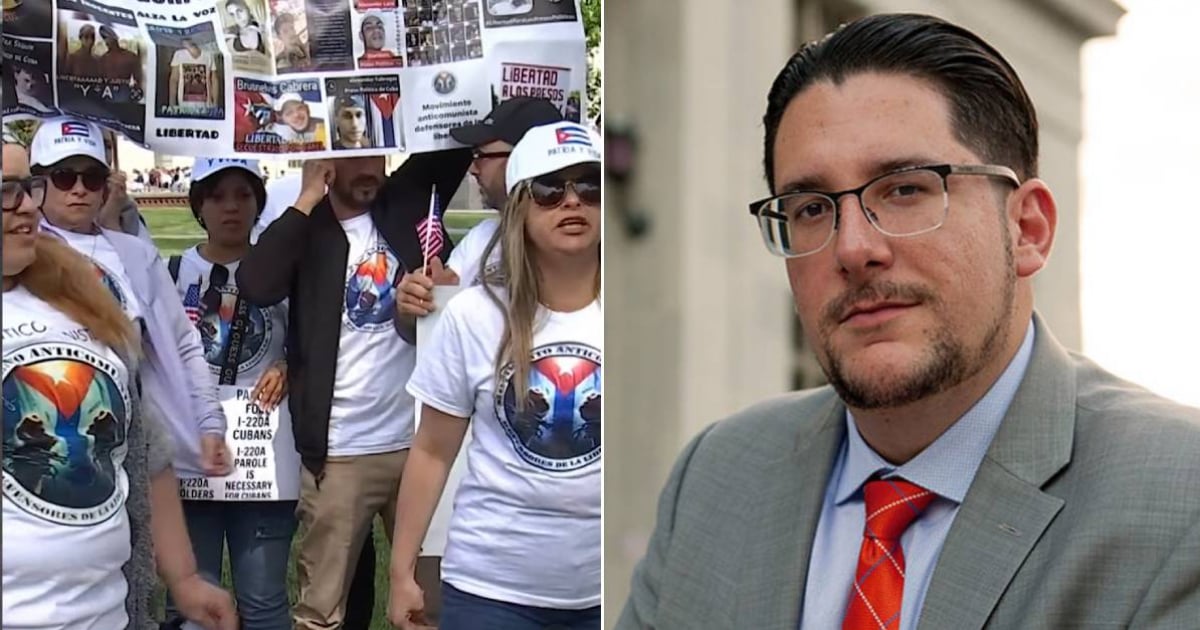
In Miami, groups of immigrants and attorneys gathered in front of the courthouse to show their support and remind everyone that the case represents entire families waiting for a chance at legalization.
"This decision could define the path to residency for thousands of Cubans," Boentes pointed out. "It's a moment of hope, but also uncertainty as we await the verdict."
Impact of I-220A Status on Cuban Migrants
What is the significance of the I-220A document for Cuban migrants?
The I-220A document is crucial because it has been used instead of parole, preventing many Cuban migrants from qualifying for the Cuban Adjustment Act, which allows them to apply for permanent residency.
How could the court's decision affect Cuban migrants with I-220A status?
If the court rules in favor of the plaintiffs, it could set a precedent that allows thousands of Cubans with I-220A status to qualify for the Cuban Adjustment Act, potentially leading to permanent residency.