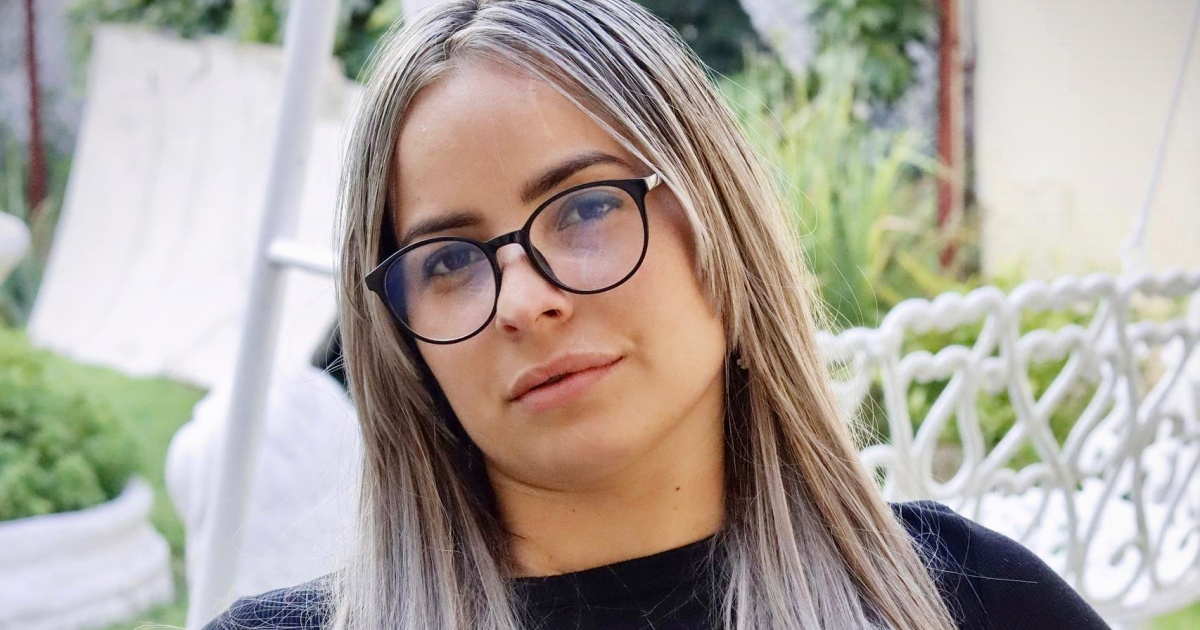
Despite enduring daily physical challenges, Mailén Díaz Almaguer, the sole survivor of the catastrophic 2018 Havana plane crash, recently shared a heartfelt message on her social media.
Her Facebook post goes beyond personal faith, serving as a collective call for hope in a country she describes as "falling apart."
"Today, while praying and crying out to God, not feeling well due to ongoing health struggles, I also prayed for Cuba," Mailén wrote, highlighting the deep connection between her personal suffering and the widespread pain she senses in her nation.
Mailén's message transcended personal reflections, appealing to a larger sense of spiritual community. She expressed with conviction, "The Lord reminded me that even as Cuba crumbles with seemingly no hope, there remains a faithful remnant whose duty is to proclaim salvation through Jesus Christ. I am part of this remnant."
Her message concluded with a blend of inner strength and tenderness. "This motivated me to take a bath, put on a little makeup, and snap a cheerful photo to say: Jesus is the way, the truth, and the life, and in Him there is forgiveness and salvation," she concluded.
Embracing Faith Seven Years On
It's been over seven years since Mailén survived the DMJ-972 flight crash, which left 112 dead. She was just 19 at the time. Now, after numerous surgeries and losing part of her leg, she has embarked on a new journey as a Theology student at the Methodist Seminary in Havana.
In September, she expressed her enthusiasm for this new path: "It has been a great privilege to start the Bachelor's degree in Theology. To God be the glory!" For Mailén, this decision is both academic and spiritual.
Encouraged by a Methodist bishop who told her that even without a formal ministry, she held a valuable dream, Mailén has found vocation and purpose in her faith.
From Trauma to Transformation
The crash on May 18, 2018, left her fighting for her life. Since then, her journey has been one of survival and adaptation, which she describes as "a miracle of God."
However, her path has not been without challenges. She has previously criticized the Cuban healthcare system for lacking essential medications and supplies. "I'm not living the sweet life; I struggle like everyone else," she stated plainly.
Mailén was clear: "I don't owe thanks to the Cuban healthcare system, but to those who have helped me get well." Her words sparked debate but also garnered solidarity, with Cubans at home and abroad sending her medical aid for her ongoing treatment.
The Embrace of a Community
Mailén's recent post inspired not only reflection but a wave of support on social media. Many users responded with messages of faith, love, and admiration, seeing her as a spiritual symbol.
"You are an example of God's power and glory; I hope you recover soon"; "You are right. Jesus, King of Kings, will soon end so much suffering and pain in this world"; "God bless and favor you in all areas of your life. In Jesus's name, receive healing through His stripes. Amen," read some comments.
These messages converge on a shared idea: Mailén embodies a "faithful remnant" that perseveres, believes, and prays.
As one user wrote, "There is a people of God on their knees, inside and outside of Cuba, praying for the nation, and by faith, we know He hears the prayers and cries of His children."
Criticism and Nuances
While most comments were positive, some criticized her for not acknowledging Cuban healthcare. One user remarked, "You should say that thanks to God and this island called Cuba, you are alive because the government, doctors, and people did everything to keep you living."
Others urged her to express "special gratitude to those doctors and healthcare staff who did so much to save your life, asking for nothing in return."
Mailén has consistently maintained her stance: gratitude toward those who have helped her is not exclusive, but her faith is the compass guiding her narrative.
A Transformed Life
Before the accident, Mailén studied nursing and later attempted psychology, inspired by the specialists who aided her recovery.
She resides in Siboney, having purchased a home with her accident settlement. In 2021, she bravely flew again, conquering her fears, documenting it as a symbol of triumph.
In every phase of her post-accident life, Mailén has championed the power of faith. Her recent reflection is not just a religious message; it's a spiritual call to action: Cuba needs hope, and she intends to be among those who announce it.
"There remains a faithful remnant," she asserts, knowing she is part of this group—a small spiritual army that, from their own ruins, chooses to stand up, put on makeup, smile, and declare: "I keep praying for Cuba."
Understanding Mailén's Journey and Faith
What motivated Mailén Díaz to share her message of faith and hope?
Mailén Díaz was inspired by her personal struggles and the broader pain she sees in Cuba, using her faith to offer hope and a sense of community.
How has Mailén Díaz's faith influenced her path after the accident?
Her faith has been a guiding force, leading her to study Theology and focus on spreading a message of redemption and hope, despite her physical challenges.
How does Mailén Díaz view her relationship with the Cuban healthcare system?
While expressing gratitude to those who have helped her, Mailén has been critical of the systemic issues in Cuban healthcare, emphasizing her reliance on external support and her faith.