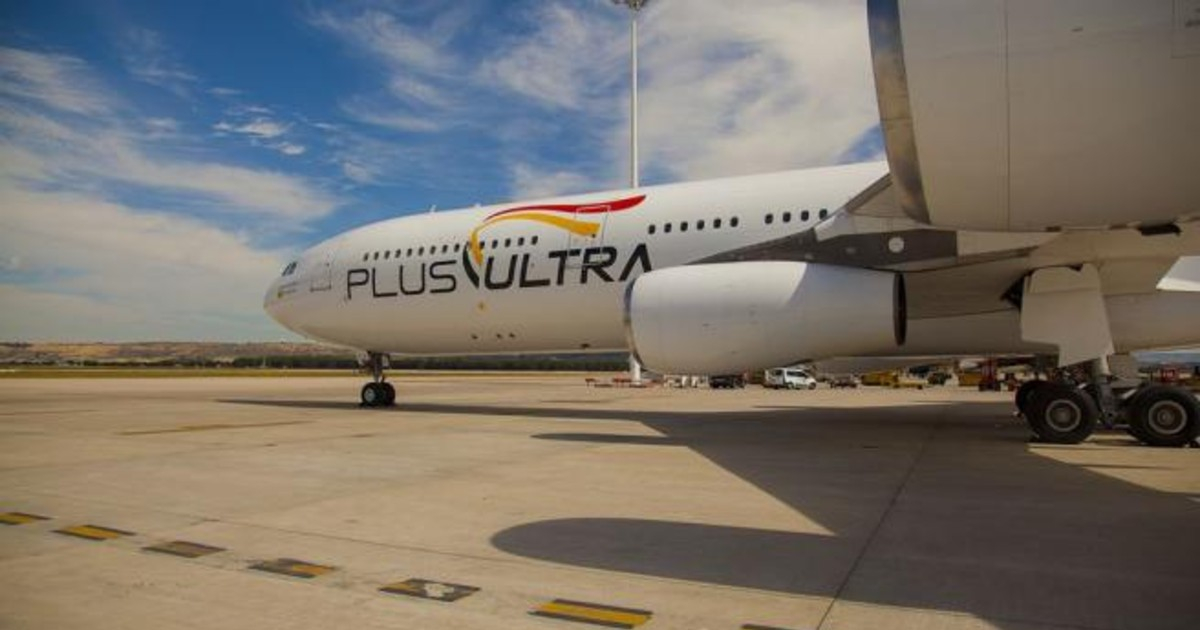
Spanish authorities have taken significant action against Plus Ultra Airlines, with the arrest of its president and owner, Julio Martínez, along with CEO Roberto Roselli, at the heart of Madrid. They are being investigated for alleged money laundering, raising serious questions about the substantial financial aid the airline received and its connections with Venezuela, as well as its contracts impacting Cuba. On the island, Plus Ultra has played a crucial role in flights, medical missions, and maintaining connections between Havana, Madrid, and Caracas.
Insight into Spain's National Police and UDEF
The UDEF, a specialized unit within Spain's National Police, focuses on economic and fiscal crimes. Their involvement indicates the severity of the situation, suggesting potential large-scale corruption or money laundering activities, rather than minor administrative issues.
The Role of SEPI in Plus Ultra's Rescue
SEPI, Spain’s public holding company, manages governmental stakes in various enterprises. During the pandemic, it handled a strategic fund meant for salvaging key companies. In 2021, SEPI approved a controversial €53 million bailout for Plus Ultra, breaking down into €19 million as a standard loan and €34 million as a participative loan. This decision sparked political and judicial scrutiny over the airline's rescue.
Understanding the Rescue's Controversy
From a Cuban perspective, the uproar in Spain over Plus Ultra’s bailout is understandable. Despite its small size, operating only a couple of planes with less than 0.1% of the Spanish market, Plus Ultra received a direct state injection of €53 million. Most of its business was tied to Venezuela and Cuba, not Spain, and involved Venezuelan businessmen connected to the Chavez regime, flagged internationally for corruption and money laundering. Spanish opposition argued that taxpayer money was not assisting a strategic company but rather a marginal airline closely linked to the regimes of Maduro and Díaz-Canel.
Venezuelan Ties: Chavismo and "Boligarchs"
Venezuelan capital, closely associated with political power in Caracas, significantly influenced Plus Ultra. The term "boligarchs" describes these businessmen, enriched under Chavez, through opaque state contracts and operations. Plus Ultra's Venezuelan partners provided more than financial backing—they opened political doors, granting the airline preferential routes and treatment in the Madrid–Caracas corridor, despite Venezuela's increasing isolation due to sanctions.
Connections with Cuba: Flights and Medical Missions
For Cuba, Plus Ultra has been more than just another foreign airline. With Cubana de Aviación facing fleet and safety restrictions in Europe, Plus Ultra filled the gap, operating flights to Havana and forming partnerships that effectively made it an ally of Cubana. Notably, a Plus Ultra Airbus A340 facilitated a flight from Madrid to Havana to Gabon with over 150 Cuban doctors, integral to Cuba's revenue-generating medical missions.
The UDEF's Path to Investigation
Following the 2021 bailout, a Madrid court initiated an investigation into possible violations of public aid regulations. Although initially closed due to technicalities, it failed to quell suspicions. Collaboration with European countries revealed suspicious financial activities between Plus Ultra and entities linked to Venezuelan corruption, including unjustifiable intra-company loans and payments to offshore entities, leading to the current probe.
Current Investigations and Potential Outcomes
The investigation seeks to determine if Plus Ultra was used to launder funds from Venezuelan corruption and whether any of the €53 million rescue was misappropriated to settle dubious debts. The focus includes the airline's agreements with Venezuela and Cuba, which have direct implications for the Cuban economy. The UDEF’s involvement underscores the case's potential international corruption and high-level political-financial connections.
Impact on Cuba
In Havana, the Plus Ultra affair highlights three uncomfortable truths: the potential entanglement of a crucial airline in a Spanish money laundering case, the possibility that the same networks supporting Chavismo and the Cuban elite might have used European shell companies for illicit financial maneuvers, and that some European pandemic-era public rescues inadvertently supported an economy-politics nexus linking Caracas and Havana.
Possible Short-Term Effects
If the investigation forces Plus Ultra to cut operations, cancel routes, or undergo insolvency proceedings, Cuba may face a temporary reduction in available flights, especially on routes where Plus Ultra supplies aircraft and operations. Given Cubana's limited operational capacity, relying on leases like those with Plus Ultra, such developments could severely impact European connectivity. While other airlines might maintain or expand their services, the effects could manifest in pricing, layovers, and schedule stability rather than a complete breakdown of the Cuba-Europe air bridge.
Key Questions Surrounding Plus Ultra Airlines Scandal
What role did SEPI play in Plus Ultra's bailout?
SEPI managed the strategic fund that provided Plus Ultra with a €53 million bailout, intended for companies crucial to Spain's economy.
Why is the Plus Ultra rescue considered controversial?
The controversy stems from Plus Ultra's small market presence in Spain and its significant ties to Venezuela and Cuba, raising questions about the strategic nature of the bailout.
How might this investigation affect Cuba?
If Plus Ultra reduces operations, Cuba could face decreased flight frequencies and higher travel costs, impacting connectivity with Europe.