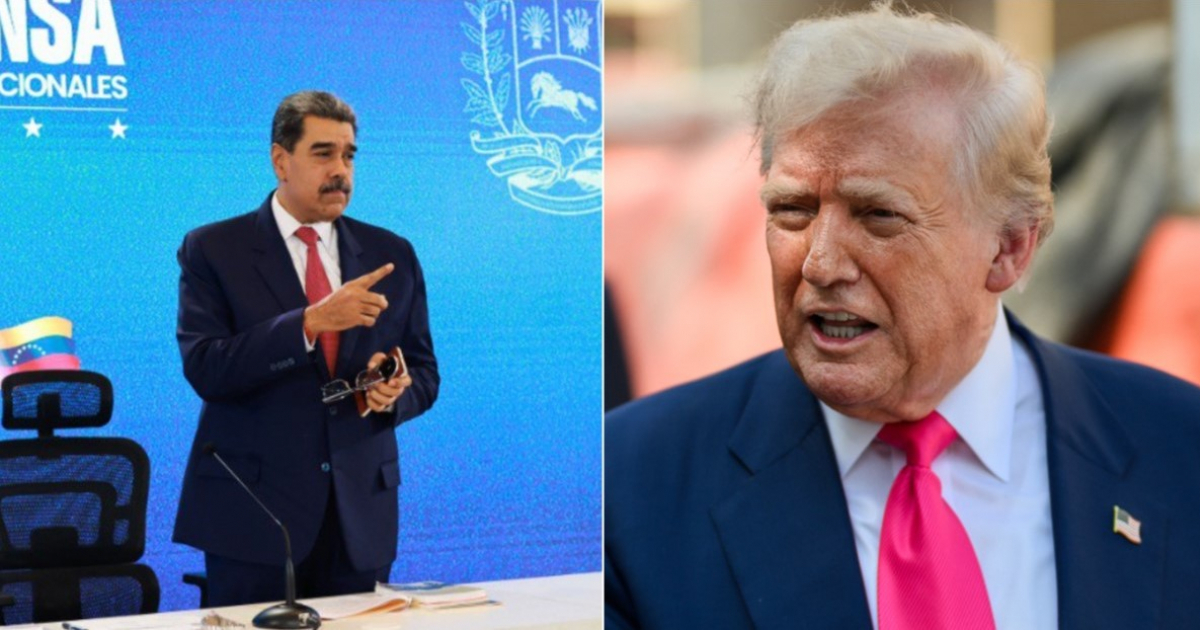
The Trump Administration unveiled a fresh wave of sanctions on Thursday aimed at Nicolás Maduro's regime in Venezuela. The sanctions target the so-called "narco nephews" of First Lady Cilia Flores, along with several international oil companies accused of engaging in alleged crude oil smuggling operations.
According to a statement from the U.S. Department of the Treasury, the Office of Foreign Assets Control (OFAC) has sanctioned three nephews of Maduro's wife—Efraín Antonio Campo Flores, Franqui Francisco Flores de Freitas, and Carlos Erik Malpica Flores—as well as a Panamanian businessman and six shipping companies involved in transporting Venezuelan oil to Asia and other regions.
"Nicolás Maduro and his criminal associates are flooding the United States with drugs that poison our people," stated Treasury Secretary Scott Bessent. "Under President Trump's leadership, we are holding the regime and its circle of accomplices accountable for their ongoing crimes," the statement continued.
The Treasury highlighted that these sanctions overturn the relief measures implemented during the Biden Administration, which had released the "narco nephews" as part of a negotiation attempt with the Chavista regime. Campo and Flores de Freitas, relatives of Cilia Flores, were arrested in Haiti in 2015 and convicted in the U.S. for drug trafficking but were pardoned in 2022.
The report indicates that both individuals resumed their drug trafficking activities upon returning to Venezuela. The third sanctioned nephew, Carlos Erik Malpica Flores, was Venezuela's national treasurer and vice president of PDVSA. He had been removed from the sanctions list in 2022 but was redesignated due to his active role in the regime's economic apparatus.
Sanctions on Business Collaborators
OFAC also sanctioned Panamanian businessman Ramón Carretero Napolitano, accused of collaborating with the Maduro-Flores family in oil and maritime transport contracts. The statement details that Carretero facilitated the export of Venezuelan crude through shell companies and ships registered in third countries.
Impact on Shipping Companies
Six maritime companies were added to the sanctions list for their involvement in evading restrictions on the Venezuelan oil sector: Myra Marine Limited (Marshall Islands), owner of the vessel White Crane; Arctic Voyager Incorporated (Marshall Islands), owner of the vessel Kiara M.; Poweroy Investment Limited (British Virgin Islands), operator of the vessel H. Constance; Ready Great Limited (Marshall Islands), owner of the vessel Lattafa; Sino Marine Services Limited (United Kingdom), manager of the vessel Tamia; and Full Happy Limited (Marshall Islands), operator of the vessel Monique. All assets of these entities in the United States have been blocked by OFAC, and U.S. companies are prohibited from conducting transactions with them.
The sanctions aim to sever the financial flow sustaining Maduro's "illegitimate regime," according to the official statement. Washington accuses the Venezuelan government of using oil as a funding source for drug trafficking networks, corruption, and internal repression.
Broader Implications
The Treasury reminded that PDVSA was blocked in 2019 under Executive Order 13850, and since then, the U.S. government has sanctioned over 200 individuals and entities linked to Chavismo. "The objective of the sanctions is not to punish but to provoke a positive change in behavior. Maduro must choose between continuing his criminal path or restoring democracy to the Venezuelan people," Bessent added.
The new offensive against Caracas also impacts Cuba, one of the principal allies of the Venezuelan regime. Experts suggest that reducing the supply of subsidized oil could exacerbate Cuba's energy crisis and weaken bilateral agreements between Havana and Caracas.
Meanwhile, Russia and China have criticized Washington's decision, labeling it as "illegal interference in Venezuela's internal affairs."
Understanding U.S. Sanctions on Venezuela
What are the "narco nephews" accused of?
The "narco nephews," relatives of First Lady Cilia Flores, are accused of drug trafficking activities, which they allegedly resumed after returning to Venezuela from the U.S., where they were previously convicted.
How do the sanctions affect the Venezuelan oil industry?
The sanctions target key individuals and companies involved in the Venezuelan oil sector, aiming to restrict its financial operations and limit the regime's ability to use oil as a funding source for illicit activities.
Why did the U.S. lift sanctions on the "narco nephews" previously?
The sanctions were temporarily lifted during the Biden Administration as part of an attempt to negotiate with the Venezuelan regime, although they have now been reinstated.