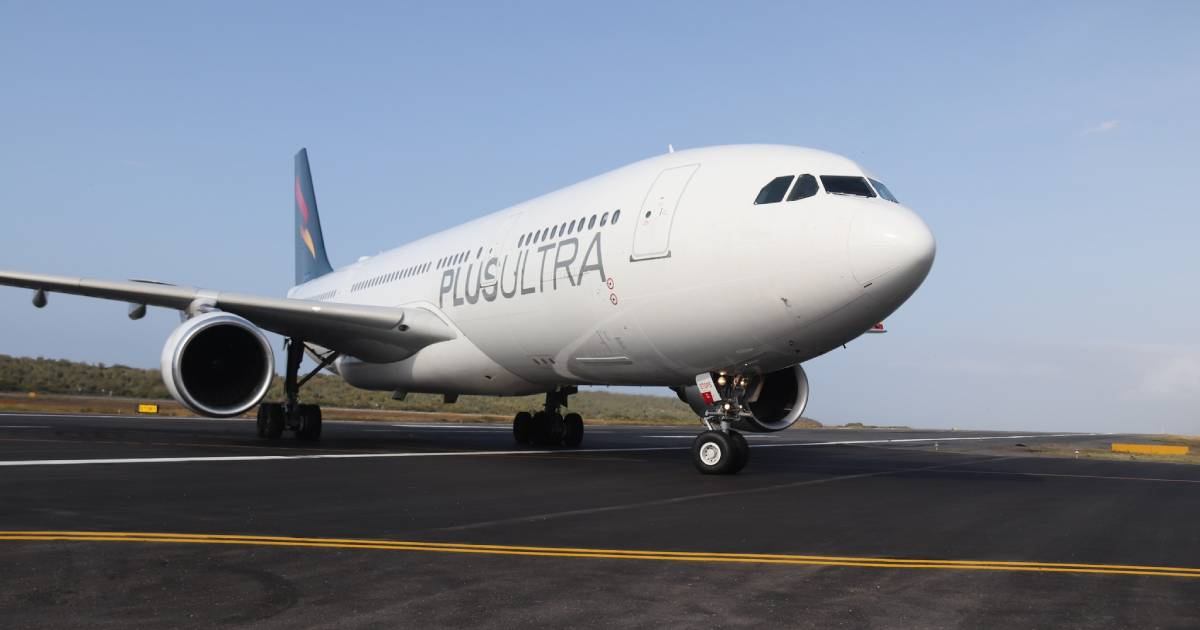
The arrest of the president and CEO of the Spanish airline Plus Ultra in Madrid has sparked fresh scrutiny over a company long criticized for its financial links to Venezuela and lucrative contracts with the Cuban government. The airline, which has flown high-ranking officials from the island, operated flights for Cubana de Aviación, and facilitated tourism routes to Varadero and Holguín, now sees its leadership under arrest on suspicion of money laundering.
The Economic and Fiscal Crime Unit (UDEF) conducted a raid at the airline's Madrid headquarters following an order from the 15th Investigating Court, as reported by Euro News.
Amidst a sealed investigation, authorities aim to clarify suspicious accounting and corporate activities. Those apprehended include Julio Martínez, the company's president and owner, and Roberto Roselli, its CEO.
The operation gained momentum after the Madrid Prosecutor's Office revisited documents related to the controversial €53 million bailout the company received from the Spanish government in 2021 during the pandemic. This bailout was contentious, given Plus Ultra's limited presence in the Spanish market, partial control by Venezuelan shareholders, and signs of insolvency even before the health crisis, according to independent experts.
Currently, the Anti-Corruption Prosecutor's Office is investigating whether a portion of the public funds ended up in foreign accounts tied to an alleged Venezuelan criminal network and whether bailout funds were used for payments to PDVSA, Venezuela's state oil company, a transaction deemed irregular by judicial experts, as noted by El País.
Connections to Cuba: Official Travels and Tourism Boosts
The news of the arrest is especially significant in Cuba, where Plus Ultra has maintained a notable presence over recent years, playing a key role in the regime's official travels and the island's air connectivity.
The Spanish airline was hired by Havana for the transport of Cuban leader Miguel Díaz-Canel during his Middle East tour in 2023, utilizing an Airbus A330-202, whose private flight rental can exceed $11,000 per hour. The same aircraft carried the Cuban delegation to the UN General Assembly in New York, according to the data journalism project Inventario.
Meanwhile, Cubana de Aviación has frequently relied on leased Plus Ultra aircraft to maintain strategic routes beyond the capacity of its aging and limited fleet. This includes flights between Havana, Santiago de Cuba, and Madrid, as well as recent operations between Germany and Cuba aimed at sustaining declining tourism.
In December alone, the Cuban government touted the restoration of Frankfurt–Holguín–Havana connections, operated with a leased Plus Ultra plane, as an "achievement" despite a more than 40% drop in German tourism and one of the worst economic and energy crises the island has faced in decades.
Plus Ultra has also flown hundreds of Polish tourists to Varadero under agreements designed to support the peak season amid growing hardships reported by visitors and locals alike.
A Troubled Airline and a Nation Bearing the Costs
While the investigation in Spain does not target Cuba directly, it does impact a company closely associated with some of the regime's most controversial expenditures over recent years, including high-cost international flights for its leaders and agreements to maintain routes no longer operable by state airline Cubana.
For now, Plus Ultra states it is cooperating with authorities and assures that its flights continue as scheduled. The court plans further actions in the coming days to determine if the company's financial activities indeed constitute money laundering.
Implications of Plus Ultra's Arrest and Operations
What led to the arrest of Plus Ultra's executives?
The executives were arrested due to suspicions of money laundering, following a detailed investigation into the company's financial activities, including a controversial bailout and alleged ties to a Venezuelan criminal network.
How is Plus Ultra connected to Cuba?
Plus Ultra has been instrumental in providing transport for Cuban officials and maintaining tourism routes. It has been leased for official travels and helped sustain strategic air routes that Cubana de Aviación can no longer support.
What is the controversy surrounding Plus Ultra's Spanish bailout?
The controversy stems from the airline's limited Spanish market presence, partial ownership by Venezuelan shareholders, and signs of insolvency prior to receiving the €53 million bailout from the Spanish government during the pandemic.