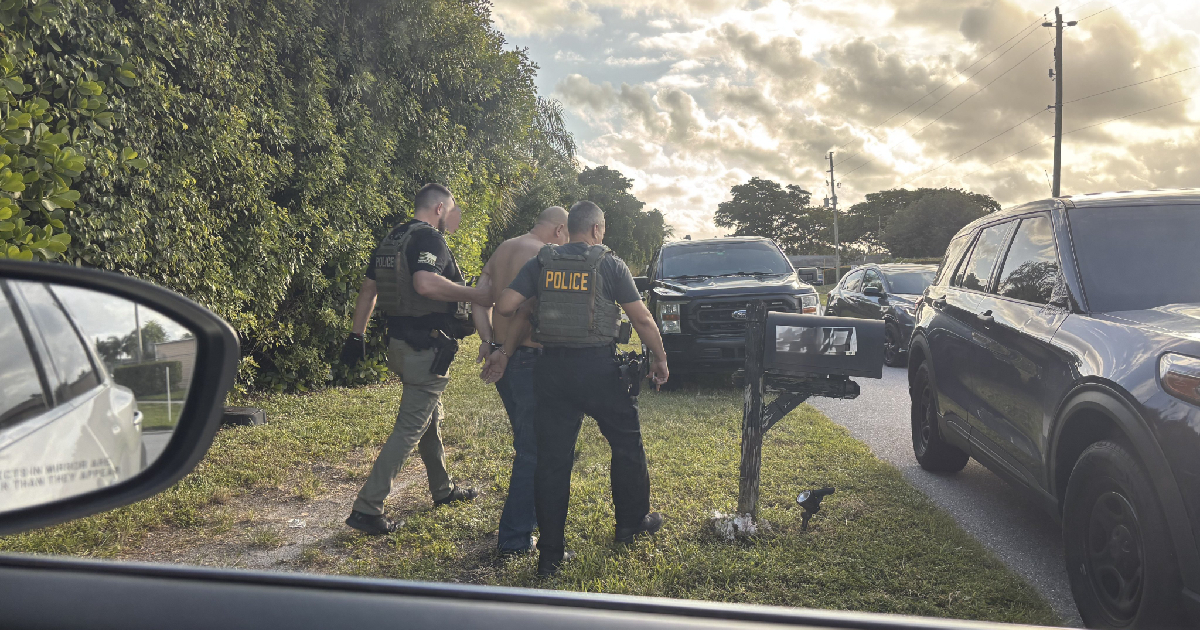
Federal authorities have confirmed the arrest of four Cuban nationals, previously convicted of sex offenses, who had longstanding deportation orders. These individuals were detained this week in Palm Beach County, Florida, after failing to leave the country as mandated.
The United States Citizenship and Immigration Services (USCIS) shared this development on their official account on the social media platform X, highlighting the crucial role the federal agency played in the apprehension of the Cuban immigrants.
"We played an essential part in the arrest of four convicted sex offenders in Palm Beach County, Florida. All were Cuban nationals with deportation orders that had been in place for years," stated USCIS. However, the agency did not disclose the identities or criminal backgrounds of those detained.
The announcement did not specify why these individuals had not complied with their deportation orders or when these orders were initially issued, but it did emphasize that "their time in the United States has come to an end."
These arrests are part of a broader initiative led by the Department of Homeland Security (DHS) to combat illegal immigration. This effort is executed by the Immigration and Customs Enforcement (ICE) in collaboration with other federal and state law enforcement agencies.
Federal authorities have ramped up efforts both in frequency and scope to locate, apprehend, and deport immigrants with serious criminal records, who are seen as threats to public safety. They assert that their primary goal is to protect American communities from dangerous, repeat offenders and to enforce the nation's immigration laws.
In recent months, these operations have led to the detention of thousands of undocumented immigrants, who are being processed for deportation.
In this context, numerous arrests of Cuban nationals with criminal histories have been made. These individuals remain in ICE custody while awaiting deportation.
However, the U.S. faces challenges in deporting certain migrants to Cuba due to the Cuban government's refusal to accept nationals who committed crimes and served prison sentences in the U.S., especially those who left before the 2017 migration agreements.
As a result, some Cubans with final deportation orders have been sent to third countries with which they have no ties, which could pose risks for them.
The recent arrests of Cuban nationals occur at a time when the Trump administration has intensified its crackdown on illegal immigration, targeting not only the arrest and removal of violent foreign criminals but also individuals at various stages of their immigration processes, regardless of whether they have committed crimes.
Frequently Asked Questions on Cuban Nationals' Deportation
Why were the four Cuban nationals arrested in Florida?
They were arrested due to longstanding deportation orders stemming from their convictions for sex offenses, which they failed to comply with.
What role did USCIS play in the arrests of these individuals?
USCIS played a critical role in facilitating the arrest of the four Cuban nationals by coordinating efforts with other federal agencies.
What challenges does the U.S. face in deporting Cuban migrants?
The main challenge is the Cuban government's refusal to accept nationals who committed crimes and served sentences in the U.S., particularly for those who left before 2017 agreements.