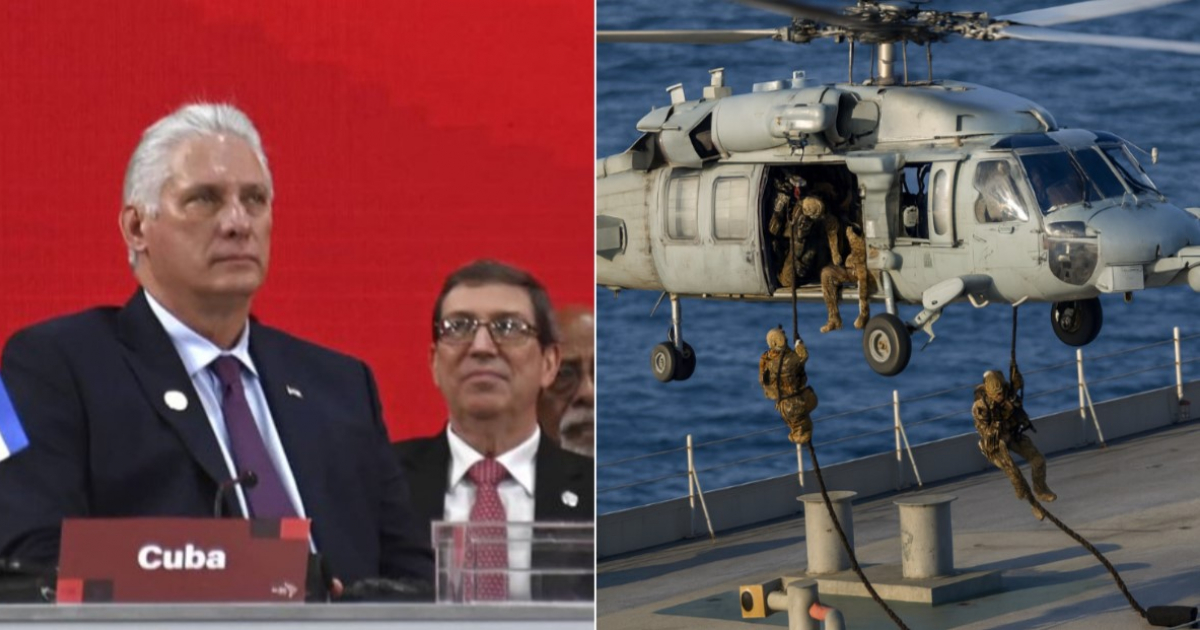
On Wednesday, Cuba accused the United States of engaging in "piracy" after the seizure of an oil tanker off the coast of Venezuela. According to Axios, the vessel was carrying Venezuelan crude intended for the island through a covert route tied to the black market energy trade.
The operation, coordinated by the Federal Bureau of Investigation (FBI), the U.S. Department of Homeland Security (HSI), and the Coast Guard with support from the Department of Defense, targeted a supply line that Havana has relied on to circumvent sanctions.
The VLCC tanker, with a capacity exceeding 320,000 tons, had been sanctioned for years due to its involvement in illicit networks moving Venezuelan and Iranian oil. Axios reports that a portion of this oil was resold by Cuba to markets in Asia and China, in arrangements allegedly linked to family members of Raúl Castro.
Reactions in Havana were swift. Cuban leader Miguel Díaz-Canel described Washington's actions as "an act of piracy, violating International Law," and voiced his "total support" for Nicolás Maduro. "This is an escalation of aggression against that brotherly nation," he stated on X.
Cuban Foreign Minister Bruno Rodríguez also condemned the incident. "It is a vile act of piracy that contravenes free trade and freedom of navigation," he declared, criticizing a new "aggressive escalation" by the U.S. against Venezuela and, by extension, against Cuba.
Meanwhile, in Washington, Donald Trump openly celebrated the capture of the tanker, referring to it as "the largest ever seized." When reporters inquired about the fate of the confiscated oil, he jokingly responded, "We keep the oil, I suppose!" and suggested they could "follow the ship by helicopter" to find out more.
The operation has been seen by U.S. officials as a "double blow": it impacts the financial resources of Nicolás Maduro's government while disrupting the energy supply that sustains the Cuban regime. For many Cubans, this incident underscores the vulnerability of a nation dependent on these shipments to keep power plants and essential services running amid an ongoing crisis.
Tensions in the Caribbean are escalating as Washington promises further actions and Caracas speaks of intervention threats. In the midst of this geopolitical chessboard, Cuba finds itself increasingly exposed.
Impact of U.S. Actions on Cuba-Venezuela Relations
Why did the U.S. seize the oil tanker?
The U.S. seized the oil tanker as part of an operation to disrupt illicit networks transporting Venezuelan and Iranian oil, which are under sanctions. The seizure is meant to weaken supply lines that Cuba uses to bypass these sanctions.
How has Cuba reacted to the seizure?
Cuba has condemned the U.S. action, with Cuban leaders calling it an act of piracy and a violation of international law. They have expressed solidarity with Venezuela and criticized what they see as a hostile escalation by the U.S.
What does this mean for Cuba's energy supply?
The seizure of the tanker could significantly disrupt Cuba's energy supply, as the country relies on these shipments to maintain the operation of power plants and essential services, already strained by a prolonged crisis.