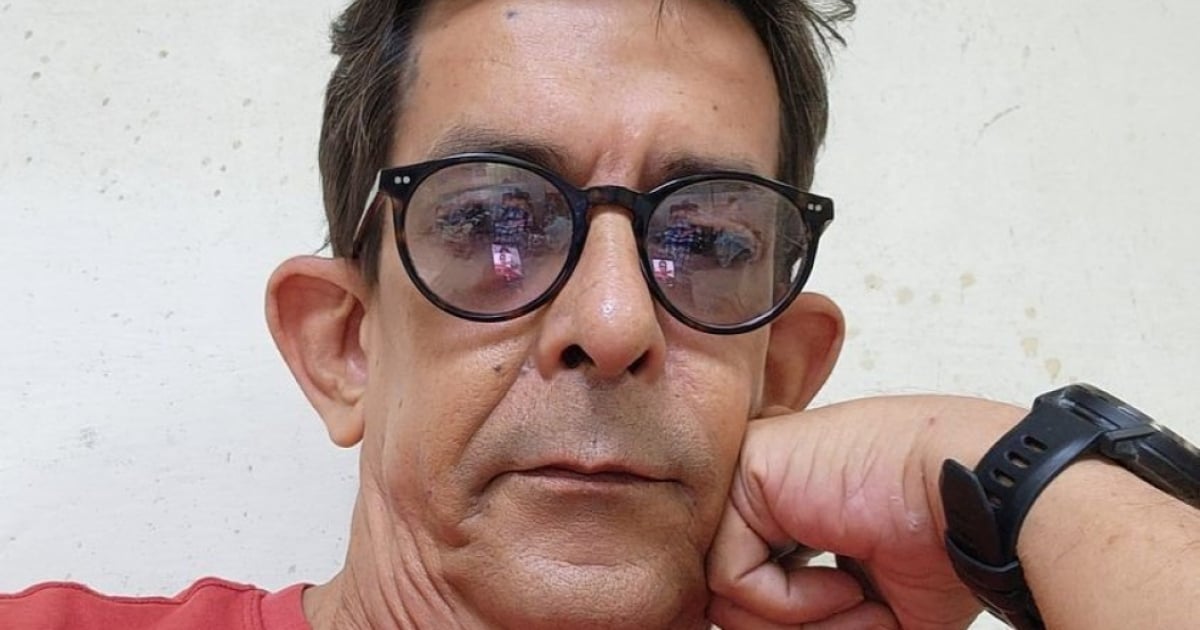
Cuban comedian Ulises Toirac has spoken out sharply following recent protests in Havana and other cities, manifestations of growing social unrest fueled by economic decline and the breakdown of essential services.
In a Facebook post, Toirac openly questioned the government's response to the surge of public discontent and warned of the repercussions of relying solely on repression as a tool.
Toirac emphasized that every protest reflects an undeniable reality: poverty is spreading, reaching social strata that had previously managed to avoid it just a few years ago.
On Monday night, Cuba experienced another wave of protests and pot-banging demonstrations amid widespread power outages and mounting social despair. In several municipalities, residents took to the streets, banging pots, lighting fires, and demanding electricity, food, and freedom.
"The energy situation—not only chaotic but with no foreseeable solution—has exacerbated an already precarious survival scenario," the actor wrote.
In his reflection, Toirac also criticized the government's economic management, a subject the authorities frequently try to justify, yet it remains plagued by years of policy reversals, failed measures, and reforms that have not alleviated the deterioration.
He argued that even with theoretically good governance, the tensions generated by the ongoing hostility with the United States could not be sustained. This conflict, he noted, has left Cuba extremely vulnerable against a vastly more powerful adversary.
"With intelligence, genuine creativity, a willingness for mutual understanding, and respect, better outcomes could have been achieved," he advised.
Ulises recalled that confrontation was sustainable during Fidel Castro's era due to his political weight: "He had influence, connections, respect on many international levels, charisma, history...". However, he noted, "much has changed from those days to now," referring to Díaz-Canel without directly naming him.
The comedian criticized the persistence of a foreign policy that disregards its real effects on the population and leads nowhere, instead of striving to find solutions.
He stressed that the desperation among Cubans is inevitable, given that "nothing suggests things will improve." Therefore, he is concerned about the government's response to the people's protests.
"Criminalization and repression cannot solve the responsibility. Things will only worsen," he asserted.
Toirac believes that repression will only intensify the social conflict and could lead the nation to more dire scenarios. "If that's the response, it will eventually become a river of blood," he warned.
His comments come at a particularly tense time for Cuba, where the increase in spontaneous protests, prolonged blackouts, and the widespread economic collapse have placed the government in a vulnerable position against a populace weary of unfulfilled promises and a seemingly endless crisis.
Understanding Cuba's Social and Economic Crisis
What triggered the latest wave of protests in Cuba?
The latest protests in Cuba were sparked by widespread power outages, economic decline, and growing social dissatisfaction with the government's handling of these issues.
How has Ulises Toirac criticized the Cuban government's response?
Ulises Toirac has criticized the Cuban government for using repression as a primary method of dealing with protests, warning that this approach only exacerbates social conflict and does not address the underlying issues.
Why does Toirac believe economic management is a key issue?
Toirac points out that the government's economic management has been marked by policy reversals and failed reforms, which have not effectively mitigated the country's economic deterioration, thus contributing to the current crisis.