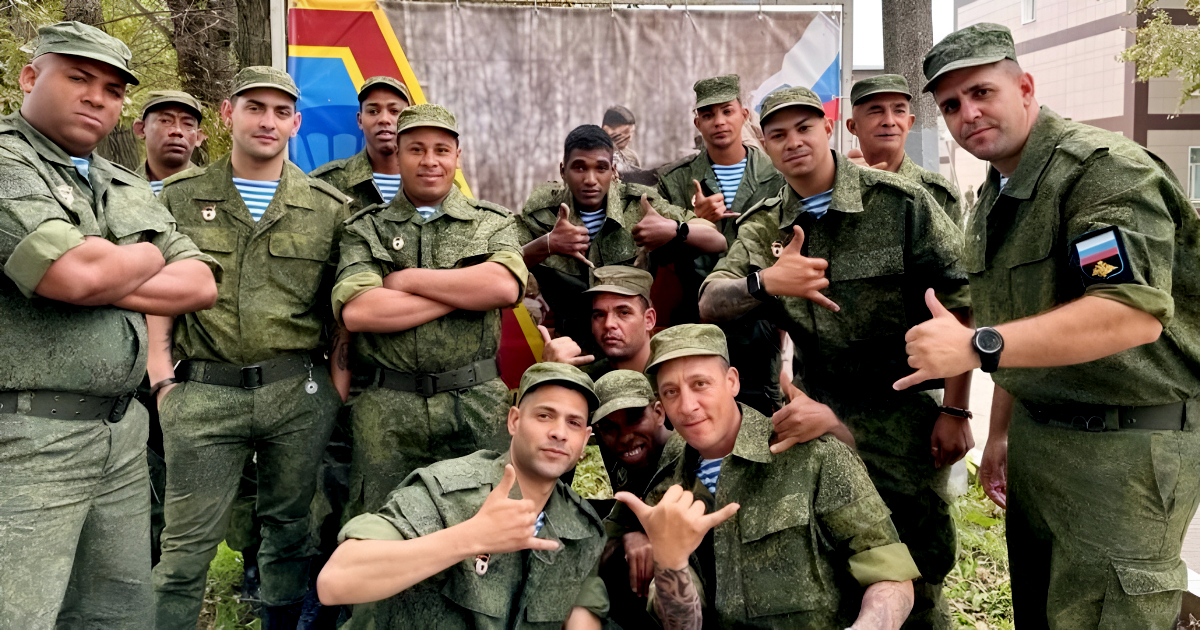
The Argentine journalist Nacho Montes de Oca, an expert in defense and international conflicts, has published a detailed and alarming thread on X, exposing the logistical, financial, and moral collapse facing Russia as it tries to maintain its imperialist war in Ukraine.
One of the most troubling revelations is that Vladimir Putin has stopped paying many of his soldiers, including foreign mercenaries like the Cubans. These recruits are now caught in a web of neglect, hardship, and silence.
Since 2023, thousands of Cubans have been recruited by Russian intermediaries — sometimes with the tacit approval of Cuban authorities — to participate in the invasion. Initial promises of salaries in rubles, temporary residency, and healthcare benefits have evaporated, leaving recruits with delayed or nonexistent payments.
Montes de Oca emphasized that due to budget cuts and administrative chaos in Russia, mildly injured soldiers receive no compensation, while only those with severe injuries are paid.
A decree signed by Putin in November 2024 capped injury payments. Of the three million rubles once promised (about $39,000), many soldiers receive only between $1,300 and $13,000, if they receive anything at all.
Missing and Unaccounted For: The Plight of Cuban Mercenaries
The journalist also highlighted that an increasing number of foreign mercenaries disappear without a trace, as Russia avoids retrieving bodies or officially recording them.
The cynical but effective reason is that a missing person does not count as a military casualty, thus freeing the state from paying compensation or facing protests.
"A Cuban killed in battle can be listed as missing, and given that they were recruited by exploiting their poverty, it's unlikely their family has the means to pursue legal action in Russia," Montes de Oca warned.
This places Cubans — alongside other impoverished recruits from countries like Nepal, Mali, or the Central African Republic — in a disposable category. They are absent from official statistics and Russian patriotic tributes; their families, often lacking internet access or legal representation, have no way to claim what is owed to them.
Russia's Overwhelmed System: Hospital Crises and Unrest Among the Injured
The neglect of these mercenaries is not an isolated incident but part of a broader trend affecting even Russian soldiers.
Montes de Oca documented that hospitals such as Burdenko, the most important for veterans, collapsed in 2023, forcing patients to be sent to the poorest regions of the country.
Injured soldiers are being sent back to the front lines due to a lack of beds and treatment. Others, like those in Novosibirsk in June 2025, have staged protests over inadequate medical care and delayed payments.
The figures are staggering: about 140,000 soldiers suffer from post-traumatic stress disorders, and up to 200,000 have permanent injuries, creating an economic and social burden that the Kremlin seeks to conceal, even at the cost of hiding the dead.
The Cruel Illusion of Easy Money
The situation of the Cubans reveals an even harsher tragedy: many were recruited out of sheer desperation.
With an average salary in Cuba around $13 a month, the prospect of earning $2,000 or $3,000 monthly in Russia appeared to be an escape. Yet the reality trapped them in a brutal war, without training, guarantees, or rights.
For Putin, using Cuban mercenaries is practical: they are cheap, expendable, and do not create internal pressure. For Cuba, their deaths are an uncomfortable statistic left unmentioned.
And for their families, the government's silence is as painful as the void left by their disappearance.
Understanding the Crisis of Cuban Mercenaries in Russia
Why are Cuban mercenaries being recruited by Russia?
Cuban mercenaries are being recruited by Russia due to their economic vulnerability. With low wages in Cuba, the promise of higher earnings in Russia appeals to many, despite the dangerous and precarious conditions they face.
What challenges do Cuban mercenaries face in Russia?
Cuban mercenaries in Russia face numerous challenges, including delayed or missing payments, lack of support if injured, and the risk of being unaccounted for if they disappear or die. This situation leaves their families without any means to seek justice or compensation.