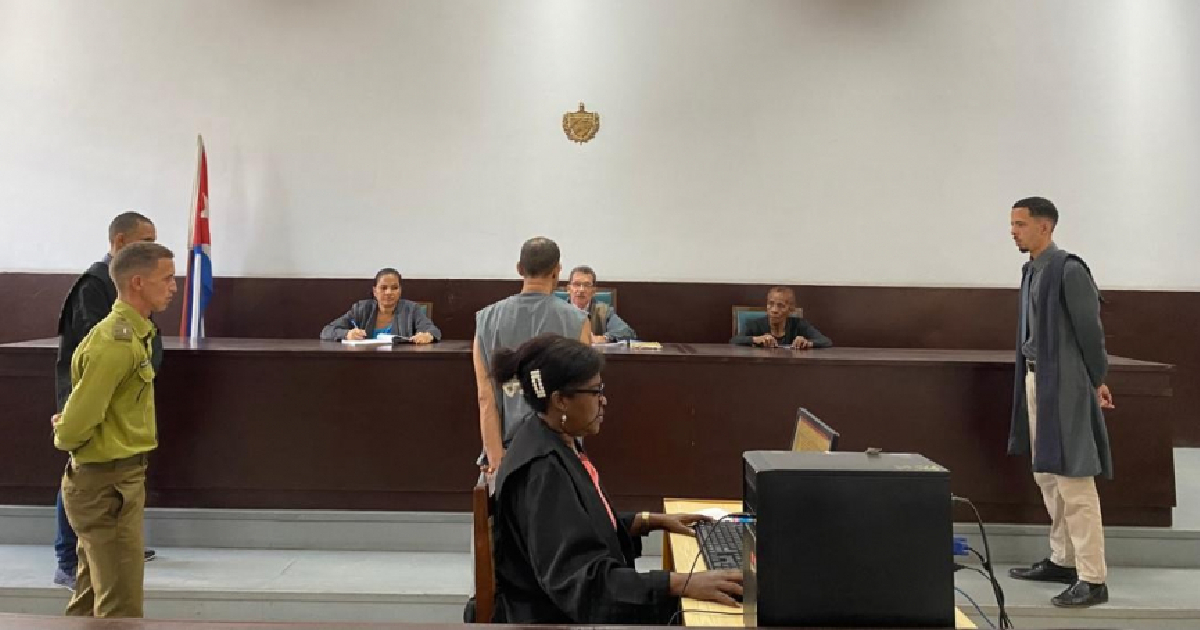
In Santiago de Cuba, the Municipal People's Court has handed down prison sentences ranging from six months to two and a half years to nine individuals found guilty of theft during Hurricane Melissa's impact on the eastern region in October.
According to the state-run newspaper Sierra Maestra, cases 159, 160, and 161 of 2025 involved trials that highlighted three incidents of stolen food, appliances, and beverages in Santiago de Cuba's capital.
The first trial concluded with six individuals being convicted of attempted theft, receiving sentences between six and nine months in prison. These individuals were apprehended in the early hours of October 29 after breaking into La Molinera Fábrica Frank País García due to a fallen outer wall. They managed to steal 111.2 kilograms of wheat flour sweepings intended for animal feed before being caught by special brigade officers guarding the facility.
Later that day, shortly before 8:00 a.m., two suspects stole a double display fridge and two other refrigerators from Carpa Alegrémonos, located at the corner of Enramadas and Peralejo streets, under "undetermined circumstances." Police officers intercepted one of the thieves as he transported the fridge along Paseo José Martí avenue and Línea, while the other refrigerators were recovered from the second suspect's residence. Both men were convicted of theft; one received a sentence of two years and six months, while the other was sentenced to two years in prison.
In a third trial, another individual was sentenced to two years for stealing from Almacén UEB 705 Aurora on Carretera de la Refinería, kilometer 2, on October 29, before 10 a.m. The perpetrator unlawfully took eight sealed boxes and 22 sealed bottles of Parranda beer belonging to PROCOVAR S.R.L., under "undetermined circumstances," according to the report.
All cases involved the application of aggravating factors under Article 80.1, clause d, of the Penal Code, which increases penalties for crimes committed during disasters or by exploiting public calamities.
Sierra Maestra emphasized that the accused committed these crimes "amid an endless anxiety, while the vast majority of Santiago residents focused solely on saving their lives and those of their families." The newspaper labeled them as "selfish and insensitive" for exploiting the vulnerable situation to seize state and private resources for personal gain.
The Municipal Court of Santiago de Cuba noted that there were no economic losses since "all items were returned to their rightful owners and state entities." The defendants also faced additional penalties, including the loss of certain rights and a travel ban from leaving the country.
In early December, Santiago de Cuba's Provincial Prosecutor's Office announced upcoming trials for citizens accused of "vandalism" during and after Hurricane Melissa. Maritza Paredes Pera, the province's chief prosecutor, reported that 15 criminal proceedings had been initiated, with most of the accused under provisional detention.
Paredes Pera confirmed that the defendants were charged with stealing roofing materials, electrical wires, appliances, and food amidst the cyclone's devastation, which exacerbated Cuba's already dire economic situation.
The Cuban government's official stance maintains that such actions "hinder recovery efforts" and "complicate aid to those affected," yet it fails to acknowledge the structural causes of basic goods shortages and widespread poverty that have significantly contributed to the rising crime rates, particularly theft, in recent years.
Frequently Asked Questions about Theft During Hurricane Melissa
What were the sentences for those convicted of theft during Hurricane Melissa?
The convicted individuals received prison sentences ranging from six months to two and a half years.
Why did the court apply harsher penalties for these thefts?
The court applied harsher penalties due to aggravating circumstances outlined in Article 80.1, clause d, of the Penal Code, which increases punishments for crimes committed during disasters or by exploiting public calamities.
What was the Cuban government's response to these thefts?
The Cuban government claimed that the thefts "hinder recovery efforts" and "complicate aid to those affected," without acknowledging the underlying issues of shortages and poverty that contribute to such crimes.