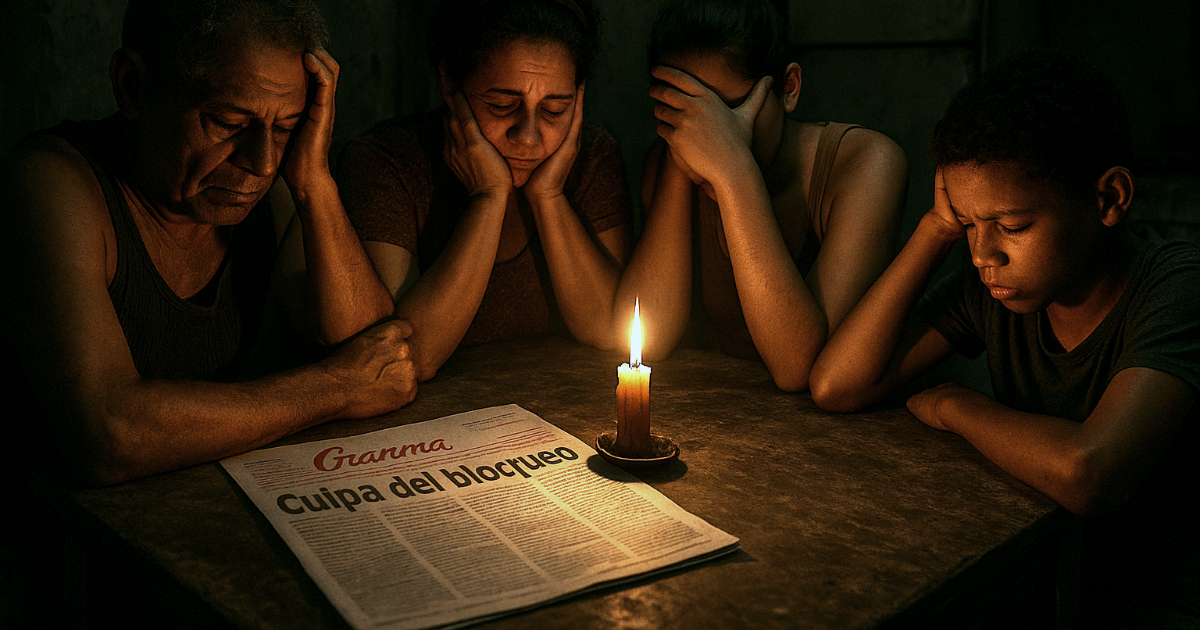
The national electricity provider, Unión Eléctrica (UNE), has acknowledged one of the worst energy crises in recent history, reporting disruptions surpassing 1,000 MW and multiple power plants offline.
Instead of taking accountability for the energy collapse that has brought the nation to a standstill, the Cuban regime is once again pointing fingers at its overused scapegoat: the American "blockade."
According to the official statement, external financial restrictions are the “direct cause” of fuel shortages, maintenance delays, and the inability to upgrade the national energy infrastructure.
“Without ending the financial blockade, there can be no permanent energy stability,” the state-run company declared on social media, shifting the blame for its shortcomings onto U.S. policies.
The Real Culprit Behind Cuba's Energy Woes
The narrative follows a familiar script: no foreign currency means no fuel, and no fuel means no electricity. What the government deliberately omits is that, for decades, the electrical system has suffered from communist bureaucracy, poor planning, and institutional neglect—not the embargo.
Exhausted by power outages lasting over 20 hours daily in many provinces, the Cuban people see things differently. The so-called “external financial restrictions” merely serve as a smokescreen to obscure internal neglect and the systematic diversion of resources meant for electricity generation.
A History of Mismanagement
Power plants are not crumbling due to a lack of dollars but because of decades of inadequate maintenance and outdated technology.
Cuba trades normally with dozens of countries capable of revitalizing its electrical infrastructure—including powerful allies like Russia and China—yet the regime opts to channel available resources into hotel construction and tourism projects, leaving its citizens in the dark.
The Cost of Propaganda Over Progress
As the regime plays the victim, Cubans endure life shrouded in darkness, heat, and despair. Promises of new solar parks or storage batteries are recycled annually, yet the country remains dependent on aging power plants and barely functional generators. The much-touted “creative resistance” translates into makeshift solutions, frayed wires, and privately-owned generators affordable only to those receiving remittances.
Official rhetoric tries to frame each blackout as a heroic act of resistance against imperialism. However, the stark reality is that the energy system has collapsed because the regime prioritized repression and propaganda over development. Instead of transparency and technical management, it offers slogans and external blame.
The Path to True Illumination
After more than six decades of “blockade,” Cuba has yet to establish a stable, efficient, or sustainable electrical system. The root cause lies not in Washington but in Havana. Each blackout plunging the island into darkness results not from the embargo but from the structural failure of a regime that has made obscurity its natural state.
The genuine light Cuba needs will not emanate from a power plant but from the dismantling of the system that keeps it in darkness.
Understanding Cuba's Persistent Energy Crisis
What is the main reason cited by the Cuban government for the energy crisis?
The Cuban government attributes the energy crisis to external financial restrictions imposed by U.S. sanctions, which they claim limit access to fuel and necessary maintenance.
How do Cubans perceive the cause of the energy crisis?
Cubans often view the government’s explanation as a cover-up for internal mismanagement, including bureaucratic inefficiencies and the misallocation of resources intended for energy development.