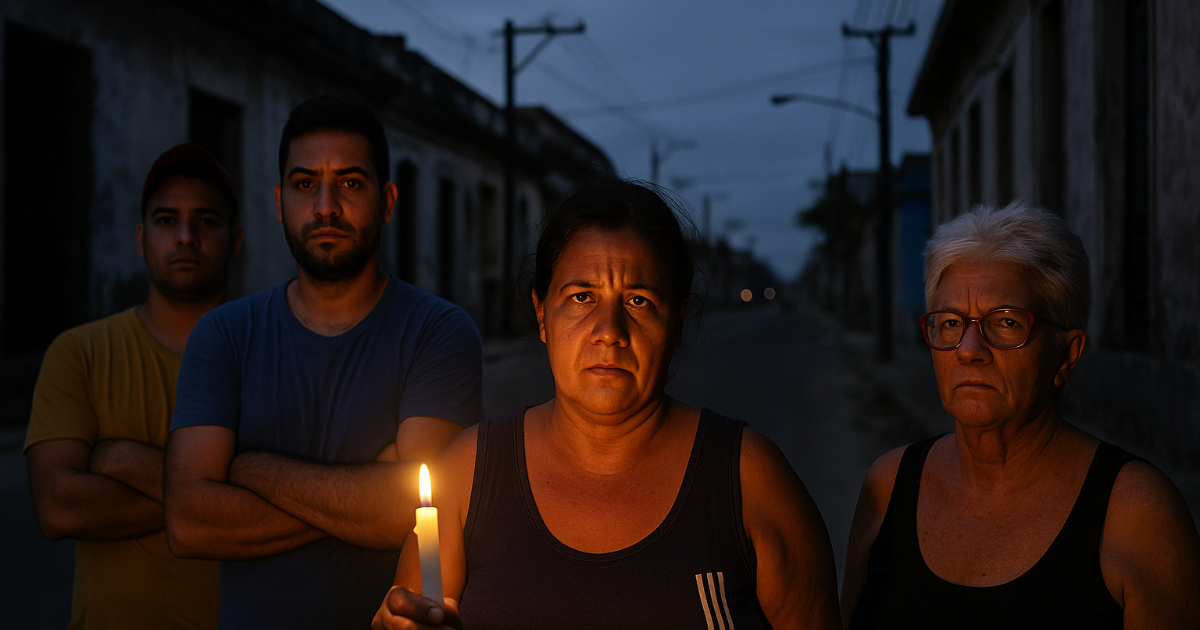
In a recent turn of events, Cubans have expressed their frustration and disbelief following statements from the Unión Eléctrica de Cuba (UNE) and the state-run media outlet Cubadebate. The company's explanation blaming the "financial blockade" for the massive blackouts over the weekend has been met with public outrage.
The backlash began on Cubadebate's social media, where an interview with Omar Ramírez Mendoza, the UNE's deputy director, was shared. It claimed the "electric system experienced a critical weekend," prompting sarcastic and angry responses from citizens still enduring power outages.
“Experienced? It's not over yet; we've been without power since Friday,” one user remarked. Another added, “It wasn't just a critical weekend; it was an endless nightmare.” A third quipped, “Of course, you're in air conditioning while the people are suffering. Easy for you to say.”
Other comments took aim at the state media: “Cubadebate, show some respect. If you're going to report, do it with respect for the people. This isn't about politics; it's about hunger, heat, and darkness.”
“No Currency, No Power”: Une's Latest Justification
Later, UNE's official Facebook page issued another statement, attributing the electrical system's collapse to the U.S. financial blockade.
“The National Electrical System suffers from a visible symptom of an external financial cause: the blockade that prevents Cuba from freely managing the monetary resources needed to purchase fuel, spare parts, and technical services,” the statement read. It emphasized, “Without currency, there's no fuel, no maintenance, no modernization. Without ending the financial blockade, there will be no permanent energy stability.”
This announcement sparked further backlash. “The blockade doesn't convince anyone anymore,” one user wrote. Another questioned, “If the blockade was around when we had power, why don't we have it now?” A frustrated citizen inquired, “Always the same story. What about the money from Russia, Qatar, China? Where is it? Who’s accountable?”
“They talk about the blockade, but the real blockade is the one they impose on the lives of the people,” another person commented. A widely shared sentiment stated, “The problem isn't the blockade; it's the shamelessness. They have no shame repeating the same when the people are in blackout and hunger.”
“A Critical Weekend”… Yet the Darkness Remains
Many Cubans mocked the phrase used by UNE in their initial statement: “experienced a critical weekend.” “That sounds like it's over, yet we're still in the dark,” someone noted. Another message read: “‘Experienced’... maybe you did, because the people are still experiencing the blackout.”
Reports from various provinces highlighted outages lasting over 40 hours: “What weekend? This never ends.”
Demands for Accountability and Transparency
Calls for accountability and transparency were common among the comments. “Tell us where the dollars from MLC stores and ETECSA are going,” one user demanded. Another was more direct: “It's not the blockade, it's the diversion. What's blocked is the brains of those in charge.”
Many also pointed out the disparity between the lives of officials and the citizens: “They are in air-conditioned offices, while we sleep on the floor because of the heat. No wonder they can withstand the blackouts.”
Protests and Desperation
The online outrage coincided with new nighttime protests across the country, particularly in Marianao, where residents took to the streets banging pots and lighting fires. Videos by rapper El Funky showed dozens demanding the restoration of electricity. “The people of Marianao know what to do when the power goes out,” the artist wrote.
Cacerolazos were also reported in Regla, La Lisa, Alamar, and the University of Camagüey. Monday's blackout was the year's most severe, affecting 62% of the country and exceeding a 2,000 MW deficit, according to official data—the highest reported national impact in 2025.
“The Strongest Blockade Is Internal”
The most shared comments encapsulated the widespread sentiment of disbelief, mockery, and exhaustion. “They don't even have shame anymore,” one person wrote. “The strongest blockade is internal,” another message stated. A user concluded, “If the blockade is the problem, then we'll never have power because it won't be lifted. Is that the solution? To live in eternal blackout?”
As UNE blames the blockade and official media echo the narrative, Cubans respond from the darkness, with candles, pots, and words that shine a light on their dissatisfaction.
Understanding Cuba's Energy Crisis
What is causing the power outages in Cuba?
The power outages in Cuba are being attributed to the financial blockade imposed by the United States, which allegedly prevents the country from accessing resources needed for fuel and maintenance. However, many citizens argue that internal mismanagement and corruption are significant factors.
How are Cubans reacting to the explanations provided by UNE?
Cubans have reacted with skepticism and frustration to UNE's explanations, expressing disbelief in the financial blockade narrative and highlighting issues like governmental inefficiency and lack of transparency.
What actions are being taken by Cubans in response to the blackouts?
In response to the ongoing blackouts, Cubans have been protesting by organizing cacerolazos, or pot-banging demonstrations, especially in areas like Marianao. These actions are a plea for the restoration of electricity and an expression of their dissatisfaction.