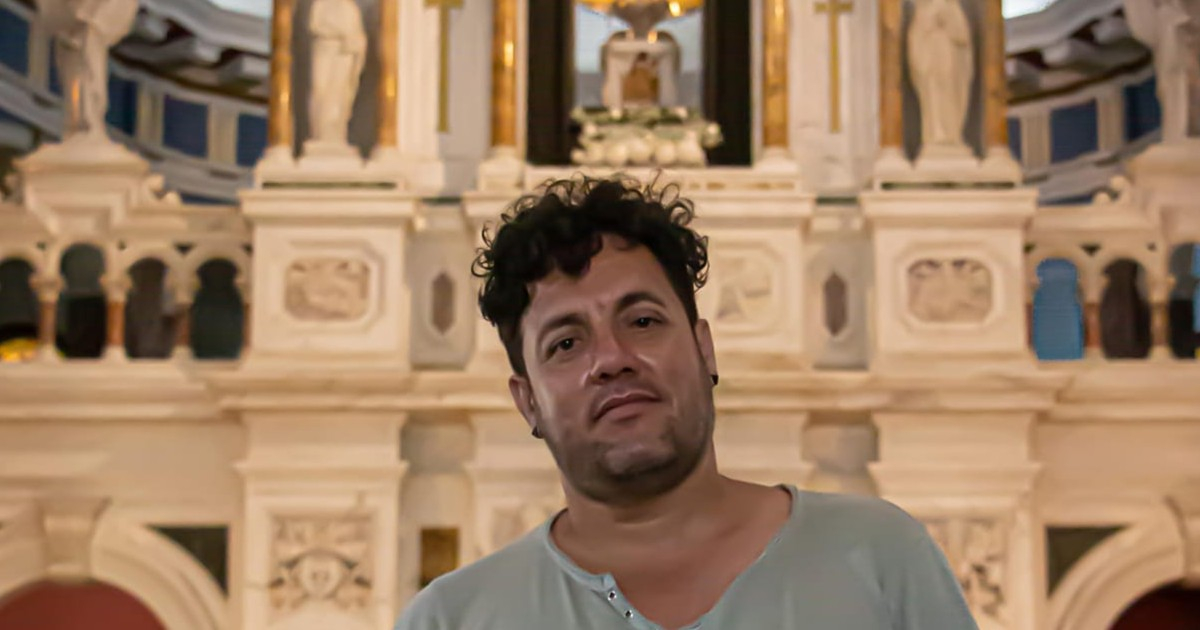
The Cuban playwright and theater director, Freddys Núñez Estenoz, who leads the Teatro del Viento group in Camagüey, has sparked significant attention with a poignant critique of Cuba's collapse and the moral, economic, and spiritual decay plaguing its society.
His message is both a lamentation and a scathing indictment of decades of structural and human degradation that have shattered the nation once envisioned.
"I dream of you and you pain me, ISLAND," begins Freddys, employing poetic language rich with haunting imagery to depict an exhausted, broken, and plundered Cuba, where official promises have become empty shells incapable of sustaining the lives of those who remain.
A Dream Deferred
In his Facebook post, the theater artist takes an emotional journey through the ruins of a national project imposed by power. He asserts that "the country we dreamed of got stranded at the edge of an attempt," never even reaching utopia, merely a "vague mirage in the mind of some lunatic."
According to Núñez Estenoz, Cuba remains ensnared in endless processes, "waiting for a signature or a decree," a metaphor for the suffocating centralism that stifles any real hope for change.
"The country we dreamed of dehydrated from so much absence, shrank from so much anger, swelled with so much fabrication, and burst from an overdose of opportunism and praise," he detailed.
Perpetual Control and Its Consequences
He denounces the deceit marking recent history, with a populace forced to fill squares and repeat "empty, sterile, old, dry, dead slogans."
In one of the most striking passages, he laments how power has turned daily life into constant surveillance and division. "The country we dreamed of left grandmothers, grandfathers, mothers, and fathers alone, divided everything due to that unrelenting obsession to control the day, the night, and the dreams of every creature born on this island," he emphasized.
This intellectual believes that this ironclad control has driven entire generations to emigrate in search of a future that Cuba no longer offers.
The Potential for Renewal
Despite the despairing tone, the playwright acknowledges that the nation could still be rebuilt if its citizens embrace their role in this transformation. "No one will come to bury this corpse," he declares, referring to an exhausted system that refuses to relinquish its hold. For him, only the people can "dig the grave and cast in what is dead and broken" to start anew.
Núñez Estenoz champions Cuban identity beyond empty symbols and repeated slogans, defending the elemental dignity of daily life: a lightbulb that never goes out, a Sunday grill "by choice, not as the only option," a united family, faith, and the freedom to build a possible tomorrow.
His text concludes with a call to a country still present, "around the corner," in the cultural, spiritual, and human essence that survives despite the decay.
Voices of Dissent Amidst Crisis
Núñez Estenoz's words emerge amid a wave of criticism from artists and intellectuals who refuse to remain silent about the widespread decline of life in Cuba. Among these voices is filmmaker Carlos Díaz Lechuga, who recently shared a powerful message on social media, describing an "ailing" island with a collapsed electrical system, thousands of areas without water, nonexistent hygiene, and unaffordable prices faced with paltry wages.
Díaz Lechuga denounced the mass impoverishment, family breakdown, and total lack of justice, pointing out that jails are filled "simply for thinking what is right." He emphasized that it all continues because "a family refuses to relinquish power," while the people suffer and the elite enjoy privileges like private jet travel and luxury goods.
In his message, the filmmaker compared the political and economic stagnation to an endless mourning: "Fidel died, and the wake drags on and on…"
The theater director's words encapsulate the exhaustion of a cultural sector that for decades was pressured to applaud, remain silent, or conform to the official narrative. Today, more creators publicly express the country's deterioration and the responsibility of those who have managed it into collapse.
Núñez Estenoz, with symbolic language, and Díaz Lechuga, with political harshness, share a common belief: Cuba is broken, but part of the country still clings to its right to envision a different future.
Understanding the Cultural and Political Crisis in Cuba
What is the main message of Freddys Núñez Estenoz's critique?
Freddys Núñez Estenoz's critique centers around the collapse of Cuba's societal structures, highlighting the moral, economic, and spiritual decay that has taken root. He calls for citizens to take responsibility for rebuilding the nation by addressing the systemic issues that have led to the current crisis.
How does Carlos Díaz Lechuga's perspective complement Núñez Estenoz's views?
Carlos Díaz Lechuga complements Núñez Estenoz's views by highlighting the tangible consequences of the political and economic stagnation in Cuba, such as the failing infrastructure and lack of basic services. He emphasizes the people's suffering while the ruling elite maintain their grip on power.