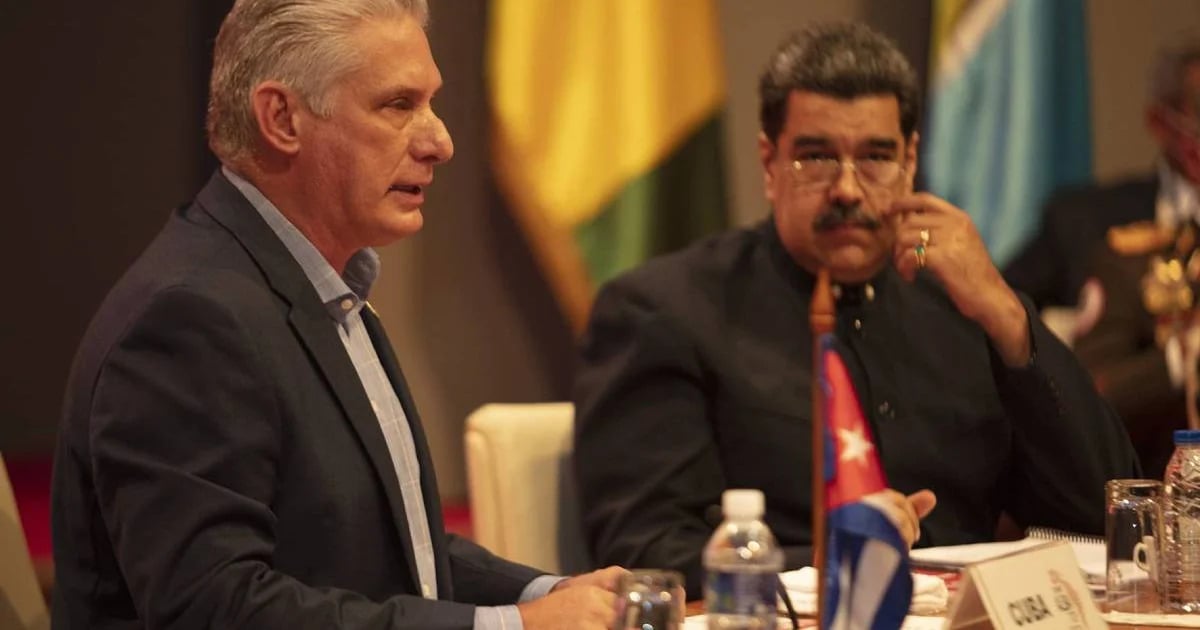
On Tuesday, the Cuban government firmly rejected allegations made by Hugo "El Pollo" Carvajal, the former head of Venezuelan Military Intelligence, who claimed that Cuban authorities were involved in drug trafficking operations alongside Venezuelan President Nicolás Maduro.
In a written statement to the Associated Press, Havana also refuted any discussions with U.S. officials regarding a potential political transition in Caracas.
Deputy Foreign Minister Josefina Vidal described the media reports as "absurd and false," dismissing claims of supposed interactions between Cuban and U.S. officials concerning internal matters that should only concern Venezuela's government.
Vidal further emphasized that Cuba strongly opposes any attempts to tarnish its clean record of advocating for peace in Latin America and the Caribbean and combating drug trafficking.
Carvajal's Allegations and Legal Context
The accusations emerged following the release of a letter purportedly written by Carvajal, who led Venezuela's military intelligence and was a National Assembly deputy. In the letter, exclusively revealed by The Dallas Express, he alleged that deliberate cocaine shipments from Venezuela to the United States occurred as part of a state directive, which he claimed originated from a Cuban idea conveyed to the late President Hugo Chávez.
Carvajal fled Venezuela in 2017 and was apprehended in Spain before being extradited to the U.S. Last June, he pleaded guilty in a Manhattan federal court to four criminal charges, including narcoterrorism.
The indictment accuses him of leading a cartel comprising high-ranking Venezuelan officials, allied with Colombian guerrilla groups, with the intent to "flood" the United States with cocaine.
Regional Tensions on the Rise
These allegations surface amidst escalating tensions in the Caribbean, marked by a significant U.S. naval deployment, including ships, aircraft carriers, and submarines, as well as direct actions against suspected smuggling vessels.
Adding to this is the confrontational rhetoric of President Donald Trump, aimed at both Maduro and Colombian President Gustavo Petro, as well as the Cuban government.
Vidal stated that "U.S. war-mongering sectors resort to crude lies" to attempt to fracture the Venezuelan government's unity against what she described as an "external aggression" and to involve Cuba in creating pretexts for military action.
Cuba's Defense and Anti-Drug Stance
Cuban diplomats emphasized that the country is not a drug producer and enforces stringent anti-drug laws, with penalties reaching life imprisonment.
However, they acknowledge that Cuba's geographic location in the Caribbean places it on a frequent smuggling route, a situation that — according to Vidal — U.S. agencies are well aware of due to existing bilateral cooperation on anti-drug efforts.
Vidal, who played a key role in the thawing of relations between Cuba and the United States during President Barack Obama's administration, highlighted the island's active role in promoting regional stability and expressed regret over what she sees as attempts to use false narratives to justify military escalations or geopolitical pressures.
FAQs on Cuba's Stance and Allegations
What are the allegations made against Cuba regarding drug trafficking?
Hugo "El Pollo" Carvajal accused Cuban authorities of participating in drug trafficking operations with Venezuelan President Nicolás Maduro.
How did Cuba respond to the drug trafficking allegations?
Cuba dismissed the allegations as "absurd and false," and emphasized its clean record in fighting drug trafficking and promoting peace in the region.
What is the significance of Cuba's geographic location in the context of drug trafficking?
Cuba's location in the Caribbean places it on a common smuggling route, which is why it maintains stringent anti-drug laws and cooperates with U.S. agencies on anti-drug efforts.