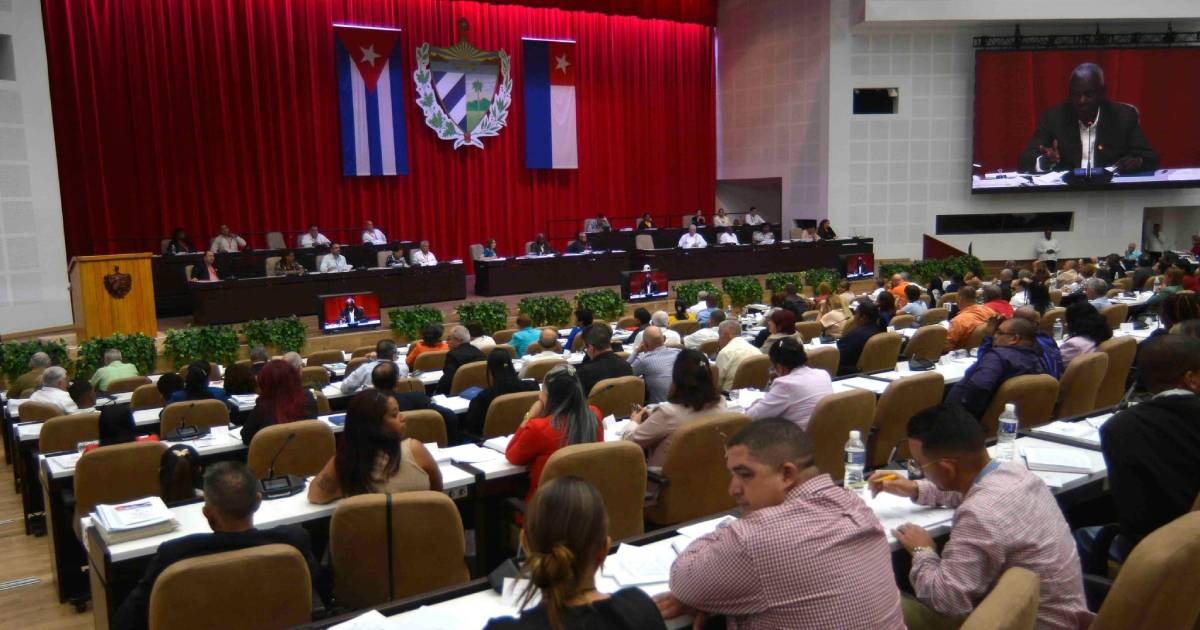
The Cuban government has unveiled a legislative proposal aimed at exceptionally shortening the terms of municipal delegates and adjusting the nation's electoral schedule. This initiative surfaces amid significant social and economic tension, as citizens demand greater transparency and participation, while local structures of the People's Power face a crisis of legitimacy.
Released by the National Assembly of People's Power and signed by its president, Juan Esteban Lazo Hernández, the draft law stipulates that the current mandate for municipal delegates will be reduced from five years, as dictated by the Constitution, to four years, concluding in November 2026. Given the procedural nature of legislative processes in Cuba, approval by the National Assembly is almost certain.
The Assembly justifies this reduction as a necessity to "restore the electoral sequence" between the selection of municipal delegates and national deputies, which was disrupted due to the COVID-19 pandemic.
On its website, the Parliament emphasizes that the publication of this document is intended to encourage civic engagement, inviting Cubans to submit feedback via email. This is an uncommon gesture in Cuba's official legislative procedures, where public input is often minimal. Nonetheless, for many Cubans, the pressing question is not technical but political: Why the urgent need to adjust the electoral calendar now?
The proposal's release coincides with the Assembly's announcement, just days earlier on November 26, of its Sixth Ordinary Session Period, scheduled for December 18.
During this session, the government will review its economic measures, the state's 2026 budget, and various accountability reports, including one from the Provincial Government of Ciego de Ávila. Several legislative projects, including the one altering delegate terms, will also be examined.
This timing does not go unnoticed. As large segments of the population grapple with power outages, food shortages, inflation, and a worsening of public services, the government's focus on reorganizing the political calendar feels disconnected from everyday struggles.
For those living on the island, the announcement not only raises concerns but also skepticism. The municipal structures of the People's Power, including district delegates, have long been discredited, having shown minimal capability to address everyday issues affecting the populace.
In numerous neighborhoods, these delegates are no longer perceived as effective representatives but rather as symbolic figures lacking real power, unable to address complaints about potholes, building collapses, sanitation issues, inadequate transportation, or persistent blackouts.
Within this context, altering their terms without transforming a failing system only deepens the sense of disconnect between authorities and a citizenry weary of unchanged realities, regardless of political calendar adjustments.
The Parliament claims that the proposal has already been discussed in preliminary consultations and will be revisited in December.
Key Aspects of Cuba's Electoral Calendar Changes
Why is the Cuban government shortening the terms of municipal delegates?
The government claims that shortening the terms is necessary to realign the electoral sequence between municipal delegates and national deputies, which was disrupted by the COVID-19 pandemic.
How are citizens reacting to the proposed changes in the electoral calendar?
Many citizens are skeptical and view these changes as politically motivated rather than addressing the urgent issues they face daily, such as economic hardships and social instability.
What is the significance of the timing of this legislative proposal?
The proposal coincides with a period when the government is set to evaluate economic measures and the state budget, indicating a strategic focus on political reorganization amidst widespread public dissatisfaction.