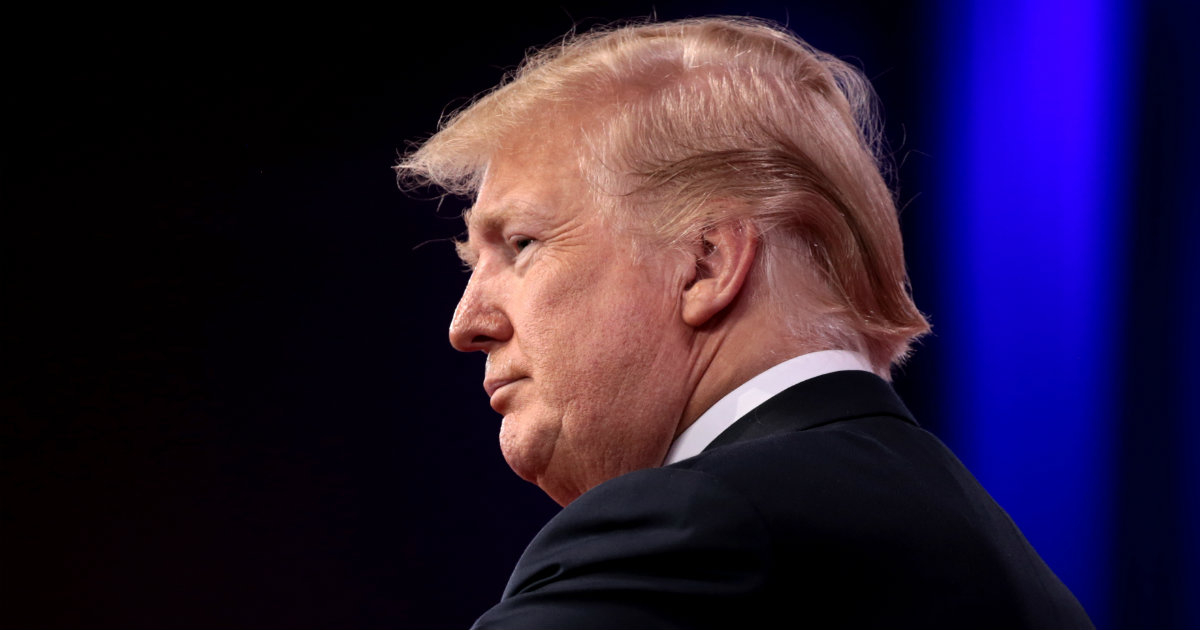
In a surprising move within the Republican ranks, the entire Florida Congressional delegation, predominantly Republican lawmakers, have reached out to President Donald Trump requesting to uphold the moratorium on offshore oil drilling along the state's coastline.
This action marks an unusual internal dissent against a key policy of the president, especially as his administration has recently announced plans to revive such activities after decades of limitations.
The letter, endorsed by Senators Rick Scott and Ashley Moody, along with the state’s 28 federal representatives, warns that the Department of the Interior's plan “threatens the state's thriving tourism industry and could disrupt military operations in a critical training area.”
While the letter stops short of directly criticizing the president—whose Mar-a-Lago estate in Palm Beach would remain unaffected by the project—it acknowledges the environmental, economic, and strategic importance of Florida's coastlines.
“In 2020, they made the right decision by using executive action to extend the moratorium on oil and gas leasing off the Gulf and East Florida coasts until 2032, recognizing the incredible value of Florida's pristine shores to the economy, environment, and military community of our state,” they wrote.
Political leaders and environmental organizations alike have voiced concerns over the risks posed by new offshore oil wells, particularly in a state whose economy heavily relies on coastal tourism.
“We know how vital our clean beaches are to the economy and the lives of Floridians. I will do everything I can to keep them safe,” stated Rick Scott, former governor and current senator.
In a subsequent message, he expressed pride in leading the entire Florida Congressional delegation in urging Trump to maintain his commitment to keeping Florida's coasts off the table for oil drilling.
Even the spokesperson for Republican Governor Ron DeSantis joined the plea, requesting the administration to reconsider the plan.
The pressure has been significant enough to prompt a response from the Department of the Interior’s spokesperson, who stated, “The Department of the Interior takes all congressional correspondence seriously and reviews each matter carefully.”
New Drilling Threat: Over 100 Miles Offshore
The newly announced plan by Interior Secretary Doug Burgum outlines 34 potential offshore oil lease sales between 2027 and 2031, including two near Florida in 2029 and 2030.
This would mark the first instance since 1995 that such activities are permitted in federal waters off the state.
The drilling would occur in a newly designated area of the Central-Southern Gulf, over 100 miles offshore, adjacent to thousands of already active wells in the Gulf of Mexico.
The Trump administration justifies the move as part of its “energy dominance” strategy, aiming to expand domestic fossil fuel production to reduce reliance on international actors and address global market volatility.
Trump defended the plan as a fulfilled promise: “Our nation will once again be a global leader in energy. No one will do it better than the United States,” he asserted.
The American Petroleum Institute hailed the decision as a “historic step” to bolster the national economy and create jobs.
Precedent, Military Interests, and Bipartisan Support
The current moratorium was imposed by Trump himself during his first term, responding to similar opposition from Florida legislators against previous drilling plans.
That measure, celebrated by both parties, was seen as a victory for federalism and environmental protection over corporate interests.
The Gulf area slated for new leases also coincides with highly sensitive military training zones.
Interfering in these spaces could not only impact military readiness but also key logistical agreements with air and naval bases in the southern state.
“We urge you to keep your moratorium in place and keep Florida's coasts off the bargaining table for oil and gas leasing. Florida's economy, environment, and military preparedness depend on this commitment,” concludes the letter.
Between Oil and Ecology: America’s Dilemma
The decision to revive deep-sea drilling is part of a broader Trump policy to enhance national oil and gas production, at the expense of renewable energy sources.
His administration has rolled back key regulations from the Obama-Biden era, blocked clean energy projects, and empowered the extractive sector.
On the international stage, the move also has geopolitical implications. The United States has recently sanctioned Russian oil companies and pressured Venezuela, reshaping the map of energy providers.
In this context, the drive for self-reliance gains political weight, albeit with significant environmental costs.
Organizations like Oceana and Greenpeace have warned about the risk of ecological disasters similar to the 2010 Deepwater Horizon spill. “This plan opens the door to a new ecological disaster,” they denounced.
Public Comments and the Future of the Plan
The Department of the Interior is holding a public comment period open until the end of January, suggesting the plan may still undergo changes.
Nonetheless, the inclusion of specific lease sales near Florida and California has raised alarms in both states.
In Florida, where tourism generates over $100 billion annually and employs over a million people, the prospect of oil platforms on the horizon is seen not only as an environmental threat but also as a direct blow to the heart of its economy.
What is clear is that, for now, Florida Republicans have drawn a line in the sand: they are not willing to sacrifice their shores for Trump's energy dominance. The question is whether the president will heed their call.
Key Questions on Florida's Offshore Drilling Debate
Why are Florida Republicans opposing offshore drilling?
Florida Republicans are opposing offshore drilling due to concerns over the impact on the state's tourism industry, military operations, and the environmental value of its coastlines.
What is the Trump administration's justification for the drilling plan?
The Trump administration justifies the plan as part of its "energy dominance" strategy, aimed at expanding domestic fossil fuel production to reduce reliance on international markets and enhance energy independence.
How could offshore drilling affect Florida's economy?
Offshore drilling could pose a threat to Florida's economy by endangering its tourism industry, which relies heavily on pristine coastlines and contributes over $100 billion annually.