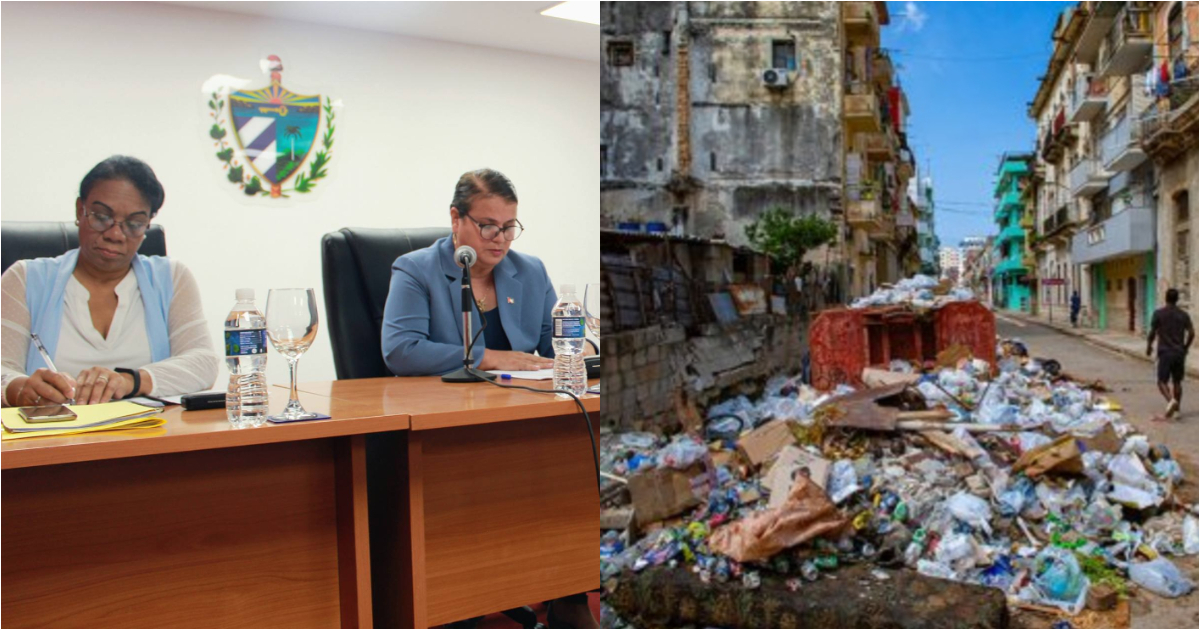
The governor of Havana, Yanet Hernández Pérez, unveiled her 2025 management report on Friday, highlighting her "connection with the population." Meanwhile, residents of the capital responded with a flood of criticism, demanding tangible results and explanations for the collapse of essential services.
The official emphasized that her main priority in 2025 was "direct engagement with the population, delegates, and presidents of Popular Councils," along with addressing unresolved issues from the previous report, as reported by the state-run newspaper Tribuna de La Habana.
She outlined initiatives aimed at tackling crime, corruption, drug use, social indiscipline, and a strategy to stabilize urban waste collection. Hernández also claimed efforts are underway to implement the government's program to "correct distortions and boost the economy," supported by contributions from 294 export entities in the capital.
She further identified national food production as a top priority and mentioned the reorganization of the state enterprise and other economic actors.
The governor acknowledged receiving over 236,700 complaints during the period, focusing primarily on issues related to water, electricity, housing, and residential deterioration.
Public Outcry Over Lack of Concrete Data
During the session, Deputy Prime Minister Inés María Chapman called for greater on-the-ground presence from leaders and officials. "We need to walk the streets, the government in action, addressing problems, finding solutions," she urged.
However, the absence of specific data in the report sparked a wave of public discontent on the capital government's Facebook page. In their comments, users highlighted the lack of measurable outcomes, worsening waste management, inflation, crime, deteriorating streets, rising drug use, and neglect of peripheral areas.
Residents ridiculed the report as "fantasy" and mocked the authorities for portraying a capital city "that doesn't exist." Others questioned why the scale of neglect, unsanitary conditions, sewage issues, ineffective banking services, or the critical state of urban infrastructure weren't addressed.
Capital in Crisis: Residents Demand Answers
"This seems like anything but a capital," one user wrote. "Havana is bleeding, and nothing is being done to heal it," added another.
Cubans perceive a state of extreme deterioration in Havana, describing it as a city engulfed in garbage, collapses, and neglect. The policy of hotel construction has drawn criticism from the population, who see luxury tourist infrastructures rising while a significant portion of homes remains in precarious conditions.
Amid the 506th anniversary of Havana in November, numerous comments on social media reflected deep dissatisfaction with the government, accusing it of neglect and inaction in the face of the city's structural problems.
The inefficiency of the state and the lack of a sustainable plan have turned waste collection into a chronic issue, exacerbated by fuel shortages, vehicle breakdowns, personnel shortages, and the dengue and chikungunya epidemics, among other factors. The Cuban government has admitted it cannot ensure Havana's cleanliness or provide decent wages to street sweepers.
Recently, authorities confessed to being unaware of the amount of garbage accumulating in Havana, highlighting a fundamental oversight that hinders any cleaning and urban infrastructure strategy.
Increasingly prolonged blackouts have a severe impact on the daily lives of Havana's residents, affecting rest, food and medicine preservation, water access, and communications. This situation has fostered a growing climate of uncertainty and social discontent.
Understanding the Challenges Facing Havana
What were the main criticisms of Governor Yanet Hernández Pérez's management report?
The main criticisms revolved around the lack of verifiable results and specific data, as well as the perceived neglect of essential services and infrastructure in Havana.
Why are Havana residents dissatisfied with the state of their city?
Residents are dissatisfied due to the extreme deterioration of infrastructure, persistent waste management issues, crime, inflation, and inadequate services such as water and electricity.
How has the Cuban government responded to the waste management crisis in Havana?
The Cuban government has acknowledged its inability to guarantee cleanliness in Havana and provide decent wages for street sweepers, citing challenges such as fuel shortages and personnel issues.