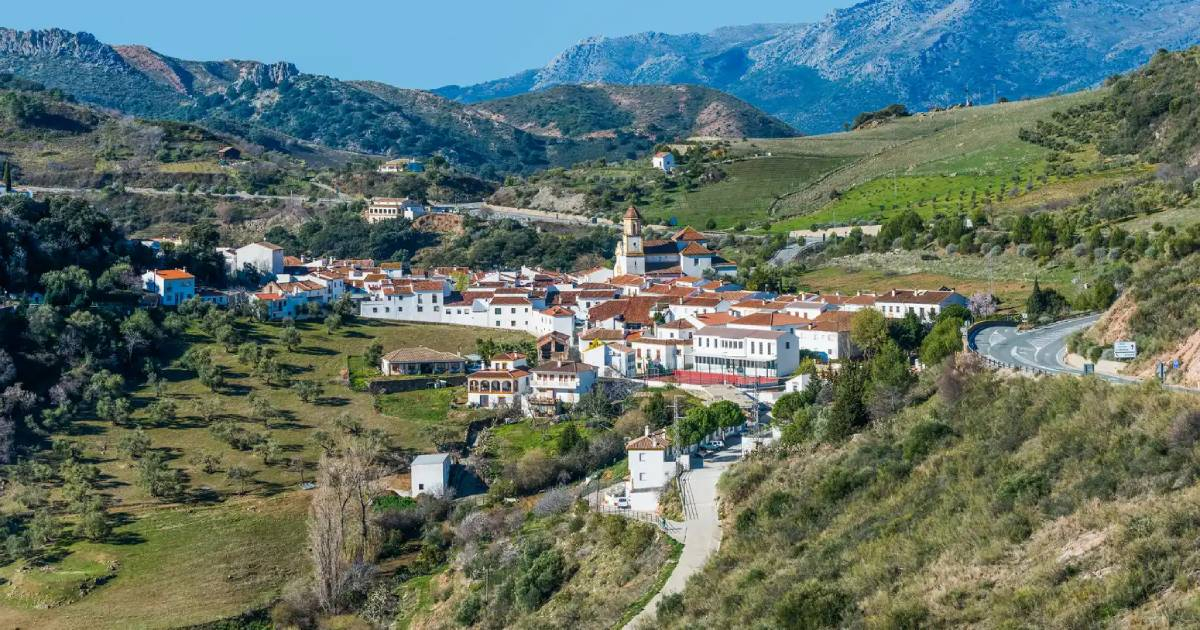
In the heart of the Ronda Mountains, tucked away between narrow, winding roads of the Andalusian landscape, lies a tiny village with a population of merely 176 residents.
This place is called Atajate, the least populated municipality in the entire province of Málaga. Among its inhabitants is a detail sure to capture the interest of any Cuban reader—a fellow Cuban lives there.
According to a report by El Español, which draws on the latest data from the 2025 Annual Population Census by the National Institute of Statistics (INE), Atajate lost 20 residents in one year, making it the smallest village in the province.
Yet, amid the British, Moroccans, Italians, Dutch, and Spaniards, a Cuban also calls this tiny community home, proving once more that Cubans find their way to the most unexpected corners of the globe.
A Cuban in a Village Where Everyone Knows Each Other
As El Español reports, Atajate's population consists of 159 Spaniards, six Moroccans, five British, one French, one Italian, one person from the Netherlands, one Paraguayan, and one Cuban, who brings a Caribbean flair to this almost secluded part of Andalusia.
The presence of a Cuban in such a small municipality is noteworthy considering the phenomenon of migratory dispersion. The Cuban diaspora no longer concentrates solely in major cities such as Madrid, Barcelona, or Miami; it also appears in minute villages where life unfolds amidst gardens, tranquility, and neighbors who greet each other by name.
Atajate: A Tiny Place with Rich History
Despite its size, Atajate is not just any place. The village sits over 700 meters above sea level and is renowned for its mountainous landscapes, hiking trails, and the peace it offers to those seeking to escape urban noise. Its cobblestone streets and white architecture typify a mountain village, almost frozen in time.
However, Atajate's case is not unique. El Español notes that many of Málaga's smallest municipalities continue to lose population. Salares, now the second least populated village, has 196 residents, including 13 British, six Moroccans, and other citizens from various countries. Although the province boasts over 1.7 million inhabitants, rural life diminishes with each passing year.
In contrast, the presence of immigrants, including Cubans, has visibly increased in Andalusia. While the personal story of the Cuban residing in Atajate remains unknown, their mere presence reinforces the notion that Cuban identity expands and adapts, even in places so remote they barely register on the map.
Understanding the Cuban Diaspora in Spain
Why is Atajate significant for the Cuban community?
Atajate is significant as it illustrates the Cuban diaspora reaching even the most unexpected and remote parts of the world, showcasing the diverse places where Cubans establish themselves.
How does the Cuban presence in Atajate reflect broader migration trends?
The Cuban presence in Atajate reflects a trend of migratory dispersion, where Cubans, like many other nationalities, are increasingly settling in rural and less populated areas, not just in large urban centers.