The Cuban government appears to be in a state of political containment and diplomatic anxiety.
As the Trump administration ramps up its offensive against Nicolás Maduro and the Caracas-Havana alliance, Cuba's leadership responds with a mix of denial, alarm, and defensive rhetoric, fearing that U.S. pressure could soon target the island.
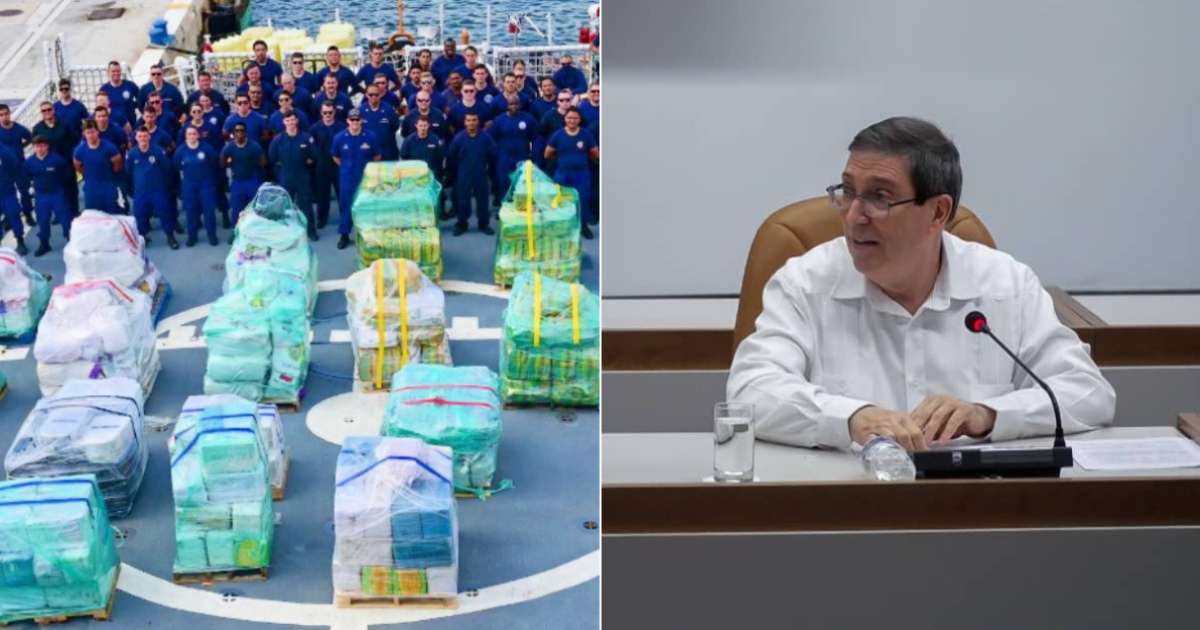
Recently, Cuban Foreign Minister Bruno Rodríguez Parrilla took to social media to publish an unusually lengthy statement asserting that "Cuba actively and responsibly fights drug trafficking," defending the "cooperation with the United States," and accusing Washington of "hindering bilateral exchanges."
"It's regrettable that this country, the main source of drugs to ours, has decided to halt and obstruct this cooperation," wrote the minister on X (formerly Twitter).
However, his defensive stance backfired. The post was flooded with thousands of responses filled with anger, irony, and direct accusations. Many users—including Cuban exiles, journalists, and international analysts—interpreted the message as a gesture of fear rather than strength.
The Reaction from Social Media
Comments ranged from skepticism to sarcasm. "They killed Ochoa to blame him for Fidel Castro's dealings with Pablo Escobar," a user remarked, referencing the historical Ochoa Affair, a symbol of the Cuban military's ties to drug trafficking in the 1980s.
Another commented, "It’s no coincidence that El Pollo Carvajal links them with drug trafficking in Venezuela," referring to the explosive letter from former Chavista intelligence chief Hugo "El Pollo" Carvajal to Trump from a U.S. federal prison, accusing Havana of being the "strategic brain" behind the Cartel of the Suns and proposing Hugo Chávez use cocaine as a geopolitical weapon against the United States.
Responses left no room for subtlety. "Fear has switched sides, Bruno," quipped one user. "You spend your day defending before the attack. No one will save you."
Political Tension and Strategic Maneuvers
From Miami, activists and analysts share a common diagnosis: the Cuban regime appears nervous about what it sees as the prelude to a hemispheric offensive led by Washington.
The tension has rapidly escalated since Reuters reported that "elements within the Cuban regime" have engaged in discreet contacts with U.S. officials to discuss "what the region might look like without Nicolás Maduro."
The leak, indicating internal divisions within Havana's power structure, came at the worst possible time: just as Trump intensifies military and diplomatic pressure on Caracas.
The deployment of the USS Gerald R. Ford aircraft carrier in the Caribbean, supported by eight warships, a nuclear submarine, and F-35 jets, represents the largest U.S. show of force in the region in decades.
Washington has already designated the Cartel of the Suns as a foreign terrorist organization and does not rule out additional measures against its sponsors.
The Shadow of Drug Trafficking
The accusations made by former Venezuelan general Hugo Carvajal continue to shake the foundations of the Bolivarian axis.
In his letter, Carvajal alleged that the Cuban regime crafted the drug trafficking strategy for geopolitical purposes and that Havana's intelligence agents directly participated in creating the Cartel of the Suns, providing weapons, passports, and impunity to criminal organizations.
Havana denies everything, but its response comes at a time when the U.S. narrative—backed by the new National Security Strategy 2025—has positioned Cuba, Venezuela, and Nicaragua as "nodes of a hemispheric criminal network."
Meanwhile, leaked reports from Caracas indicate that Maduro even distrusts his Cuban guards, fearful that Havana might sacrifice him if his stay becomes untenable.
In the corridors of the Communist Party and the MININT, as per diplomatic sources in Havana, the term "narco-dictatorship" has become a taboo that triggers fear and private discussions.
A Regime Under Pressure
The consensus, both inside and outside the island, is almost unanimous: Havana trembles at the mention of "narco-dictatorship." Not because it's a new term, but because it now echoes in Trump's White House, accompanied by aircraft carriers, sanctions, and intelligence leaks.
The narrative seems to be closing in on Castroism: internationally isolated, reliant on Venezuelan oil, and suspected of being the intellectual architect of a continental drug trafficking network, the regime faces an unprecedented moment of vulnerability.
The signals on X, public responses, and the tone of its foreign minister confirm that in Havana, they no longer speak with the arrogance of resistance but with the reflex of those who know they are being watched, cornered, and on a countdown.
Understanding the Political Climate in Cuba
Why is the Cuban regime nervous about the term "narco-dictatorship"?
The term "narco-dictatorship" resonates with the Cuban regime as it implies involvement in drug trafficking, which is now being highlighted by the Trump administration, threatening their political stability and international relations.
How has the U.S. increased pressure on Cuba regarding drug trafficking?
The U.S. has intensified military and diplomatic efforts, including deploying a significant naval force in the Caribbean and designating the Cartel of the Suns as a terrorist organization, which increases scrutiny on Cuba's alleged involvement.
What are the implications of the accusations made by Hugo Carvajal?
Carvajal's accusations suggest that Cuba has played a strategic role in drug trafficking in collaboration with Venezuela, which could lead to further international isolation and potential action from the U.S. and its allies.
What does the deployment of USS Gerald R. Ford signify?
The deployment represents the most significant show of U.S. military force in the Caribbean in decades, signaling a strong stance against alleged narco-trafficking networks linked to Cuba and its allies.