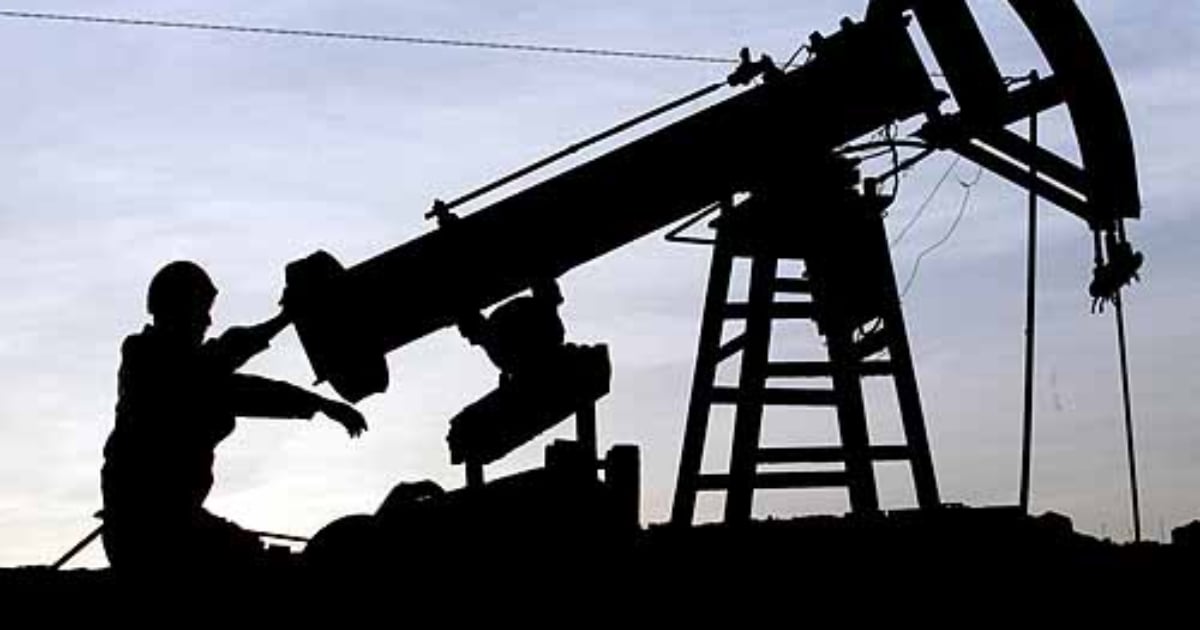
The notion that the United States aims to "seize Venezuela's oil" has resurfaced as a central theme in the official rhetoric of Havana and Caracas, particularly following the launch of Operation 'Southern Spear.' This recent naval and aerial deployment by Washington in the Caribbean has rekindled such claims.
Overseen by the United States Southern Command (SOUTHCOM), this military maneuver includes warships, aircraft carriers, and surveillance airplanes intended to bolster drug interdiction and regional security.
Nevertheless, available evidence and official U.S. documents do not substantiate the allegation of an imperialist agenda. The actions and strategies outlined by the Trump administration reflect a policy focused on curbing drug trafficking, reducing Russian and Iranian influence in the area, and advocating for a democratic transition in Venezuela, rather than appropriating the South American nation's energy resources.
Cuban Propaganda and the Old "Imperialism" Theory
Recently, prominent figures within the Cuban regime, such as Miguel Díaz-Canel, Bruno Rodríguez Parrilla, and officials from the Ministry of Foreign Affairs (MINREX), have amplified rhetoric regarding a supposed "aggression" by Washington against Venezuela.
These statements assert that the "true" objective of U.S. actions is to "seize oil and natural resources" and "forcibly overthrow" the legitimate government of Nicolás Maduro. Díaz-Canel, on his official X account (formerly Twitter), called for an "international mobilization to prevent aggression" and to "preserve the Latin American Peace Zone."
Rodríguez Parrilla went further, claiming that the so-called 'Cartel of the Suns' is "a fabrication by the U.S. government to justify violent actions and take control of Venezuelan oil." Meanwhile, MINREX issued a statement accusing Washington of preparing "a military action" against Caracas to "install a servile government" and "make Venezuelan oil available to the U.S."
This narrative isn't new. It's the same anti-imperialist rhetoric Havana has employed for over six decades: blaming the U.S. and its "imperialist" economic interests for any conflict, and portraying its allies—specifically the chavismo—as victims of foreign conspiracy.
What U.S. Documents Really Indicate
Public reports and statements from the U.S. State Department, the White House, and Congress reveal a different reality. According to the Integrated Country Strategy for Venezuela for the 2024–2025 period, Washington's policy is rooted in a comprehensive vision that combines democratic defense with regional stability.
The document outlines that the central aim of U.S. action is to help restore the rule of law and democratic institutions while enhancing support for civil society and human rights defenders. It also emphasizes the necessity to curb the influence of criminal groups and drug trafficking networks operating within and outside Venezuela, seen as a direct threat to hemispheric security.
Moreover, the strategy incorporates a humanitarian component: addressing the social and migration crisis caused by the country's collapse, and strengthening regional cooperation to prevent Venezuelan instability from spilling beyond its borders.
In contrast, since 2017, the U.S. has enforced stringent sanctions prohibiting its companies from engaging with Maduro's government or Petróleos de Venezuela S.A. (PDVSA). Even the BOLÍVAR Act, passed by Congress in 2024, bars the Executive from signing contracts with companies linked to the chavista regime.
In essence, Washington is not pursuing Venezuelan oil; instead, it has explicitly renounced any economic benefits from such a relationship while the country remains under authoritarian control.
Oil Isn't the Prize Anymore
The "oil plunder" myth overlooks a clear fact: Venezuela's industry is technically collapsed. Maintenance neglect, corruption, talent drain, and international sanctions have reduced production to historic lows.
Today, much of Venezuela's crude is sold irregularly, through intermediaries with Iran, Russia, or China, under opaque conditions and without public benefit. Rather than intervening to claim these resources, the U.S. has focused its policy on preventing oil from funding criminal or terrorist networks.
The Office of Foreign Assets Control (OFAC) monitors every PDVSA-related transaction, and any U.S. company violating these sanctions faces severe legal and economic penalties.
A Historical Precedent: Iraq and the "Energy Imperialism" Myth
The same argument was used against Washington following the 2003 Iraq invasion: that the U.S. sought to control Iraqi oil. However, twenty years later, the facts showed otherwise.
According to Iraq's Ministry of Oil and the International Energy Agency (IEA), legal and operational control of Iraqi crude remained with the state through public companies like Basra Oil Company and North Oil Company, overseen by the state-run SOMO (State Oil Marketing Organization).
As for foreign participation, the largest current production volumes come from consortia led by Chinese and Russian companies, not American ones. Reports from Iraq Oil Report and consultancy Wood Mackenzie confirm that PetroChina and China National Petroleum Corporation (CNPC) now operate the Ahdab and Halfaya fields, while Russia's Lukoil controls West Qurna 2, one of the country's largest.
In contrast, ExxonMobil and BP, the two major Western firms that arrived post-2003 invasion, have gradually reduced their presence since 2020 due to financial and security concerns.
This gradual withdrawal reflects a sectoral shift: Asian —particularly Chinese— capital and Russian firms have expanded their operational role, while the Iraqi state, through SOMO and public enterprises like Basra Oil Company, has reinforced control over crude revenues and strategic decisions.
Thus, Iraq serves as empirical proof that the "oil imperialism" narrative doesn't hold up under scrutiny. Applied to Venezuela, the parallel is clear: the U.S. isn't seeking to control wells or exports but to weaken the power of regimes allied with Russia and Iran in its own hemisphere.
Security and Democracy: The True Interests
Statements from Secretary of State Marco Rubio and President Trump align on one point: Venezuela isn't an economic target but a geopolitical and moral one.
The presence of Russia, Iran, and China in the Caribbean—especially in Venezuelan and Cuban ports—is perceived as a direct threat to hemispheric security. Hence, the deployment of ships and aircraft in the region currently serves a logic of pressure and deterrence, not invasion.
The U.S. strategy also relies on cooperation with democratic countries in the region—Colombia, Panama, the Dominican Republic, Costa Rica—to intercept drug trafficking routes and monitor hostile intelligence movements.
Politically, Washington aims to oust the illegitimate and fraudulent Maduro government, promote a peaceful transition in Venezuela, and return sovereignty to the Venezuelan people, who overwhelmingly voted for change by electing Edmundo González Urrutia and María Corina Machado as leaders of an anticipated democratic government.
Propaganda as a Smoke Screen
The Cuban regime knows that the "Yankee imperialism" narrative remains effective among sectors distrustful of Washington. That's why it repeats it whenever the U.S. acts in the region.
However, beyond the ideological discourse, Cuba and Venezuela face deep internal crises: shortages, inflation, migration, censorship, and repression. Blaming an external enemy is a classic political distraction and social control mechanism.
Propaganda doesn't withstand evidence: the U.S. isn't invading or seeking to pillage Venezuela, nor is it solely interested in benefiting from its oil, despite legitimate American business interests in investing in that and other sectors of the country's economy.
Its declared and verifiable objective in public documents is to contain the expansion of authoritarian regimes allied with extra-hemispheric powers and promote conditions for democratic recovery.
Attributing to Washington intentions of oil plunder is recycling a script written in the 1960s by Soviet propaganda and reused by Havana and Caracas to justify their failures.
The data show that U.S. policy towards Venezuela doesn't aim to "seize" anything: it seeks to limit Russian and Iranian influence, combat drug trafficking, and support the Venezuelan people's right to decide their future.
Recent history, from Iraq to the Caribbean, confirms that the "oil imperialism" myth is just that: a myth. And like any political myth, it serves those who repeat it, not those who suffer from it.
The Cuban regime's "anti-imperialist" narrative comes across as particularly hypocritical when considering that Havana has been one of Venezuela's largest oil beneficiaries for over two decades, receiving it at subsidized prices or even without direct payment, in exchange for political, military, and intelligence cooperation.
Under this arrangement, thousands of Cuban advisors have operated within chavismo's structures—from citizen identification systems to security and repression apparatuses—while the Venezuelan population was deprived of the benefits of transparent and fair commercialization of its natural resources.
Cuba, which accuses the United States of "energy imperialism," has sustained much of its economy through unequal barter of crude for political control, a model enriching the elites of both regimes and impoverishing Venezuela's citizens.
In this context, Havana's discourse about supposed U.S. plunder is nothing more than survival demagoguery, a desperate attempt to externalize the blame for its dependence and the internal exploitation it helped perpetuate.
Debunking the Narrative: Key Questions and Answers
What is Operation 'Southern Spear'?
Operation 'Southern Spear' is a U.S. naval and aerial deployment in the Caribbean, directed by SOUTHCOM, aimed at enhancing drug interdiction and regional security.
What are the real objectives of U.S. policy towards Venezuela?
The U.S. policy focuses on restoring democracy, stabilizing the region, curbing Russian and Iranian influence, and addressing the humanitarian crisis in Venezuela, rather than seizing its oil resources.
How does the Cuban regime benefit from Venezuelan oil?
Cuba has been a major beneficiary of Venezuelan oil, receiving it at subsidized rates or without direct payment, in exchange for political and military support, benefiting the elites of both regimes.