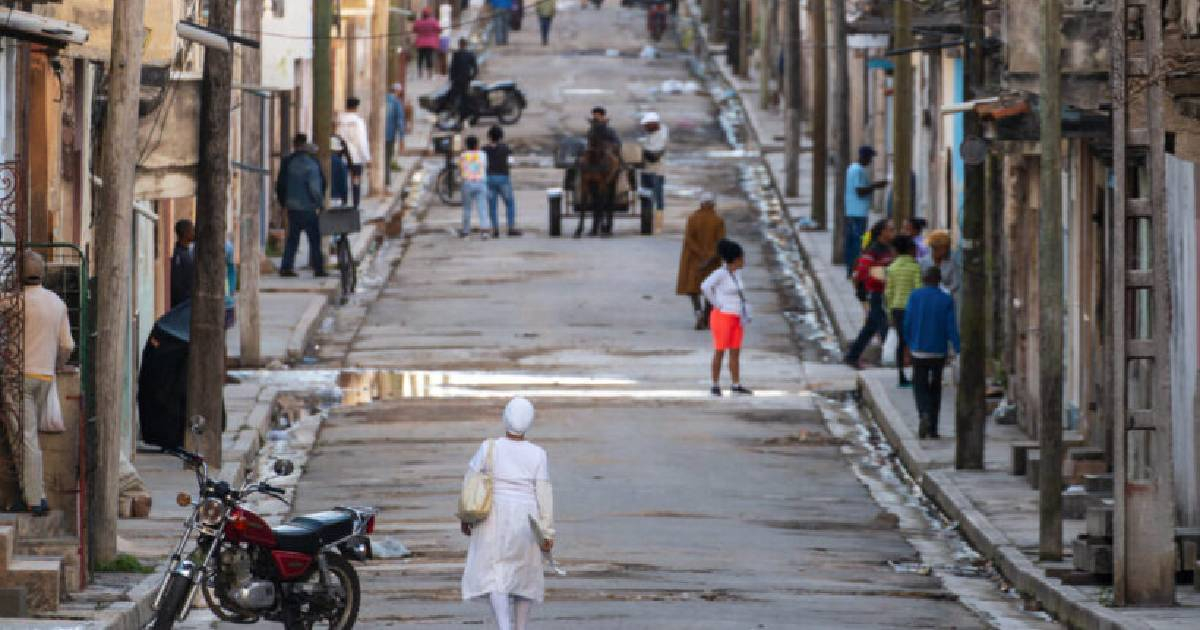
The severe issues plaguing public transportation in Matanzas province have compelled numerous businesses and state entities to alter their work schedules. This change arises from the inability of employees to arrive at their workplaces on time.
The state-run newspaper, Girón, published a piece titled “Working Within Our Means,” explaining that the transportation crisis has led to an informal shift in work hours. Many workers now start their day at nine in the morning and leave early to ensure they can return home.
A commentary from the publication highlighted how the lack of transportation “justifies us arriving late or leaving early,” signaling a breakdown in work discipline amidst fuel shortages and the halted operation of state-run buses.
This transportation shortfall has directly affected productivity and the quality of services. Tasks initially scheduled for completion on a Monday are often delayed to Tuesday or even later in the week.
Several factors contribute to this situation: power outages, water shortages, health issues, missing spare parts, and an economy in perpetual decline.
“Your boss understands,” the provincial media text notes, acknowledging that managers face similar issues: electricity cuts, water scarcity, inadequate transportation, and low wages.
Such understanding has morphed into a collective resignation, with efficiency suffering across all sectors.
The article points out that public service quality declines, work plans are unmet, and the nation enters a cycle where “everyone does what they can, not what they should.”
The result is an unproductive system that penalizes both workers and service users.
Analysts argue that this crisis underscores the government's mismanagement and lack of structural solutions.
The shortage of fuel, poor condition of the vehicle fleet, and lack of planning exacerbate the transportation crisis nationwide, while the Cuban regime fails to offer real alternatives to ease the plight of millions of workers.
The Girón article concludes with a call to “innovate and find ways to adapt,” yet acknowledges that work discipline and motivation are undermined by the extreme living conditions faced by Cubans.
Understanding the Transportation Crisis in Matanzas
Why have work schedules been changed in Matanzas?
Work schedules have been adjusted due to severe public transportation issues, preventing employees from arriving on time.
What are the main causes of the transportation crisis in Matanzas?
The crisis is caused by fuel shortages, the poor condition of buses, lack of spare parts, and insufficient governmental planning.
How does the transportation crisis impact productivity?
Productivity is adversely affected as employees arrive late or leave early, delaying work tasks and reducing service quality.