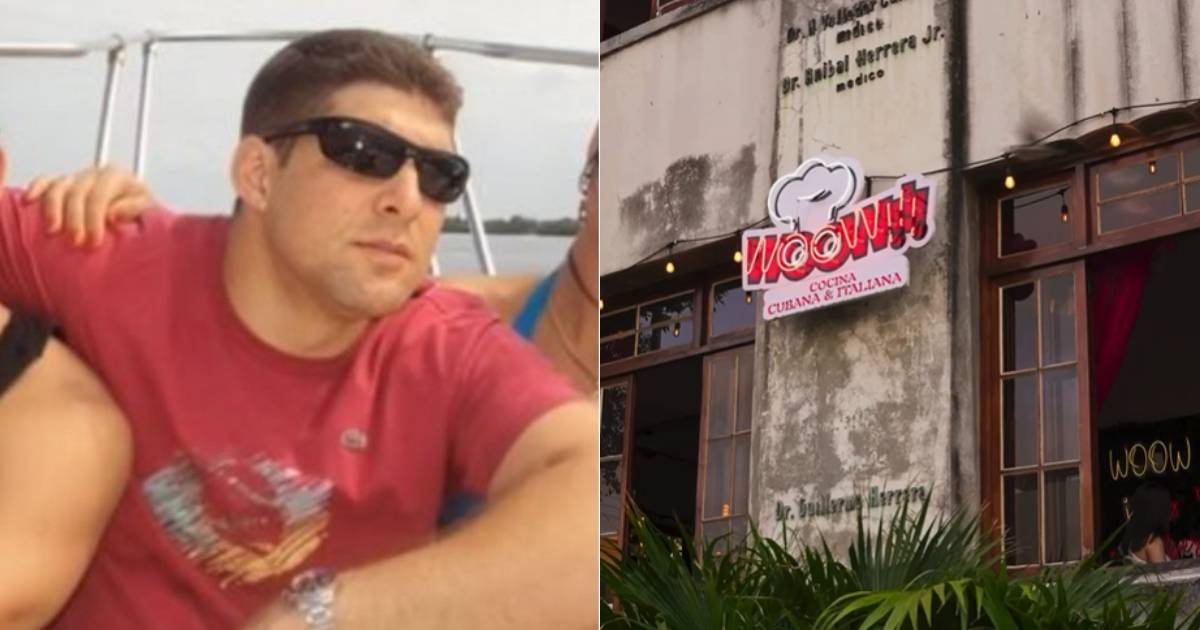
Fresh revelations have emerged following an investigation that exposed the opulent dining ventures of Cristina Lage Codorniú, daughter of former Cuban Vice President Carlos Lage Dávila. The inquiry sheds light on a world of exclusivity and privilege hidden behind closed doors.
Staff from the restaurants associated with Cristina assert that their regular patrons include high-ranking members of Cuba's political and military elite. These VIPs are accompanied by protocols as stringent as they are telling: surveillance cameras must be turned off upon their arrival, ensuring no record of their visits remains.
The allegations were brought to public attention by journalist Mario J. Pentón. He explained that employees of Sensacioones, Woow, and Nao Habana, which are part of the Group Tentacioones SRL owned by Lage Codorniú and her husband Orlando Alain Rodríguez Leyva, describe these patrons as “untouchable clients.”
Among the notable names are the son of Rubén Remigio Ferro, the president of the Supreme People's Court, and Raúl Castro's grandson, known as El Cangrejo. Both are reported to insist on disabling the surveillance system during their visits.
As millions of Cubans continue to endure an immobilized economy, frequent power outages, inadequate wages, and the inability to afford basic necessities like a carton of eggs, this emerging elite indulges in dinners with price tags that rival luxury, all while the city crumbles around them.
Martí Noticias had previously revealed that Group Tentacioones SRL serves as the corporate façade behind restaurants claiming to offer a “world-class culinary experience,” complete with menus priced in dollars—a stark contrast to the everyday struggles faced by the Cuban populace.
The group proclaims on its website that these establishments are the “materialized dream of a family passionate about hospitality,” yet it omits any mention of the proprietors. However, Cristina Lage is tagged in the businesses’ social media profiles.
The report also highlights that the daughter of the former vice president frequently travels to the United States and Europe, allegedly holding a U.S. visa. Her lifestyle reportedly revolves around travel, exclusive business ventures, and a network of contacts that enable her seamless operation within Cuba, according to cited sources.
Both Martí Noticias and other sources note the absence of official information regarding the ownership of these restaurants, a gap attributed to the opacity of the current system. Lage Codorniú has not responded to requests for comments.
This controversy arises while Carlos Lage's legacy remains tainted by his downfall in 2009, following accusations by Raúl Castro of succumbing to the “honey of power.” Meanwhile, as his daughter manages luxurious private enterprises in the heart of Havana, reports of privilege, connections, and clandestine dinners are reigniting the discourse about a new privileged class under the regime’s shadow, in a nation where the majority barely scrape by.
Understanding Cuba's Emerging Elite Dining Scene
Who are the main figures involved in the elite dining controversy in Cuba?
The controversy involves Cristina Lage Codorniú, daughter of former Cuban vice president Carlos Lage Dávila, and her husband Orlando Alain Rodríguez Leyva. High-profile patrons include members of Cuba's political and military elite, such as the son of Rubén Remigio Ferro and Raúl Castro's grandson, known as El Cangrejo.
What measures are reportedly taken when elite individuals visit these restaurants?
According to reports, surveillance cameras in the restaurants are turned off to ensure there is no record of the visits by these elite individuals, maintaining their secrecy and privacy.
How does the elite dining contrast with the average Cuban's experience?
While the Cuban elite enjoy luxurious dining experiences, the average citizen faces a paralyzed economy, frequent power outages, low wages, and struggles to afford basic items, highlighting a significant disparity in lifestyle and privilege.