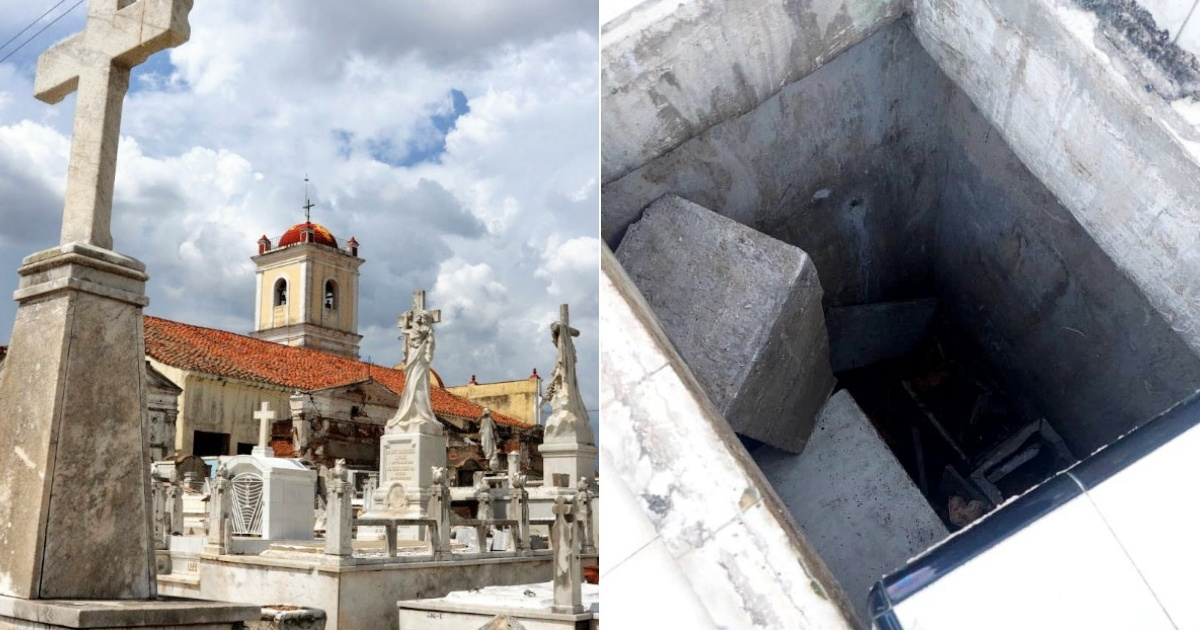
The stark phrase, "Today my family's very humble plot in Camagüey was found empty," marks the beginning of a public outcry by exiled artist and activist Camila Lobón. She has shared a poignant and deeply symbolic narrative: the disappearance of her relatives' remains from the General Cemetery of Camagüey.
As the family arrived to lay another loved one to rest, they were met with a shocking void.
"None of the ossuaries or urns of our deceased were there," Lobón recounted.
The account is not only a testimony to physical desecration but also speaks to the emotional and spiritual wound inflicted on those who still cherish the memories of their ancestors.
The Last Insult: No Rest for the Departed
"I can't even speculate about the reasons for this. It defies any bureaucratic logic or even the most despicable act of theft," remarked the artist.
Among the missing remains were those of her great-uncle, a political prisoner; and her great-grandmother Rosa and great-grand-aunt Mercedes, "the ones who raised us all, the most important and sacred people to our family."
Although Lobón does not adhere to any particular religion, she confessed that in her darkest times, she prayed to her great-grandmother.
The hardest part, she notes, is the impact on the elder family members: "My grandmother and the elders, who need their rituals and attend memorials every year, are devastated."
A Country Without Comfort: "Not Even the Dead Are Left in Peace"
Lobón's narrative also serves as a chronicle of exile, the pain of being far away, and the daily strain on those living abroad trying to support those who stayed behind.
"Every day you wake up to a new tragedy in Cuba. You live in constant anxiety here… with guilt on top of everything," Lobón lamented.
"And one day you wake up to the message that in the country you can't return to, they've discarded the only profound part of you that remained, your dead," she complained.
Lobón concluded her denunciation with justified and dignified anger: "For the memory of my grandmother, they will pay. Not a single one of their offenses will be forgotten. Down with the dictatorship!"
Signs of a National Decline
Lobón's denunciation quickly resonated with dozens of other testimonies. What happened in Camagüey is not, regrettably, an isolated incident.
"A friend went to the Colón cemetery in Havana… the gravediggers confirmed as if it were nothing all the most outrageous practices one thinks can't be true… burying bodies without coffins, one on top of another… blatant robberies… emptying graves and discarding the remains," shared one individual online.
Another recounted a case in Cayo Baríen: "The kids… when the perimeter fence collapsed… discovered some femurs were as hard and good as a bat and started playing rugby with the skulls… like billiard balls."
"My God, how far does the horror in Cuba go"; "It's the most grotesque, sickly, and cruel thing I've seen," lamented two other commentators.
Desecration, Commerce, and Neglect
Some comments suggest possible motivations behind these desecrations.
One user claimed: "They don't just discard them. They're stolen to be sold for religious witchcraft practices. Not even eternal rest is respected anymore."
Others go further: "It seems they're selling the plots… the disaster reaches all spheres."
"It's not only happened as in your case… I also know from relatives that they change and erase the names of the owners to introduce others…," another testimony indicated.
Another account tells of a similar case: "The same thing happened with my family's plot… it was illegally sold to the Ministry of Culture."
Institutionalized Barbarity
The loss of respect for the dead is seen as a sign of a broader collapse: "I've said it's not just a crisis… it's the systematic failure of a model of civilization… nothing guarantees that when this transition ends, society won't reproduce this terrible thing."
"In a country so desacralized… the looting of mortal remains could simply be understood as an expression of indifference for the dead. But I think it speaks to a deeper indifference for life…," noted another internet user.
"You can't even call it hell; at least there they keep their dead"; "Neither forget nor forgive"; "It's devastating and exhausting… they've taken even our dead from us"; "We can neither die nor rest in peace in our land anymore," were other opinions shared.
The Right to Memory
This is not just a case of grave desecration. It is an affront to memory, a reflection of the total degradation of a nation that has lost respect for both life and death.
And it is, above all, a warning of what happens when a society decays to the point of emptying even its own cemeteries.
As one internet user wrote: "Nothing more devastating than a people from whom even their dead have been stolen."
Reoccurring Pattern: Cemetery Looting and Desecration Across the Island
The horror reported by Camila Lobón is not an isolated case but part of a growing phenomenon affecting cemeteries in various provinces of Cuba.
At the General Cemetery of Camagüey, for instance, there have been reports of open graves, destroyed vaults, stagnant water, overgrown weeds, and general neglect; a scene of such critical deterioration that some mausoleums appear without lids and with debris, as reports of looting multiply.
In other areas of the country, such as the province of Las Tunas, there have also been severe desecrations reported: at the Vicente García Cemetery, families visiting graves found remains scattered on the ground, with funeral urns stolen.
The same is happening in cemeteries of other provinces, where there are reports of forced niches, disappearance of remains, and theft of funeral objects or even body parts.
The consequences are not only patrimonial but deeply human and cultural: tearing away the identity, history, and memory of entire families, many of whom live far away, in exile or as emigrants.
Cemeteries, conceived as sacred spaces of respect—where future generations come to honor their dead—have become scenes of neglect, looting, and desecration.
Frequently Asked Questions About Cemetery Desecration in Cuba
What happened to Camila Lobón's family cemetery plot in Camagüey?
Camila Lobón reported that her family's burial plot in Camagüey was found empty, with the remains of her relatives missing. This discovery was made when the family went to bury another relative.
Why are graves being desecrated in Cuba?
There are various speculated reasons for the desecration of graves in Cuba, including the theft of remains for use in religious practices and the illegal sale of cemetery plots. This reflects broader issues of neglect and systemic collapse in the country.
How widespread is the issue of cemetery desecration in Cuba?
Cemetery desecration is a growing problem across various provinces in Cuba, with reports of open graves, stolen remains, and neglected cemetery conditions in places like Camagüey and Las Tunas.