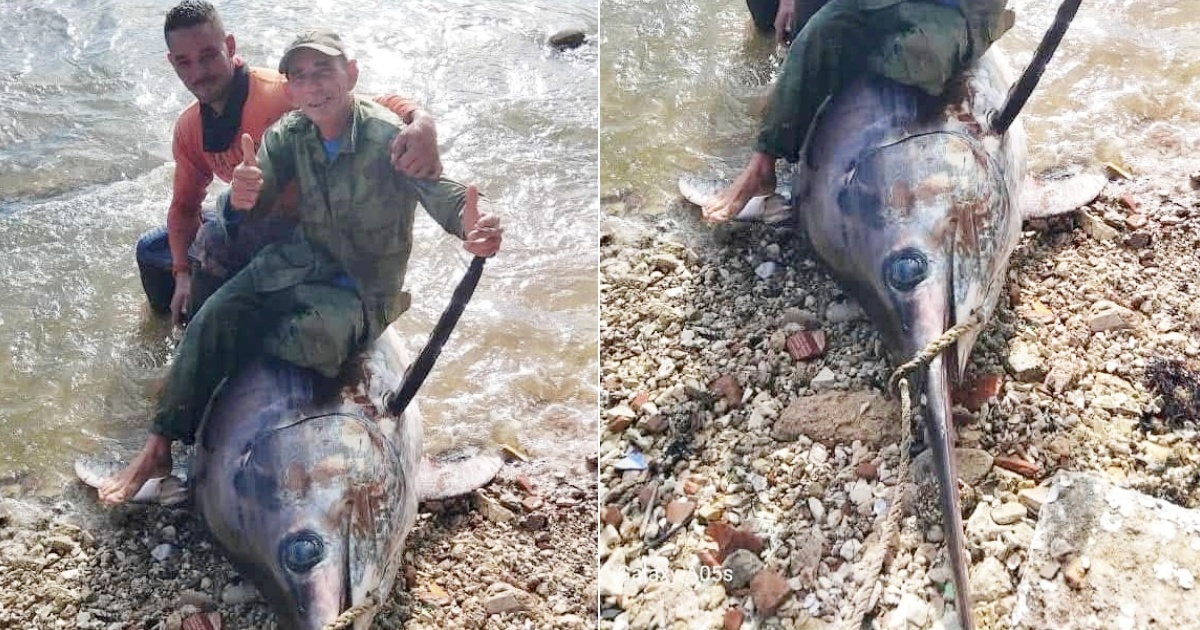
Social media is abuzz with excitement following an extraordinary catch: Cuban fishermen have reeled in a massive 525-pound swordfish off the coast of Gibara, Holguín.
This remarkable feat, celebrated by hundreds of Facebook users, not only highlights the skill and endurance of these seafarers but also underscores a fishing tradition that persists in many of Cuba's coastal communities despite ongoing hardships.
Majestic Catch in Northern Holguín
The news portal Cuba en Miami shared the achievement with a simple congratulatory message: "Congratulations, friends, great catch: 525 pounds in Holguín, Cuba."
Though specific details about the fishing technique or the duration of the endeavor were not disclosed, comments suggest it was an artisanal effort carried out under modest conditions.
The sheer size of the swordfish, locally known as "emperador," left many in awe, with some expressing skepticism about the existence of such large fish in Cuban waters today.
Numerous users from Holguín confirmed the catch's location, flooding the post with expressions of surprise, joy, and pride.
Amidst the congratulations, some highlighted the potential risks of such a catch given Cuba's current context. Jokes circulated about the possibility of authorities seizing the fish.
"Illegal hoarding and fishing. Seized. Hahaha," quipped one user with laughter.
This catch is not just a one-time triumph; it symbolizes the resilience and creativity of those who rely on the sea for their livelihood in Cuba.
In a challenging economic environment with limited resources, fishermen from places like Gibara continue to achieve astounding feats that captivate, unite, and delight.
The Ocean's Irony: Scarcity in an Island Nation
Despite being surrounded by ocean, Cuba has seen a significant decline in fish consumption due to limited availability in markets and steep prices.
For many Cubans, obtaining seafood such as snapper, bonito, or swordfish is a luxury reserved for special occasions or those with direct connections to fishermen.
This irony is frequently pointed out by citizens wondering why it's so difficult to get fish on the table while living in an island nation.
Government restrictions, the deterioration of the state fishing fleet, and the lack of proper equipment for artisanal fishing have compounded the issue.
Nonetheless, the fishing culture endures in many coastal areas where entire families rely on the sea for survival and to nourish their communities.
Catches like the one in Gibara not only stand out due to their size but also offer a glimpse into a practice that is increasingly constrained, yet fights to persist amidst the crisis.
The Struggles of Cuban Fishing Communities
Why is fish consumption declining in Cuba?
Fish consumption in Cuba has decreased due to the limited availability in markets and high prices, despite the country being surrounded by ocean.
What challenges do Cuban fishermen face?
Cuban fishermen face numerous challenges, including government restrictions, a deteriorating state fishing fleet, and inadequate equipment for artisanal fishing.
How does the capture of the 525-pound swordfish symbolize resilience?
The capture represents resilience as it showcases the ability of Cuban fishermen to continue achieving remarkable feats despite economic difficulties and limited resources.