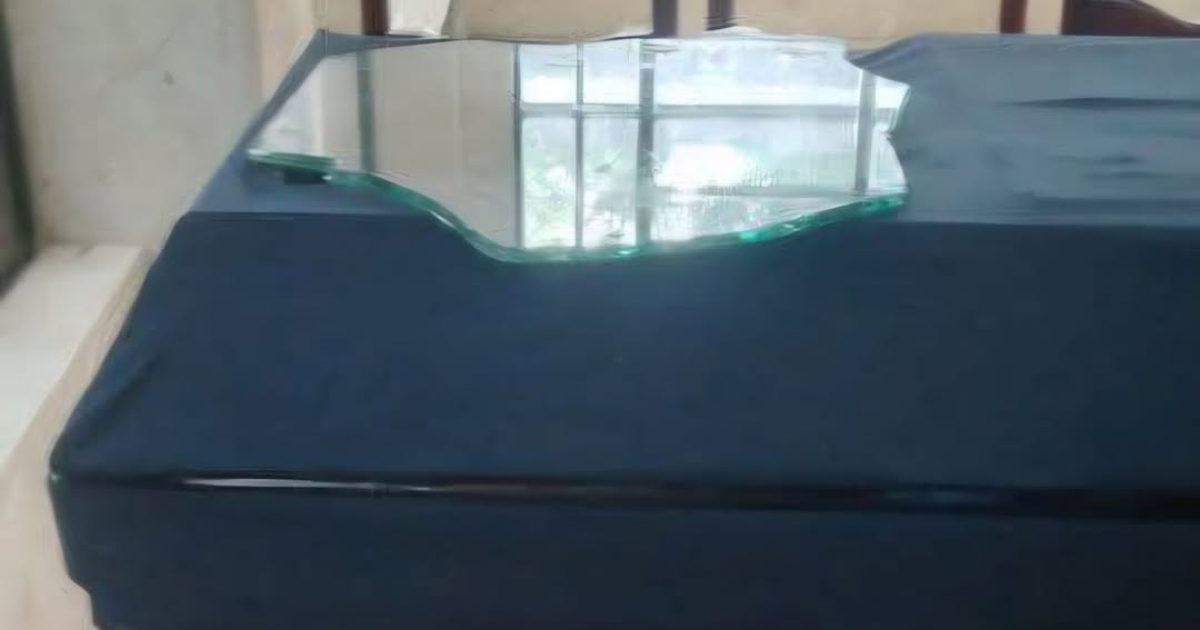
An image shared on Facebook depicts a coffin draped in a dark cloth with a broken glass haphazardly placed at a funeral home in Guantánamo. Activist Irma Lidia Broek raised the issue, criticizing the disrespect shown towards the deceased and their families.
"Look at the glass they used for this 'coffin' (if you can even call it that) so families could mourn their loved ones in Guantánamo. The level of disrespect is so enormous that it's almost insurmountable. How much longer, Cuba?" she wrote.
Independent journalist Yosmany Mayeta Labrada echoed the complaint on his Facebook profile, highlighting that the image "exposes the brutality of the crisis engulfing the country," and it underscores "the institutional disregard for human dignity, even in death."
The Everyday Indignity
Among the hundreds of comments on both posts, many users recounted similar experiences in funeral homes across different provinces, corroborating the widespread deterioration of Cuba's funeral system. One individual shared that when their father passed away, the coffin's glass broke, and the Alamar funeral home refused to replace it, forcing them to salvage glass from a window to proceed with the vigil. Another user recalled their grandfather waiting over six hours for a coffin in Bayamo, only to find no cement or water available to seal the grave upon reaching the cemetery.
Reports also mention funeral homes where glass is reused among several bodies, coffins that require hammering nails to stay together, or caskets made from recycled materials. In numerous instances, mourners describe the added pain of witnessing these conditions during a time of grief. One online commenter noted that in Cuba, "there's neither shame nor respect for the people, and certainly not from the government," while another summed up the sentiment: "Neither the living nor the dead have dignity." Another woman shared that her mother was laid to rest "without glass because the only piece available was being rotated between different coffins."
Some recounted how workers hammer the lids shut with large nails carelessly, or families have to supply their own materials. "My husband died in Holguín, and they didn't provide any glass; the coffin was so poorly made that blood was visible," lamented one grieving individual. These comments highlight not only the scarcity of resources but also the erosion of empathy and respect during moments of sorrow.
Systemic Failure and State Neglect
Recent complaints from various provinces affirm that these are not isolated incidents but evidence of a systemic collapse of the funeral industry. In Holguín, a family waited over 15 hours for a deceased elderly woman's body to be collected, leading to neighborhood protests when relatives placed the corpse at the residence's entrance. In Villa Clara, the shortage and poor quality of coffins delay burials, while in Camagüey, a single operational hearse serves the entire city, causing prolonged waits for bodies in hospitals and morgues. In Contramaestre, Santiago de Cuba, a veteran's family reported that his burial occurred without state support or official honors.
In other regions, the lack of materials and staff has sparked scenes of desperation and protests, according to various reports on the crumbling funeral services. Conditions in cemeteries also reflect the decay: graves without cement, lack of water for mixing, and insufficient grave diggers. Many funeral homes lack lighting, flowers, or ventilation, and coffins are often makeshift, constructed from low-quality materials or even cardboard.
The Added Pain of Indignity
Accounts consistently convey a sense of collective humiliation and exhaustion. One user summarized that "not even death is dignified anymore," while another expressed that "in this country, there's abandonment of the living; what can be expected for the dead?" For many, the scene of the coffin with broken glass is a visible symptom of a deeper crisis, where material scarcity is compounded by human neglect.
The situation in Guantánamo, as in other provinces, illustrates how death in Cuba has become an experience marred by scarcity, waiting, and disrespect. What should be a moment of reflection and farewell becomes, for many families, a final test of endurance against a system that no longer ensures even the right to die with dignity.
Understanding Cuba's Funeral Crisis
What sparked outrage over the funeral system in Guantánamo?
A Facebook image showing a coffin with a broken glass cover at a funeral home in Guantánamo sparked outrage, highlighting the disrespect towards the deceased and their families.
How have citizens described the funeral system's condition in Cuba?
Citizens report widespread deterioration, with accounts of broken coffins, reused materials, and lack of basic resources, reflecting a systemic collapse of the funeral industry.
Why is the funeral system in Cuba considered to be in crisis?
The crisis is due to systemic neglect, scarcity of materials, insufficient staff, and a lack of government support, resulting in disrespectful and inadequate funeral services.