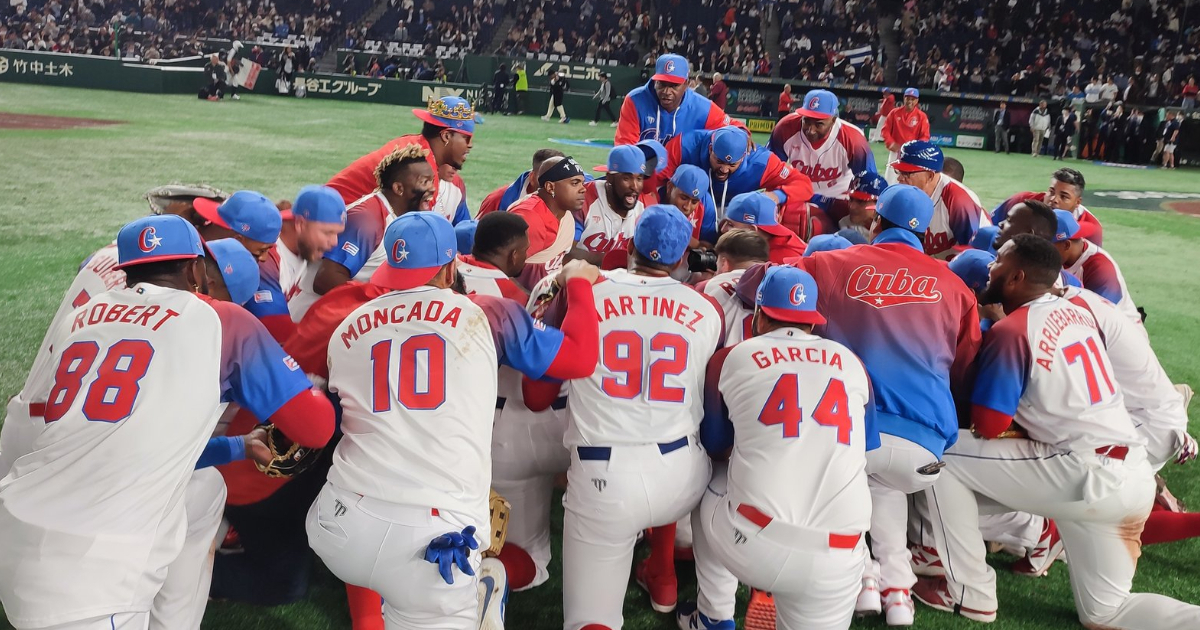
Cuba's participation in the 2026 World Baseball Classic appears to be nearly certain, with the crucial authorization from the United States' Office of Foreign Assets Control (OFAC) seemingly in place. This approval is essential for the Cuban team to compete in an event organized by entities under U.S. jurisdiction.
According to various sources, journalist Francys Romero reported on Facebook that the country is finalizing the remaining formalities. The Cuban Baseball Federation has recently submitted a preliminary roster of 50 players, featuring several Major League Baseball stars like Andy Pagés, Andy Ibáñez, Yoan Moncada, Yariel Rodríguez—whose inclusion raises eyebrows—along with Daysbel Hernández and Lázaro Estrada.
Inclusion of MLB Players and Government Restrictions
The presence of active MLB players underscores the continuation of the controlled opening process that began with the 2023 Classic, albeit under strict government oversight. However, despite the apparent institutional go-ahead, the government maintains clear boundaries regarding who can join the "Team Cuba."
Romero confirmed that Cuban-American players, such as the talented Los Angeles Angels' shortstop Zach Neto, were denied permission from high-level political figures to be part of the team. This political exclusion highlights that, although Havana has been forced to ease its stance with the sports diaspora, it continues to block athletes born or developed in the United States who could enhance the team's competitive edge. Essentially, the squad remains a project managed not only from athletic criteria but also from ideological control.
Promising Roster Hindered by Political Decisions
The inclusion of MLB players could make this one of the most talented Cuban teams presented at a World Classic in the past decade. Nevertheless, the inability to incorporate Cuban-American figures who have expressed a willingness to represent Cuba is a barrier to the team's true potential.
Meanwhile, sports authorities are working to complete all formal requirements, historically a pivotal bureaucratic step for Cuban delegations participating in U.S.-managed sporting events.
On the Road to the 2026 Classic
With the green light practically secured and a preliminary roster combining established figures and young talents, Cuba is on track to compete in the 2026 World Baseball Classic. However, they will do so once again with a team shaped by decisions that go beyond sports.
The lingering question is whether the team can aim for a historic outcome despite the self-imposed limitations by the government itself.
Key Considerations for Cuba's World Baseball Classic Participation
Why is OFAC authorization important for Cuba's participation in the World Baseball Classic?
OFAC authorization is crucial because the event is organized by entities under U.S. jurisdiction, and without this approval, Cuba would be unable to compete.
What is the impact of excluding Cuban-American players from Team Cuba?
Excluding Cuban-American players limits the team's potential, as these athletes could significantly enhance the competitive strength of the team.
How does the inclusion of MLB players affect the dynamics of Team Cuba?
The inclusion of MLB players brings a higher level of talent and experience, potentially making Team Cuba one of the most skilled teams in recent years.