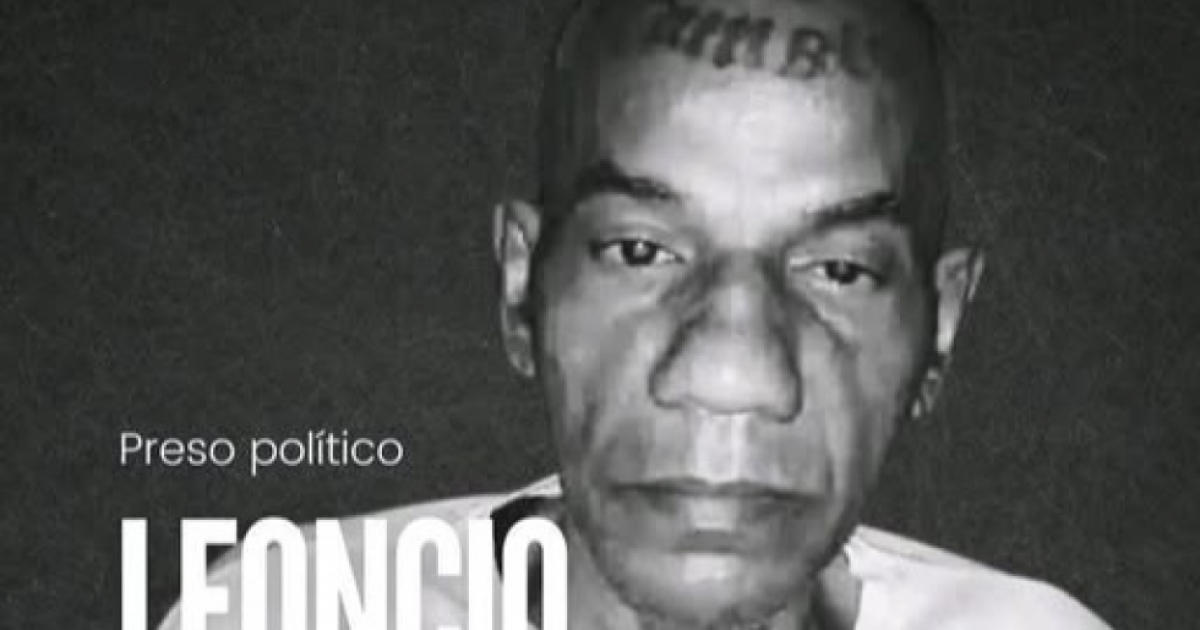
Leoncio Rodríguez Ponce, a Cuban political prisoner who has been incarcerated for 37 years, is now in grave danger after initiating a hunger strike on December 1st.
The organization Cubalex reported on Facebook that Rodríguez Ponce was moved to an isolation cell at the Holguín Provincial Prison under orders from the head of Internal Order, as a punishment for his peaceful protest.
At 60 years old, Rodríguez Ponce began his hunger strike in solidarity with Yosvany Rosell García, who previously engaged in the same protest for 40 days.
His health has deteriorated to a critical state, suffering from hypertension, ulcers, severe malnutrition, kidney issues, and rheumatism, conditions that make him extremely vulnerable during a hunger strike.
However, prison authorities have consistently denied him the medical care he desperately needs, prolonging his suffering and heightening the risk of fatal outcomes.
Cubalex has revealed that Rodríguez Ponce, imprisoned since 1988, has endured a persistent pattern of abuse: beatings, threats, arbitrary transfers between various prisons, denial of benefits, and fabricated criminal charges.
Currently, he is kept far from his family in Guantánamo, making visits and vital support nearly impossible.
Throughout his prolonged incarceration, Rodríguez Ponce has been moved through prisons in Boniato, Kilo 8, Villa Clara, Combinado del Este, and Pinar del Río, with Holguín being his most recent location.
While in Boniato, he was beaten, prompting him to tattoo the word "change" on his forehead as an act of defiance. In response, State Security offered him parole if he removed it, an offer he refused, resulting in further reprisals.
Rodríguez Ponce's case is not isolated; it highlights the systematic treatment of political prisoners in Cuba, where neglect and inhumane prison conditions are used as tools of repression.
Organizations like Cubalex demand the regime ensure Rodríguez Ponce's life and health, as well as respect for his fundamental rights.
The political prisoner has also publicly criticized, in letters to the European Union, the hypocrisy of international bodies that denounce the U.S. embargo but fail to pressure the Cuban government over human rights violations on the island.
Rodríguez Ponce has directly challenged the lack of consistency in European policy and the minimal attention given to the plight of political prisoners in Cuba, showing that his fight extends beyond the prison walls.
The situation of Leoncio Rodríguez Ponce demands urgent attention and serves as a stark warning about the extreme conditions faced by dissidents in Cuba.
The international community, human rights organizations, and citizens play a crucial role in bringing visibility to his case and urging the Cuban regime to cease its reprisals and ensure the life and dignity of political prisoners.
Key Questions About Cuban Political Prisoners
What is the current health condition of Leoncio Rodríguez Ponce?
Leoncio Rodríguez Ponce is in a critical health condition, suffering from hypertension, ulcers, severe malnutrition, kidney problems, and rheumatism, making him extremely vulnerable during a hunger strike.
How has the Cuban regime responded to his hunger strike?
The Cuban regime has responded by placing Rodríguez Ponce in an isolation cell and consistently denying him the medical care he requires, thereby increasing the risk of fatal consequences.
What actions have human rights organizations taken regarding Rodríguez Ponce's situation?
Human rights organizations like Cubalex have been vocal in demanding that the Cuban regime ensure Rodríguez Ponce's life and health, as well as respect his fundamental rights.