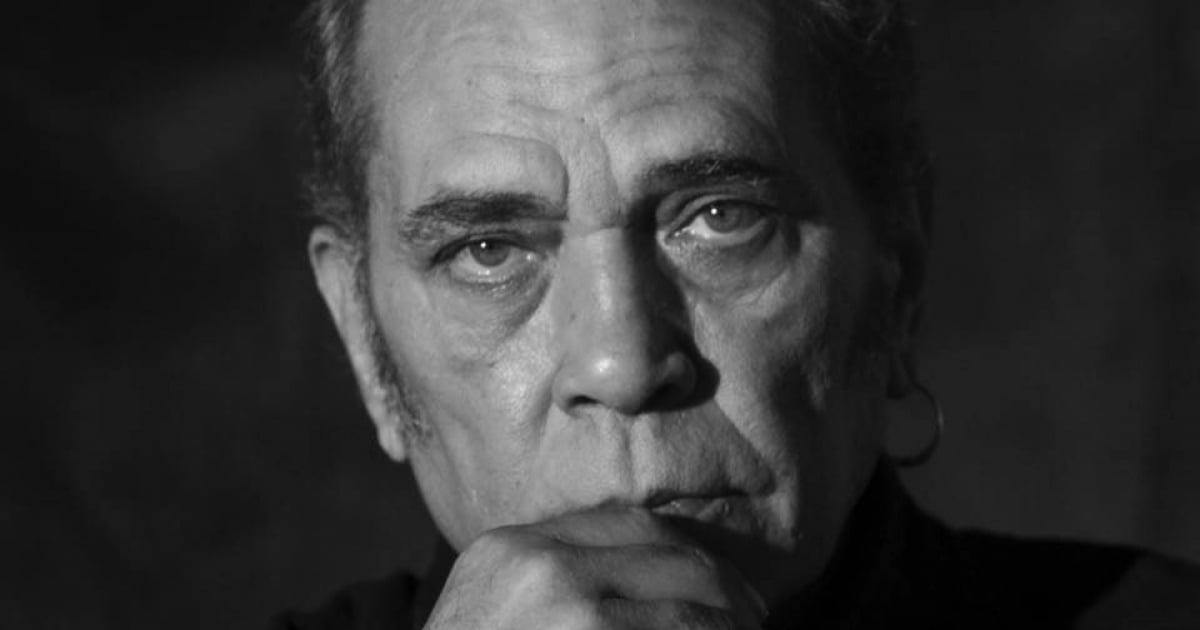
Cuban actor Luis Alberto García Novoa has once again stirred social media with a powerful message condemning the government's manipulation of information and lack of transparency, particularly in handling crises like the recent power outage that affected the western part of the country.
His critique resonated with hundreds of users who, like him, experience the direct consequences of official misinformation.
The Frustration with Official Narratives
In his post, García expresses his daily frustration with what he describes as an "onslaught of triumphalism and half-truths or blatant lies" shamelessly broadcast by state media. According to him, the official narrative attempts to portray the country as a model of efficiency, while in reality, the population suffers from failures, delays, and negligence.
This contrast leads him to a bitterly ironic conclusion that Cubans are "not truly the masters of our destiny and don't hold the power."
Power Outage and Deception of NTV
The actor's patience snapped with a headline on the Television News which claimed that electrical service was restored by noon after a general disconnection at 4:55 am. García debunked the official version with a personal example: in his Playa neighborhood, electricity returned eight hours later than announced, precisely at 8:00 pm.
"They are not serious. What do they gain from this? Can't they be transparent? Are the news fabricated for the international public opinion or for compatriots living far away who have no way to verify its truthfulness?" García questioned, highlighting the ease with which the government could have stated that "NOT ALL AREAS AND NEIGHBORHOODS received service simultaneously!"
Furthermore, the government has yet to provide a detailed explanation of what exactly caused the disconnection in the western part of the country. García emphasized that as citizens, it's their right to know, and it's the duty of those in charge to tell the story.
Demand for Honesty and Clarity
García questions why the government prefers to sugarcoat reality instead of explaining the problem's magnitude and its causes clearly. He stresses that it would have been sufficient to say that not all areas were restored at the same time, but even this basic level of precision and respect is denied to the public.
Moreover, no clear explanation has been provided about what triggered the disconnection in the western part of the country. "It is our right as citizens to know, and it is the obligation of those who lead to tell the story," he reiterated.
An Outdated Information Model
With a straightforward and uncompromising tone, García warns that "ideology cannot stand firm with evasions and half-truths" and that eventually, "the makeup will crack." His criticism goes beyond the specific case of the blackout, suggesting that he might address issues like arbovirus statistics and fatalities, implying that official information in those areas is also incomplete or distorted.
Perhaps the most significant blow to the government's narrative comes when García reminds us that "the era of newspapers, radio, and television as the sole truth-tellers is over." Today, he notes, nearly every citizen has a device that functions as a camera and microphone—a tool for documenting, denouncing, and contrasting what was once dictated from above.
"I Want Substance"
The publication concludes with a phrase echoing the sentiments of thousands of Cubans: "I want substance." It is a direct call for truth, public responsibility, and the end of a communication system that underestimates the population and relies on half-truths to maintain a worn-out narrative.
With this denunciation, Luis Alberto García once again positions himself as a central voice among the critics who, from art and citizenship, demand something as basic as respect, clarity, and coherence from the Cuban government. His message not only reveals a personal discontent but also the collective exhaustion of a country that no longer accepts half-baked explanations or manipulated headlines.
Understanding the Impact of Government Misinformation in Cuba
Why is Luis Alberto García critical of the Cuban government's handling of power outages?
Luis Alberto García criticizes the Cuban government for manipulating information and lacking transparency, particularly during crises like power outages. He highlights the government's tendency to present an overly positive narrative that ignores the real issues faced by citizens.
How did García prove the government's narrative about the power outage was false?
García provided a personal example from his neighborhood in Playa, where electricity returned eight hours later than the government claimed. This evidence directly contradicted the official narrative that service was restored by noon.