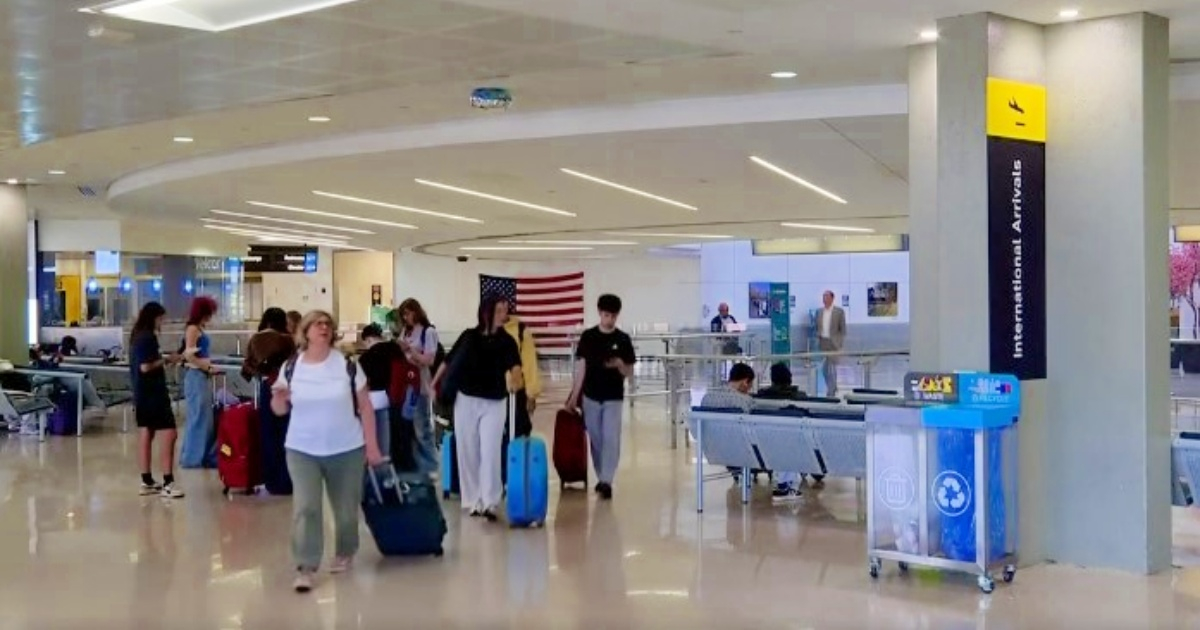
The Trump administration is contemplating a significant expansion of travel restrictions, potentially affecting citizens from as many as 30 to 32 countries. This proposal, put forth by Secretary of Homeland Security Kristi Noem, is part of a renewed effort to tighten immigration controls.
Many view this proposal as drastic and politically motivated, emerging after a violent incident that reignited debates surrounding the immigration system.
The catalyst was a recent shooting in Washington D.C., where Rahmanullah Lakanwal, an Afghan immigrant, shot two National Guard members, resulting in one fatality. Lakanwal had been resettled in the U.S. after aiding American troops in Afghanistan. Although his asylum application was approved during the Trump administration, the resettlement occurred under President Biden's leadership.
Republican factions have used this case to criticize what they perceive as the current immigration system's leniency. They argue the crime highlights security screening failures and serves as justification for a major expansion of the existing travel ban.
Expanding the Travel Ban: Political Implications
In response, Secretary Noem urged former President Trump to take decisive action, stating on her X account, "I recommend a total travel ban on countries flooding our nation with murderers, leeches, and rights addicts." She further emphasized, "Our forefathers built this nation with blood, sweat, and an unwavering love of freedom—not for foreign invaders to massacre our heroes. WE DON'T WANT THEM. NOT A SINGLE ONE."
This rhetoric continues the nationalistic and restrictive tone characteristic of Trump's first term.
Current and Potentially Affected Countries
The United States currently imposes full or partial entry restrictions on citizens from 19 countries, as outlined in Presidential Proclamation 10949 dated June 4, 2025. Noem's recommendation seeks to increase this number to between 30 and 32 countries, though the full list remains undisclosed.
According to sources cited by CNN, the measure is not merely reactive to the recent crime but is part of a broader reevaluation of the immigration system: "The list could expand based on ongoing assessments, but it remains unclear which countries will be added or when announcements will be made," the outlet reported.
A Department of Homeland Security (DHS) spokesperson confirmed, "We will announce the list soon."
Current Restrictions and Justifications
The present list differentiates between countries with total and partial entry restrictions:
Total restriction (12 countries): Afghanistan, Myanmar, Chad, Republic of the Congo, Equatorial Guinea, Eritrea, Haiti, Iran, Libya, Somalia, Sudan, and Yemen.
Partial restriction (7 countries): Burundi, Cuba, Laos, Sierra Leone, Togo, Turkmenistan, and Venezuela.
Restrictions vary by country. In particular cases, such as Cuba and Venezuela, exemptions apply if an applicant holds dual nationality or specific diplomatic visas (e.g., A-1 or G-4).
Official justifications for including these countries center on alleged security issues, international cooperation deficits, and identification documentation problems. The U.S. government considers Cuba a "state sponsor of terrorism," claiming that Havana refuses to accept deported citizens or share police information with the U.S.
Venezuela faces accusations of lacking a "central authority" capable of issuing reliable civil documents and having a high visa overstay rate (9.83% for B-1/B-2 visas).
Immediate Actions and Historical Context
Beyond the proposed expansion, immediate actions have been announced by immigration agencies. The U.S. Citizenship and Immigration Services (USCIS) has halted all immigration applications from the 19 currently restricted countries, and green cards already issued to citizens from these nations are under review.
USCIS Director Joe Edlow stated that updated guidelines would allow certain national factors to be considered as "significant negative" elements. "We will pause all asylum decisions until we can ensure that each foreign national is vetted and scrutinized to the fullest extent possible," Edlow declared.
The DHS also confirmed it is reviewing all asylum cases approved under the Biden administration in an effort to further tighten immigration assessment criteria.
Previously, in 2017, Trump implemented a travel ban known as the "Muslim Ban," initially affecting seven predominantly Muslim countries and expanded during his term. Despite harsh criticism and numerous legal challenges, the Supreme Court partially upheld it.
However, the current rhetoric and proposed expansion suggest an even more radical approach. Noem and Trump have not concealed their intentions. The former president has even threatened to "permanently pause" immigration from what he termed "Third World countries," without specifying which would be included.
If this new expansion is approved, millions of people from at least a dozen additional countries could see their access to the U.S. blocked, affecting tourism, family reunification, and asylum applications. Although the complete list is unknown, the proposal has raised alarms among human rights advocates and immigrant communities.
What began as a reaction to an individual crime could become one of the broadest and most severe immigration restrictions in recent U.S. history, with significant diplomatic and humanitarian consequences.
Understanding the Proposed U.S. Travel Ban Expansion
What is the proposed U.S. travel ban about?
The proposed U.S. travel ban aims to expand the current list of countries with entry restrictions from 19 to potentially 30 or more, focusing on tightening immigration controls in response to security concerns.
Who is behind the travel ban proposal?
The proposal was suggested by Kristi Noem, Secretary of Homeland Security, and supported by former President Donald Trump, as part of efforts to enhance immigration control measures.
Which countries are currently under U.S. travel restrictions?
Currently, the U.S. has full or partial entry restrictions on 19 countries, including Afghanistan, Myanmar, Chad, Cuba, and Venezuela, among others, based on security and cooperation concerns.
How might the travel ban impact international relations?
If implemented, the travel ban could strain diplomatic relations and pose humanitarian challenges by blocking access for millions of people seeking to travel, reunite with family, or seek asylum in the U.S.