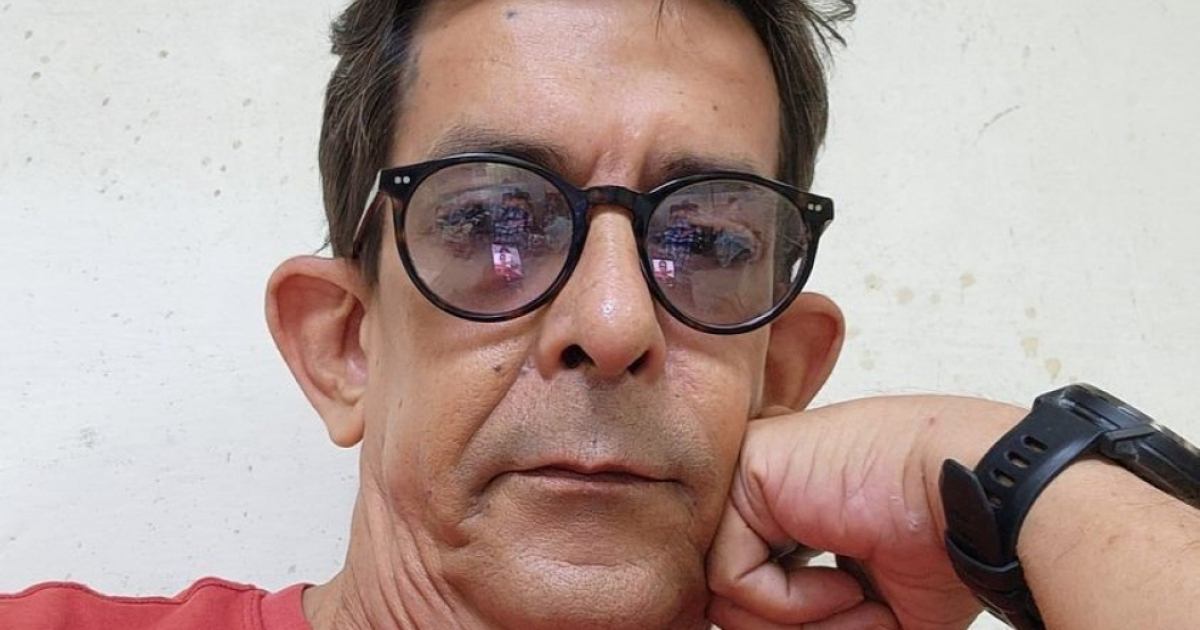
The Cuban comedian Ulises Toirac has once again delivered a sharp critique of the nation's political landscape, questioning the absence of room for dissent and the persistence of a system that quashes diversity and clings to power with rhetoric increasingly detached from the everyday experiences of its citizens.
In a thought-provoking post on Facebook, Toirac declared that "not dissenting is what's abnormal," emphasizing that human life is built on agreements, disagreements, and personal experiences, rather than mere adherence to external directives.
For Toirac, individualism cannot coexist with any system that seeks to replicate ideas and eliminate the variety of viewpoints, a characteristic he sees as ingrained in the Cuban political model.
While reflecting on the origins and development of revolutionary movements, the artist noted that every revolution is born from a social force and imposes itself through power.
However, he cautioned that once in power, these movements lose their transformative nature and, in their quest to endure, turn dissent into a perpetual adversary.
"Revolutions are not eternal movements. They change a status quo and falter as they gain power. There is no revolution in a power that seeks perpetuation. Forget the tango," he emphasized.
Toirac argued that the Cuban government constructs defensive mechanisms that become more sophisticated over time, creating structures that simulate democracy while retaining firm political control.
The comedian explained that the initial polarization typical of major social conflicts dissipates over the years, yet the government's stance towards dissent remains unchanged: any questioning continues to be treated as a threat, even when it comes in moderate or constructive forms.
This, he asserted, leads the state to stifle plurality, an essential component for the development of any human endeavor.
In his most direct critique of the government's rhetoric, Toirac admitted he read with "astonishment" official statements portraying Cuba as "a military, medical, and economic power on the rise," something he deemed absurd, especially when the country hasn't even managed to achieve stable electrification.
He was emphatic in pointing out that those who uphold such narratives don't drive real solutions because they fail to recognize the urgent need for change.
In his view, these are official profiles designed to be showcased as models of patriotism, untouchable figures that the system protects and elevates, while suppressing or discrediting any divergent stance.
His reflection, filled with historical references and philosophical concepts, concluded with a central idea: without plurality, without contradictions, without debate, and without the freedom to dissent, no social project is viable.
Amidst a Cuba engulfed in constant blackouts, economic decline, and growing public frustration, Toirac's post once again highlights, through words and critical thinking, the limitations of a system that refuses to reform.
Key Insights on Cuba's Political Climate
What is Ulises Toirac's main criticism of the Cuban government?
Ulises Toirac criticizes the Cuban government for its lack of openness to dissent and its persistence in maintaining a system that suppresses diversity and clings to power through outdated rhetoric.
How does Toirac view the relationship between revolution and power?
Toirac believes that revolutions lose their transformative nature once they gain power, as they often seek to perpetuate themselves and view dissent as an ongoing threat.
Why does Toirac consider the government's portrayal of Cuba as a power to be absurd?
Toirac finds it absurd because despite these claims, Cuba struggles with basic issues like achieving stable electrification, which contradicts the image of being a rising power.