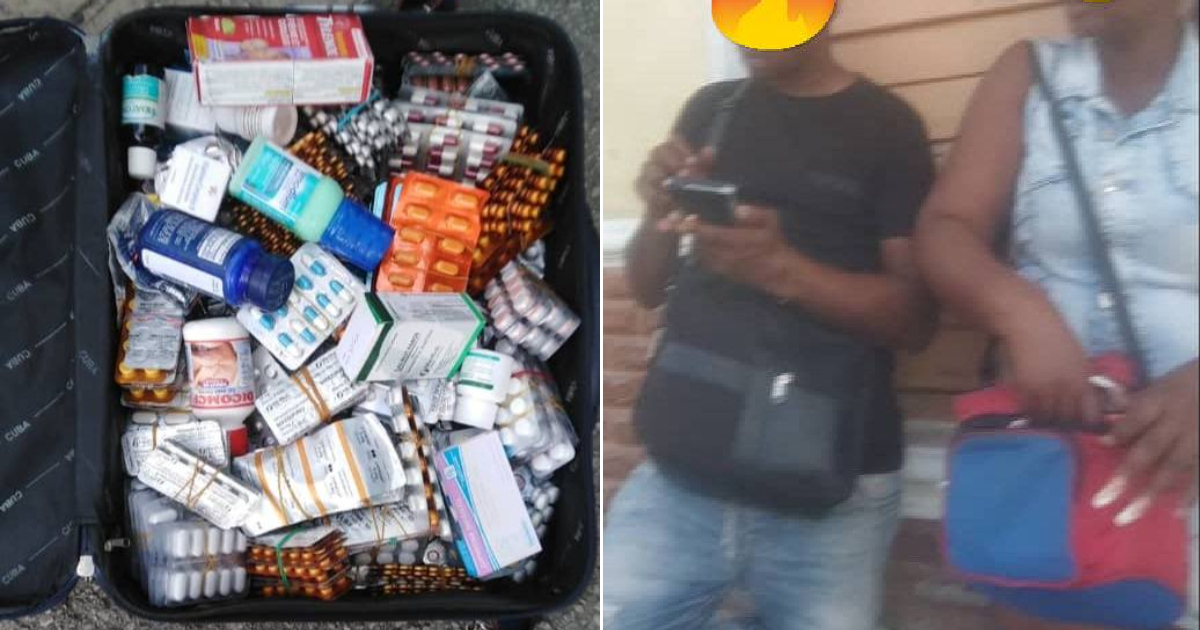
In a recent police operation in Centro Habana, authorities apprehended seven individuals allegedly involved in the illegal sale of medications in a busy area of Cuba's capital, according to a source linked to the Ministry of the Interior (Minint).
The Facebook profile "El Cubano Fiel" reported that plainclothes officers executed a raid on Tuesday at El Curita Park and its vicinity, leading to the arrest of six women and one man who were carrying bags filled with boxes, blister packs, bottles, and tubes of various pharmaceuticals.
Unnamed sources cited by the profile claimed that the group was selling controlled medicines—some with effects akin to drugs—mostly domestically produced.
Witnesses reportedly saw several plainclothes officers arrive, who seemed to have already identified the resellers and went straight to them. The officers confiscated the medications, including carbamazepine, used to treat mental health disorders, and took the suspects into custody.
The post concluded with a controversial reflection that sparked strong reactions from users. "Sometimes we wonder, why arrest them if it's our only option to acquire the medications we need?" questioned El Cubano Fiel. "But we fail to consider that most medications these people resell are produced nationally and are taken from the few supplies that reach pharmacies and are diverted under the table."
Several individuals argued that the black market has become the sole option due to the persistent lack of medicines in state pharmacies, while criticizing the government's ineffectiveness in ensuring the supply of basic drugs, forcing patients and families to rely on resellers who offer them at often prohibitive costs.
Critics also questioned the authorities for failing to control the state sale of medications and ignoring—or even being complicit in—their "diversion" and illicit sale by pharmacy heads and employees to resellers, who hoard them before the public can buy them.
"Here in Puerto Padre, we hardly see any national production medicines in pharmacies, except for a few occasionally, so there needs to be an investigation into their origin, the root of the problem," warned a resident in Las Tunas.
"Once the state does things right, the resellers will vanish," assured another woman, acknowledging, "Perhaps it's the only way we have to find the medication for our relatives."
"Exactly, those nationally produced medications come from pharmacies, that's why when I go to buy them there's never any, just like everyone else," lamented a third person.
"And now where the hell do I buy my blood pressure pills if the pharmacy never has them?" protested another woman from Havana.
The day before, the police reported a similar operation in Morón, Ciego de Ávila, which also unleashed numerous reactions of outrage on social media. Users condemned the action, noting it only targets the consequences of a recurring problem in the country without addressing its root causes: the chronic shortage of medications.
Mid-year, Health Minister José Ángel Portal Miranda acknowledged the unprecedented structural crisis facing Cuba's healthcare system, marked by coverage of just 30% of the essential drug supply and a general deterioration of medical services.
The Minint and the police conduct frequent operations against illegal drug sales, including those with psychotropic effects or that affect mental functions, as well as against the possession and sale of illicit drugs, such as synthetic cannabinoids or "chemical," whose trafficking and use have surged to unprecedented levels in recent years.
According to data released by the Minint in September, over 1,500 individuals had been arrested for drug-related crimes since the beginning of the year. Authorities seized 81 kg of narcotics, 11,000 plants, 23,000 seeds, five firearms, and traffickers' assets, while dismantling five criminal networks operating out of José Martí International Airport in Havana.
In its effort to curb the crime wave associated with drugs, the regime has launched a nationwide judicial offensive, with exemplary trials and harsher penalties, including sentences of up to 20 years in prison for those involved in drug-related offenses.
Understanding the Crisis of Medication Shortages in Cuba
What led to the arrest of seven people in Havana?
Seven individuals were arrested in Havana following a police operation targeting the illegal sale of medications in a busy area of the city.
Why is there a black market for medications in Cuba?
Due to the chronic shortage of drugs in state pharmacies, many Cubans rely on the black market as their only option to access necessary medications.
What are the implications of the medication shortage in Cuba?
The lack of medications has led to increased reliance on illegal sellers, higher costs for consumers, and criticism of the government's failure to provide basic health services.