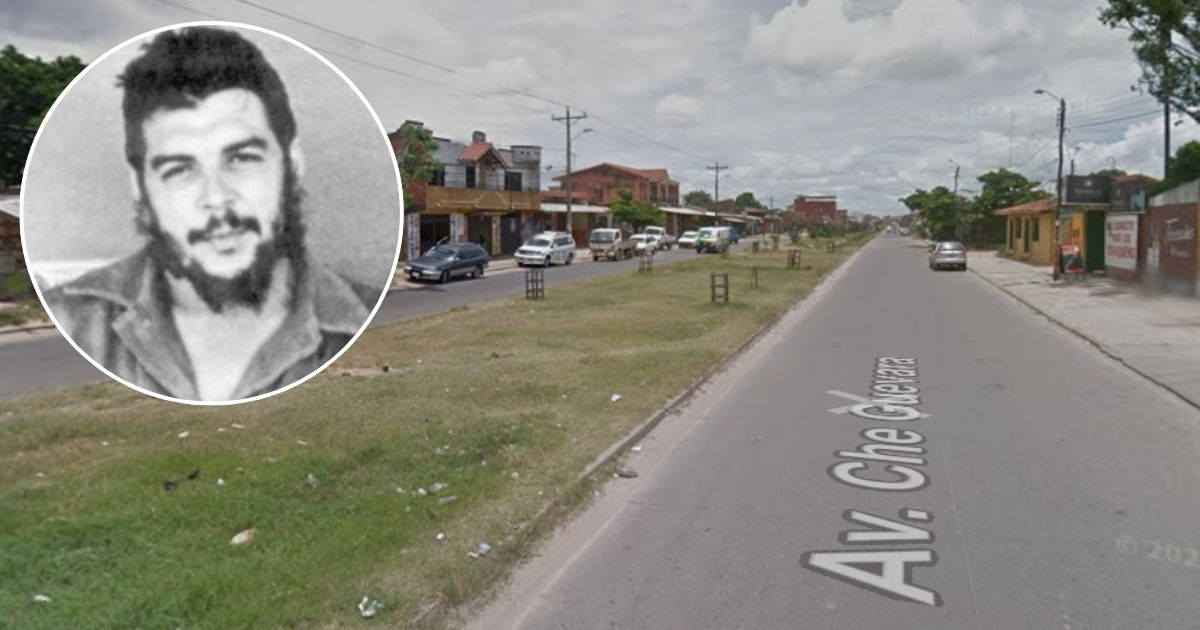
In a symbolic move, Bolivia has renamed a prominent avenue in Santa Cruz de la Sierra, removing the name of Ernesto “Che” Guevara, known by some as the "Murderous Hero," in a bid to distance itself from the legacy of the Argentine-Cuban revolutionary.
According to EjuTV Noticias, citing El Deber, the Santa Cruz Municipal Council approved a law to rename Che Guevara Avenue to honor Monseñor Nicolás Castellanos, a late Spanish missionary celebrated for his extensive social work in Bolivia.
With a majority of seven votes, the municipal legislature decided to replace the name of the communist revolutionary with that of a religious figure who spent over 30 years aiding the poorest sectors of the city.
Castellanos, who established the Proyecto Hombres Nuevos, arrived in Bolivia in 1992 accompanied by a group of Spanish laypersons and priests. From the impoverished Plan Tres Mil neighborhood in Santa Cruz, he spearheaded efforts in education, healthcare, housing, and food programs for thousands of families.
His social initiative, driven by the motto “for and with the poor,” evolved into a model of community action, garnering support from volunteers and benefactors in both Bolivia and Spain. The priest passed away on February 19, 2025, at the age of 90, and was laid to rest in the very neighborhood where he had dedicated his life's work.
Some local analysts view the renaming as a gesture of historical reevaluation in a country where Che Guevara's memory remains contentious. In 1967, Guevara was captured and executed in Bolivia's Vallegrande region during his unsuccessful attempt to spread the Castro-led revolution across South America.
While the Cuban regime continues to idolize Guevara, Bolivia is increasingly recognizing humanitarian and religious leaders who have made tangible impacts on vulnerable communities.
The avenue will now be known as Avenida Monseñor Nicolás Castellanos, symbolizing, for many Bolivians, a preference for service-oriented achievements over ideological violence.
This renaming is part of a series of symbolic and structural reforms introduced following the election of Bolivia’s new president, Rodrigo Paz. His administration has sought to break away from the ideological roots of the Movement for Socialism, prioritizing figures associated with social and community service, like Castellanos, over icons of communist armed struggle such as Che.
This political shift is also evident in decisions like removing visa requirements for tourists from the United States, Israel, South Korea, and other countries, aiming to boost tourism and reverse what the new government deems as economically and ideologically counterproductive measures.
President Paz has emphasized the importance of Bolivia opening up to the world, moving past the isolation imposed by previous political agendas. Following his electoral win, the United States expressed its support for Bolivia’s economic recovery process, signaling a significant shift in the Andean nation's foreign relations and underscoring the new direction under Paz's leadership.
In this evolving landscape, actions like removing Che Guevara's name from public spaces reflect both an ideological shift and a redefinition of Bolivia's political and institutional alliances.
Bolivia's Avenue Renaming and Its Implications
Why was Che Guevara's name removed from the avenue?
The name was removed as part of a symbolic move to distance Bolivia from the controversial legacy of Che Guevara, focusing instead on individuals who have made significant social contributions.
Who is Monseñor Nicolás Castellanos?
Monseñor Nicolás Castellanos was a Spanish missionary known for his extensive social work in Bolivia, particularly in education, healthcare, and housing for impoverished communities.
What does the renaming signify for Bolivia?
The renaming signifies Bolivia's shift towards recognizing humanitarian contributions over revolutionary violence, aligning with new political and institutional priorities.
How has Bolivia's foreign policy changed under President Rodrigo Paz?
Under President Paz, Bolivia has sought to open up to the world, improving relations with countries like the United States and removing visa requirements to boost tourism.