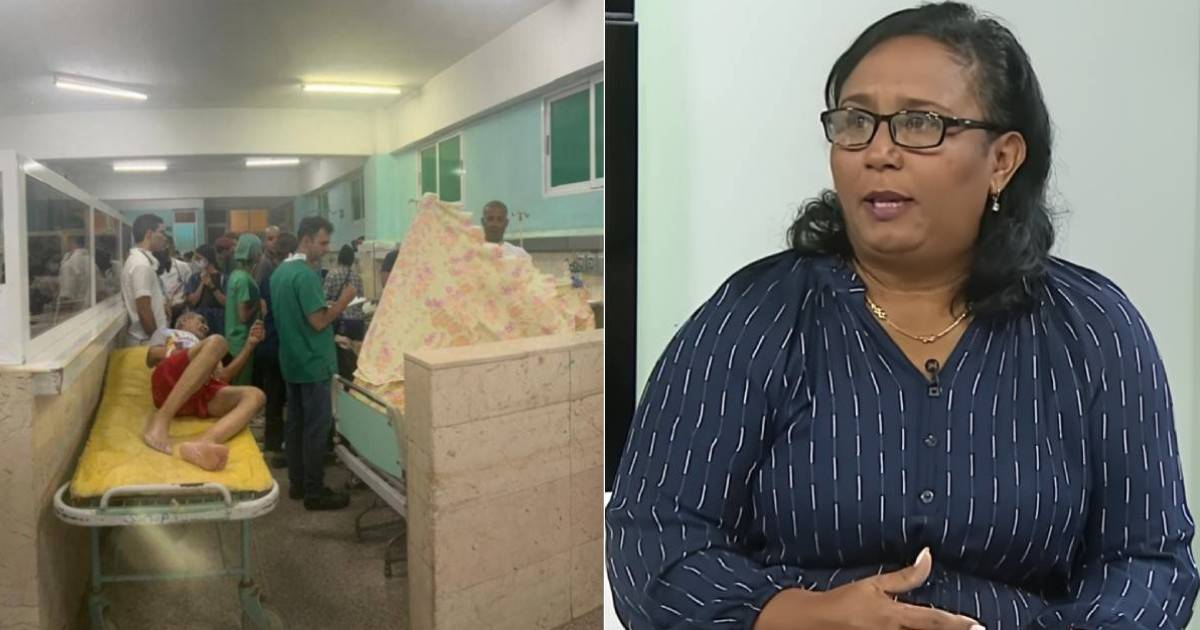
Recent statements made by Carilda Peña García, the Deputy Minister of Public Health, claiming that Cuba's healthcare system is "better than that of many countries," have sparked widespread outrage among Cubans both on and off the island. Her remarks come amidst a severe epidemiological crisis involving dengue and chikungunya, which has already resulted in the tragic death of 33 individuals, 21 of whom were children, according to official figures released this Monday.
The Deputy Minister's comments, broadcasted on Canal Caribe, were met with disbelief by countless families who have long been reporting overcrowded hospitals, delayed medical attention, shortages of medications, and a noticeable deterioration in the country's sanitary conditions.
Social media is flooded with expressions of exhaustion, pain, and skepticism. Many Cubans are questioning how anyone can describe the system as "superior" when they themselves are facing endless queues, overwhelmed emergency rooms, and entire neighborhoods neglected by communal services and deprived of necessary fumigation.
Repeatedly, people express their frustration over the fact that doctors are doing their best but have no access to resources, medications, or equipment, while the population is surrounded by garbage dumps, sewage, and mosquito breeding grounds.
Some suggest that those who praise the supposed strength of the healthcare system should visit a local hospital to witness the "harsh reality" where families must bring their own analgesics and basic supplies for surgical procedures.
Many have called for respect concerning the high number of child fatalities, which they see as a true indicator of the system's collapse, contrary to the portrayal in official media.
Statistics reveal this stark contrast. In just one week, Cuba reported 5,717 new cases of chikungunya, most diagnosed clinically due to a shortage of reagents and PCR tests.
The nationwide total has reached nearly 39,000 infected individuals, while the Aedes aegypti mosquito maintains high infestation rates in provinces like Camagüey, Pinar del Río, Santiago de Cuba, Sancti Spíritus, and Havana.
Adding to the crisis is the shortage of insecticides, malfunctioning focus treatment machines, and a reduction in the number of fumigation workers, issues that the Deputy Minister herself has acknowledged.
In response to the official narrative, many Cubans reacted with frustration. "How long will you keep lying and mocking the people?" they repeatedly asked in comments, criticizing the call for "calm" from television studios while people in neighborhoods are unable to find basic medications like pain relievers, antibiotics, or available hospital beds.
The gap between rhetoric and reality grows wider each day. As the epidemic spreads, trust in the institutions plummets, and the silent suffering of affected families accumulates. Despite authorities' insistence that "everything possible is done to save lives in Cuba," for many Cubans, these words are increasingly disconnected from their everyday experiences.
FAQs on Cuba's Health Crisis
What diseases are currently contributing to the healthcare crisis in Cuba?
Cuba is currently facing a severe crisis with dengue and chikungunya, leading to numerous fatalities and overwhelming the healthcare system.
How has the Cuban population reacted to the government's statements about the healthcare system?
Many Cubans have expressed outrage and disbelief at the government's claims of a superior healthcare system, particularly in light of the current crisis and resource shortages.
What are some of the challenges facing Cuba's healthcare system right now?
Challenges include overcrowded hospitals, delayed medical services, medication shortages, and deteriorating sanitary conditions, along with a lack of fumigation and resources.