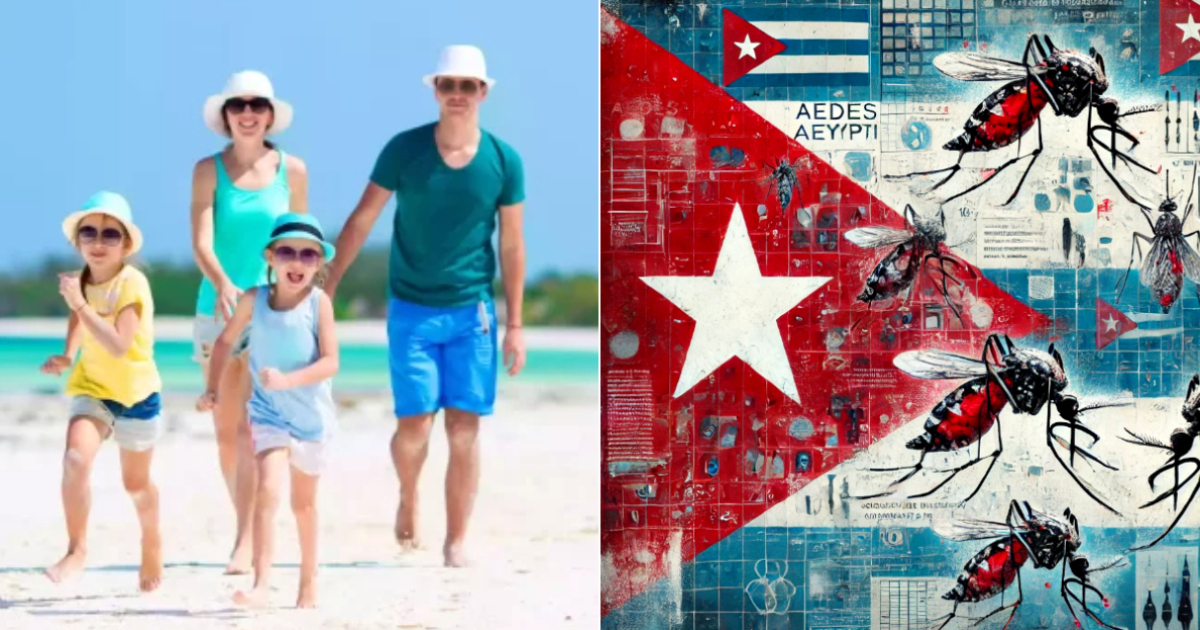
News of the tragic deaths of 21 children and teenagers in Cuba due to dengue and chikungunya has reverberated internationally, reaching the attention of Canadian media this past Monday. Canada, a key source of tourists to the island, has expressed growing concern over the situation.
In a recent report by TVA Nouvelles, Cuban Deputy Minister of Health, Carilda Peña, confirmed that a total of 33 individuals have succumbed to arboviruses, with 14 of these fatalities attributed to chikungunya and seven to dengue.
The Quebec-based publication highlighted the initial silence of the Ministry of Public Health (MINSAP) regarding chikungunya-related deaths, despite persistent warnings from families and medical professionals about the surge in severe cases and overcrowded hospitals.
The regime’s delayed acknowledgment coincides with an updated travel advisory from Global Affairs Canada, issued on November 18, cautioning against travel to the island due to the epidemic outbreak and the dire state of the Cuban healthcare system.
The Canadian government agency warns travelers that there is a "higher than expected number of chikungunya cases," placing Cuba alongside Bangladesh, Kenya, and Sri Lanka as countries with active outbreaks.
The advisory stresses the limited medical care available in Cuba, noting poorly maintained hospitals, drug shortages, and hygiene deficiencies. It mentions that international clinics in tourist areas provide better medical services than public centers, but these are reserved for foreigners.
Additionally, the alert references Cuba’s ongoing structural issues: shortages in food, fuel, and medications, power outages, and deteriorating emergency services. It warns that ambulance response times "can be slow, especially outside tourist zones."
International concern echoes the outrage within Cuba, where citizens and experts accuse MINSAP of concealing the true figures and lacking transparency.
The confirmation of child deaths validates the medical warnings and social media outcries from Cubans grieving the loss of loved ones, claiming there are "many children in critical condition."
While Canada issues warnings and international media covers the crisis, Miguel Díaz-Canel's regime continues to hold televised meetings with "experts and scientists" without announcing concrete measures, budgets, or acknowledging direct responsibility.
Cuba, once heralded for its revolutionary healthcare model, now faces a visible health system collapse: an epidemic claiming its children's lives, a resource-starved system, and a government prioritizing propaganda over truth.
Understanding the Crisis of Arbovirus in Cuba
What are the primary arboviruses affecting Cuba?
The primary arboviruses affecting Cuba are dengue and chikungunya.
Why is Canada concerned about the situation in Cuba?
Canada is concerned due to the high number of arbovirus cases, the precarious Cuban healthcare system, and the island's popularity as a tourist destination for Canadians.
What are the challenges facing the Cuban healthcare system?
The Cuban healthcare system is challenged by poorly maintained hospitals, drug shortages, inadequate hygiene, and slow emergency response times.