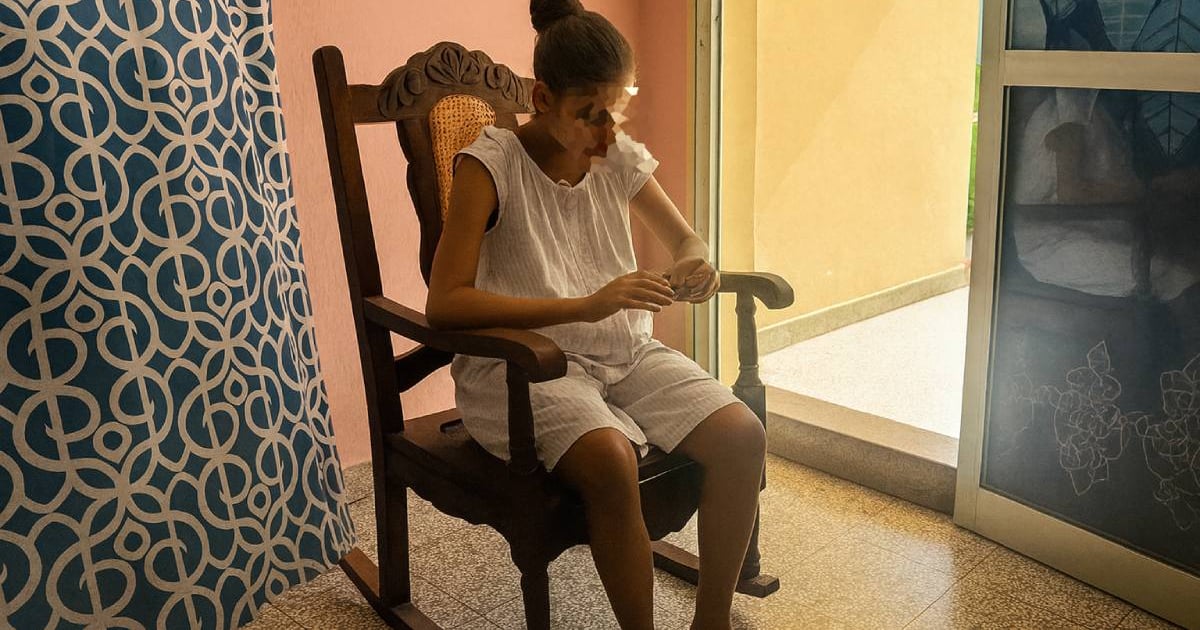
A recent post by the Provincial Health Directorate (PHD) of Granma has sparked intense criticism from activists and Cuban citizens alike, who accuse the agency of glamorizing teenage pregnancy—a growing concern in Cuba.
On its official social media page, the PHD highlighted a visit to the “8 de Marzo” Maternity Home in Cauto Cristo, focusing on Leidys, a teenager who is 36 weeks pregnant and soon to welcome her daughter, Mélany. The post celebrated the "maturity" with which the young girl has handled her pregnancy, quoting excerpts from José Martí on motherhood and portraying it as a testament to tenderness, hope, and beauty.
"Leidys, who will soon be the young mother of Mélany, has approached her pregnancy with remarkable maturity for her age. She dreams of becoming a teacher and educating the children of her community," shared PHD Granma.
The post did not disclose Leidys's exact age, yet it triggered a wave of reactions online, where many Cubans condemned the "romantic" tone used by authorities to address a significant social and public health issue.
Activist Idelisa Diasniurka Salcedo Verdecia was one of the first to respond. "Is this really what they want to showcase as an achievement? Please! Young girls should not be forced to skip childhood stages or become mothers when they should be studying, playing, and building their future," she asserted.
Regarding the upcoming birth, she added, "May it be healthy, yes... but we should not romanticize a painful reality that reveals vulnerabilities and highlights significant failures in protection, education, and family and state support. A pregnant minor is not a cause for pride; it is an urgent call to examine what is happening to our girls."
Another user also harshly criticized the official publication, questioning, "How can they not be ashamed of glamorizing teenage pregnancy?"
Structural Issue of Teenage Pregnancy
According to the Demographic Yearbook of Cuba 2024, released by the National Office of Statistics and Information in 2025, births to teenage mothers accounted for nearly 18% of all deliveries in the country. In 2024 alone, there were 11,962 births from mothers aged 15 to 19 and 327 from those under 15, underscoring early pregnancy as a persistent social and health challenge on the island.
The eastern provinces, including Granma, Las Tunas, and Guantánamo, lead in the highest rates of teenage motherhood. Although the national rate slightly fell to 47.1 births per 1,000 adolescents, Cuba remains among the countries with the highest incidence of teenage pregnancy in the region, according to official statistics.
Rather than encouraging a responsible discussion on the underlying causes, the PHD Granma's post has been seen as an attempt to gloss over a painful reality with an official narrative of "tenderness and hope," without acknowledging the social and psychological consequences faced by young mothers.
Impact of Teenage Pregnancy in Cuba
What are the statistics of teenage pregnancy in Cuba?
In 2024, teenage mothers accounted for nearly 18% of all births in Cuba, with 11,962 births from mothers aged 15 to 19 and 327 from those under 15.
Which provinces in Cuba have the highest rates of teenage pregnancy?
The eastern provinces of Granma, Las Tunas, and Guantánamo have the highest rates of teenage pregnancy.
How did the public react to the PHD Granma's post?
The post was met with widespread criticism, with many accusing the authorities of romanticizing a serious social and health issue.