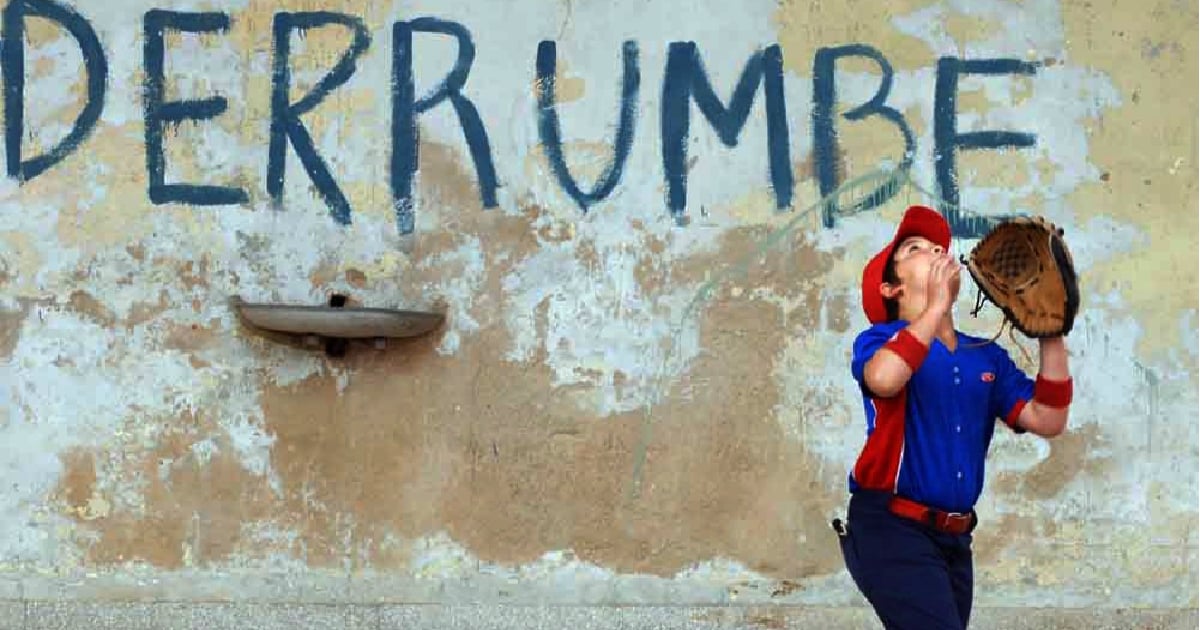
For years, even decades, this journalist roamed baseball stadiums across Cuba, seeking interviews and crafting stories. Regardless of the game's outcome, a palpable joy would fill the air. The reason was simple: there was quality, competition, and an enthusiastic fan base.
To make the Cuban national team was the ultimate goal, and players poured their hearts into every game. Passion for both local and national jerseys ran deep.
Regrettably, those days are gone. What remains is a series of failures, unbelievable situations, injustices, incompetence, and poor decisions.
It wouldn't be an exaggeration to claim that Juan Reinaldo Pérez Pardo, the president of the Cuban Baseball Federation and national commissioner, bears significant responsibility for the chaos due to his poor leadership and limited understanding of Cuba's beloved sport.
When I say Cuban baseball is riddled with “macabre” events, I'm not overstating: violence, indiscipline, lack of quality, disinterest, and disorganization abound. Managers have been dismissed, transportation leaves players, officials, and referees stranded, and even thefts have marked the season.
This week, the Matanzas team experienced a shocking theft at the "Victoria de Girón" stadium. During a pre-game between Matanzas and Camagüey, unidentified individuals raided the dugout and locker room, stealing personalized gloves, bats, protective gear, spikes, phones, wallets, and more, leaving some players with nothing but the clothes they warmed up in.
This theft, occurring in what should be a secure and supportive environment, highlights the precarious state of Cuba's national pastime. Authorities claim to have launched a thorough investigation to identify those responsible and promise enhanced security across all parks, but few believe these assurances.
The Transportation Crisis Hits Hard
Another rampant issue is transportation. Recently in Matanzas, both teams, along with management and referees, were stranded after a grueling doubleheader due to a lack of fuel. Buses were only given 30 liters for the journey from Varadero to Matanzas, but no more fuel was available, leaving everyone stuck. This scenario is all too common, with buses breaking down on major highways and back roads, lacking spare parts, tires, batteries, and gas.
The quality of accommodations for players has also declined, particularly regarding nutrition, which falls short of what high-performance athletes need.
An Exodus of Talent
It's no surprise that many young athletes are fleeing to the Dominican Republic, hoping to make it to the Major Leagues, or at least find opportunities in Asia, the Caribbean leagues, Mexico, or Canada. Anywhere but Cuba seems to be the sentiment.
Additional issues plague Cuban baseball. In Pinar del Río in May 2024, the principal scorer José Andrés Ramos Aroche and the legendary Charles Díaz, acting as commissioner, were sanctioned. They had reported an umpire, Ricardo Campanioni, who was working under a false name. Despite providing audio and video evidence, their claims were dismissed, and they were removed from the series.
Another troubling incident involved mentor Eriel Sánchez, who struck a commissioner with a bat, leading to his removal. More recently, Eddy Cajigal was dismissed from leading the Avispas due to registering an ineligible player, resulting in forfeits for the Santiago team.
In addition to these issues—ineptitude, poor decisions, scarcity, violence—the deteriorating conditions of stadiums and fields cannot be ignored.
Stadiums in Decline
The "Genaro Melero" stadium in Jatibonico, once the site of a legendary playoff between Havana and Las Villas in 1989, recently had its grass burned due to a lack of maintenance equipment. The fields of major stadiums are in poor condition, and the stands, without proper upkeep, pose a serious risk to fans. Lighting is practically nonexistent across the island.
These problems are just a fraction of what ails our national sport. Internationally, where we once ranked number one, we now find ourselves at the bottom.
Poor decisions often lead to unfavorable outcomes. For the 68th Caribbean Series, scheduled from January 30 to February 7, 2026, in Caracas, Venezuela, Cuba announced that it will be represented by the Ciego de Ávila team, champions of the III Elite League, six months after their victory.
The absurdity is evident as those familiar with Cuban baseball know that the team won largely due to reinforcements: Frederich Cepeda, Dennis Laza, Yordanis Samón, Rodolexis Moreno, Robert Luis Delgado, Leonelkis Escalante, and pitchers Yankiel Mauris, José Grandales, Alex Guerra—a team of mercenaries, essentially.
While other countries' teams will send their current champions, armed and ready, Cuba will field a team that lacks cohesion and recent competition experience.
Admitting the crisis engulfing Cuban baseball is difficult and painful, but it's even more disheartening to realize that, for now, there's no sign of change that might restore our sport to its former glory.
Understanding the Crisis in Cuban Baseball
What are some of the main issues facing Cuban baseball today?
Cuban baseball is grappling with incompetence, poor decision-making, violence, transportation issues, theft, and deteriorating stadium conditions.
How has the transportation crisis affected Cuban baseball?
Transportation issues have left teams and officials stranded due to insufficient fuel and poorly maintained buses, disrupting schedules and player morale.
Why are young Cuban players leaving the country?
Young players are leaving Cuba in search of better opportunities and conditions in leagues across the Dominican Republic, Asia, the Caribbean, Mexico, and Canada.
What impact has leadership had on the state of Cuban baseball?
Leadership has been criticized for its poor management and lack of knowledge, contributing significantly to the sport's decline in Cuba.