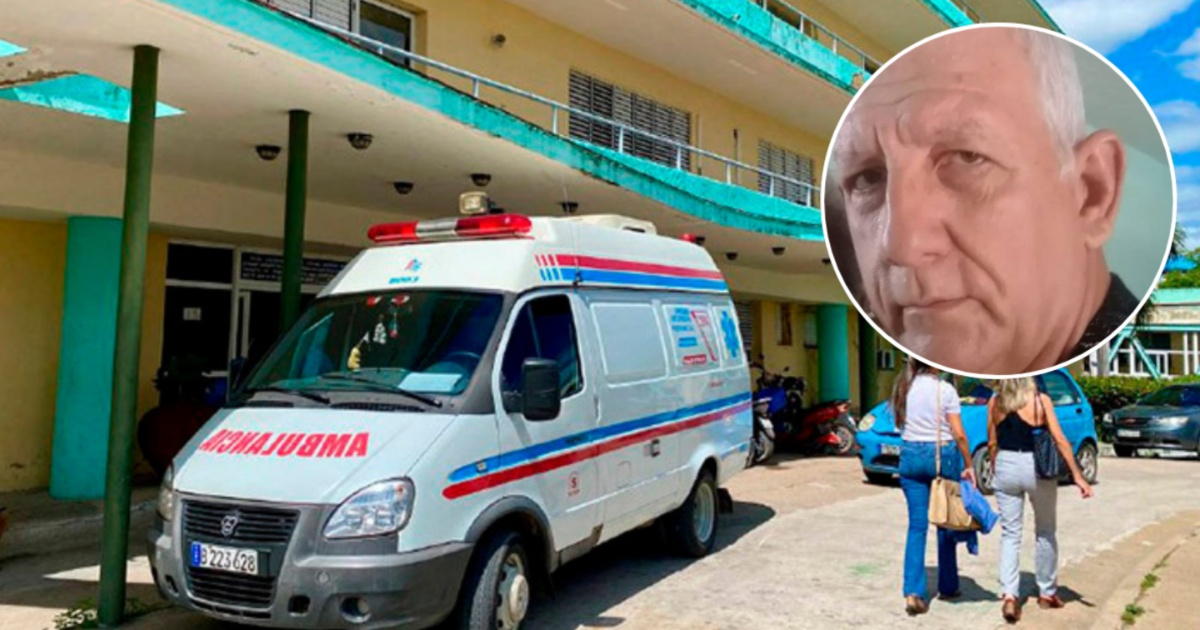
Dr. Castor San Quintín Muñoz, the head of Radiology at Camagüey's Pediatric Hospital and a mentor to countless medical students in the region, is enduring a severe crisis within the very healthcare system to which he has dedicated his life.
Following a hip fracture, Dr. San Quintín found himself ensnared in a web of delays, severe shortages, and preventable dangers, as reported by independent journalist José Luis Tan Estrada.
Tan Estrada described the radiologist as a "teacher of teachers," a guiding academic force for many students who practice medicine today thanks to his dedication and discipline.
The Collapse of Healthcare in Camagüey
Nevertheless, neither his esteemed reputation nor his significant contributions have shielded him from the crumbling state of healthcare in Camagüey, which has turned his personal ordeal into a reflection of the system’s failures after his accident.
The ordeal began when Dr. San Quintín suffered a fall that resulted in a fractured hip. What should have been a swift and coordinated medical response turned into a grueling ordeal. The doctor had to wait several hours for an ambulance to transport him to the Orthopedic Ward at the Provincial Hospital of Camagüey, where he was slated as the third patient on the surgical list, according to reports from the journalist.
An Unimaginable Incident in the Operating Room
Just as the surgery was about to commence, and with the doctor already under anesthesia, a section of the operating room ceiling unexpectedly collapsed, contaminating the sterile environment and halting the procedure immediately.
Medical staff were left in shock, pondering the catastrophic consequences had the surgery been underway. "Imagine if the incision had already been made," they lamented, highlighting the severe risk of infection or even greater disaster.
The operation was postponed to Monday, yet no clear alternatives or concrete assurances were provided to the patient, who remained in a room that failed to meet basic standards.
Enduring Undignified Conditions
The situation deteriorated further with a sudden downpour, transforming the doctor's stay into what Tan Estrada termed an act of indignity. The doctor found himself soaked within the hospital, confined in a dilapidated cubicle unfit for any patient, much less a doctor devoted to public service.
For Tan Estrada, Dr. Castor San Quintín's case is not merely an isolated incident but rather a stark illustration of the vulnerability and dangerous neglect plaguing Cuba's healthcare system. It is particularly painful because it shows that even the most dedicated professionals—those who have upheld hospitals, classrooms, and emergency rooms for decades—are not immune to institutional neglect.
The Need for Immediate Action and Respect
Tan Estrada argues that the current plight of this esteemed specialist demands immediate responses and actions, not only in terms of infrastructure—such as repairing ceilings, securing operating rooms, and ensuring ambulance availability—but also in terms of human dignity and respect.
He asserts that the country cannot continue to treat its medical professionals as if they are expendable, and the ordeal of Dr. Castor San Quintín has become a poignant emblem of this decline.
Health System Challenges in Cuba
What led to the postponement of Dr. San Quintín's surgery?
The surgery was postponed because a section of the operating room ceiling collapsed, contaminating the sterile area and preventing the procedure from taking place.
How did the operating room incident impact Dr. San Quintín?
The incident forced the postponement of his surgery, leaving him in unsuitable hospital conditions without clear alternatives or assurances for his treatment.
Why is Dr. San Quintín's case significant?
His situation highlights the dangerous neglect and lack of protection within the Cuban healthcare system, affecting even its most dedicated professionals.