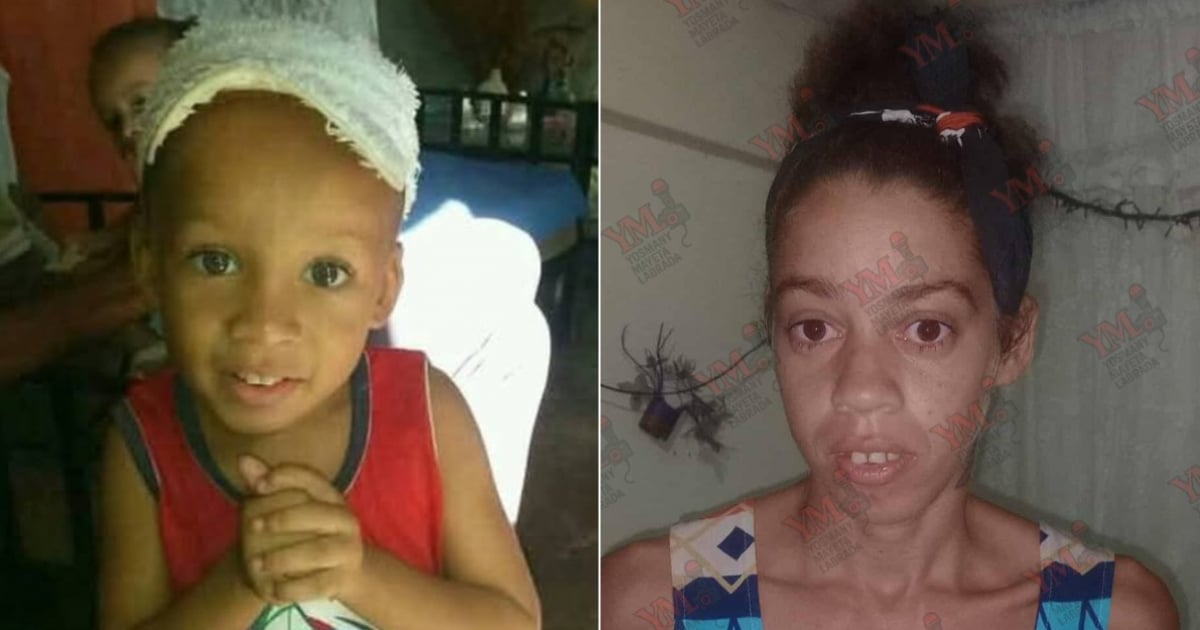
The disappearance of five-year-old Yordan Corrales Ricardo in Santiago de Cuba has triggered a community alarm, once again forcing residents to take matters into their own hands due to the lack of official response.
Independent journalist Yosmany Mayeta Labrada reported the case on Facebook after Yordan's mother, Reida Ricardo Ortega, reached out to him in a desperate attempt to locate her son, who has been missing for over a week.
Reida, who is currently ill with the virus and responsible for two other young children, allowed her brother's new partner to take Yordan to Reparto Altamira, believing he would be safer from exposure there.
According to Reida's account, Yordan was taken first to Reparto Altamira, then to Reparto Van Van, where his uncle lives, and finally to Songo La Maya. Since last Thursday, Yordan's whereabouts remain unknown.
The mother admits she does not have a photo, name, or any identifying information about the woman who took her son, complicating the situation further.
Frustration with Police Inaction
Reida recounted that when she went to the police station to report the disappearance, instead of initiating an urgent search protocol, officers asked her to formally accuse her own brother. As of now, no action has been taken by the authorities to investigate or locate the child.
Despite being under the care of a virtually unknown individual, not a single resource has been mobilized to find the young boy. The family has made public their contact numbers, urging anyone with information to reach out: +53 59187737 / +53 22685059.
Cuban Families Left to Fill Institutional Gaps
Yordan's case is not an isolated incident. In recent years, the disappearances of both minors and adults have raised increasing concerns among the population, not only because of their frequency but also due to the inadequate response from authorities. Often, official procedures are delayed, alerts are downplayed, or search operations are simply not conducted.
In the absence of effective official mechanisms, social media has become the primary tool for searches, a role that should belong to trained institutions capable of quick action. Families and friends are compelled to distribute photos, retrace steps, contact witnesses, and apply public pressure to ensure cases are not forgotten.
Every online post serves as a collective testament to the institutional void: children, teenagers, and adults whose fates rely more on community solidarity than on a formal investigative system.
Escalating Concerns
Yordan's disappearance highlights this vulnerability once more. As his photo circulates online and the community shares his details, the family fears that time is against them.
The message is clear: anyone who may have seen Yordan or has even the slightest detail is urged to come forward immediately.
Santiago de Cuba is once again gripped by the anguish of a mother without answers and a community organizing because they cannot wait for official solutions.
This case reiterates a demand echoed across the island: the need for effective protocols and a police force that does not force citizens to become, out of desperation, the sole seekers of their missing loved ones.
Understanding the Crisis of Missing Children in Cuba
What are the main challenges faced by families of missing persons in Cuba?
Families often struggle with a lack of prompt action and resources from authorities, forcing them to rely on social media and community efforts to locate their loved ones.
How has social media become a tool in finding missing persons in Cuba?
Social media has become crucial for raising awareness and sharing information quickly, as it provides a platform for families to reach a wider audience and mobilize community support.
What actions are Cuban communities taking in response to disappearances?
Communities are actively engaging in sharing photos, gathering information, and publicly pressuring authorities to ensure that cases are not ignored.