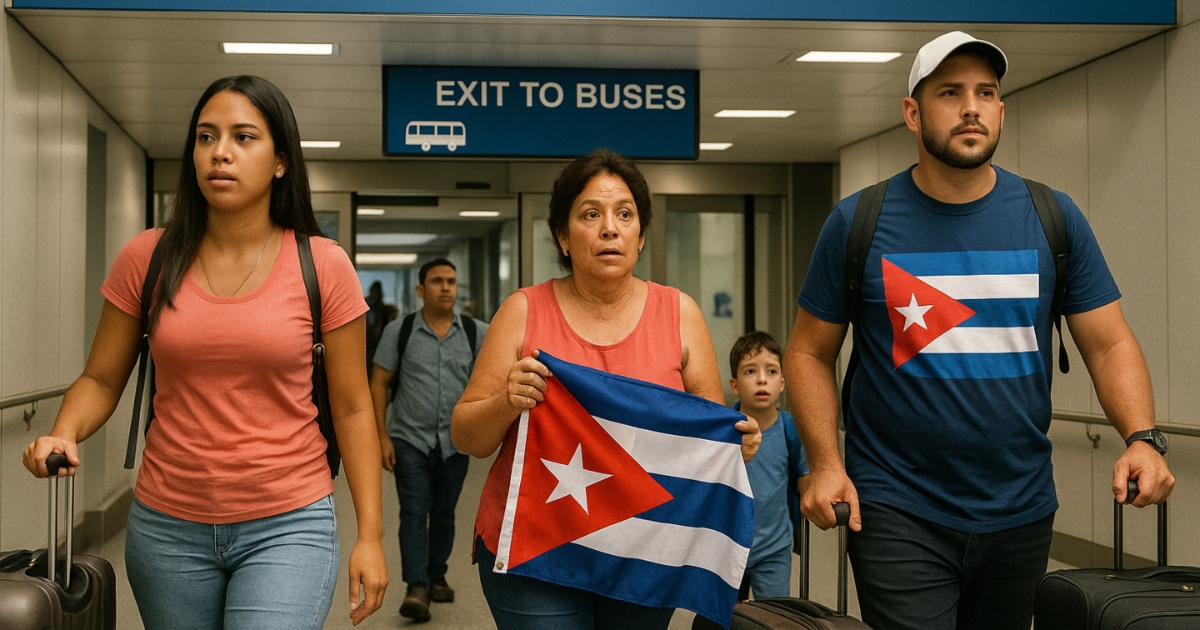
The recent anti-immigration measures announced by President Donald Trump, which include a permanent halt to migration from "all Third World countries," have sparked significant controversy among Cubans, both within the United States and abroad.
Social media reactions highlight a nation deeply divided between those who support the president's policies and those who see them as a direct threat to migrant communities.
The debate erupted following a post on Truth Social by the president, where he vowed to cut federal benefits to non-citizens, deport those deemed a "public charge," and revoke citizenship from migrants he claims "undermine national stability."
"I will permanently stop migration from all Third World countries," he declared, describing the current situation as a "destructive invasion."
This was compounded by an announcement from the U.S. government that the USCIS has halted all asylum case decisions, following a recent shooting in Washington D.C. attributed to an Afghan citizen who entered the country during the Kabul evacuation in 2021.
"The safety of the American people always comes first," the institution justified.
Cubans Supportive of Trump's Stance: "Respect the Law or Leave"
Among those backing the measures, several Cubans argue that Trump's stance is essential for maintaining order.
"An excellent president. Anyone not adapting should leave," commented a user who expressed pride in having voted for Trump. Another noted the need for national stability and argued that the U.S. should not support those who "come looking for trouble."
Some also criticized migrants who, in their view, fail to show gratitude towards the host country.
"The problem is that most migrants aren't grateful," said another commenter, who expressed appreciation for having become a U.S. citizen.
Cubans Opposed: "Just Like the Idolization We Had for Fidel"
Conversely, many Cubans reacted with outrage to the toughened immigration policies. One internet user compared the devotion to Trump with that once shown to Fidel Castro: "It seems surreal to see Cubans defending a politician so fervently... it's the same foolishness."
Another Cuban criticized the blaming of immigrants for the country's internal issues and defended Latinos who emigrate out of necessity.
"Before they emigrated, there were already massacres due to gun sales. Why blame immigrants now?" she questioned.
Others pointed out that many Cuban migrants feel "untouchable" and warned that the measures could affect them as well.
"Cubans need to get off that cloud thinking they're better than other Latinos. To Trump, we're all just another flea on the dog," a user wrote.
Concerns Over Uncertainty
The new policies have stirred anxiety among Cubans without legal status, who fear that "reverse migration" measures, accelerated deportations, and the elimination of benefits could impact even those who have been in the country for years.
One user summed up the widespread nervousness with a message directed at the president: "And he wants the Nobel Prize... karma will catch up."
The reactions reveal deep fractures within the Cuban community in the U.S.: between those who view Trump as a keeper of order and those who see him as a threat to immigrants themselves.
The heated exchange of opinions underscores that while the government tightens the immigration system following the Washington D.C. attack, the Cuban community continues to grapple with an internal debate over identity, migration, and belonging in a country where policies can change overnight—impacting thousands with a single presidential statement.
Key Questions on Trump's Immigration Policies
What are the main components of Trump's new immigration policies?
The new policies include a permanent halt to migration from all Third World countries, elimination of federal benefits for non-citizens, deportation of those deemed a public charge, and revocation of citizenship from migrants who undermine national stability.
How have Cubans responded to these measures?
Reactions among Cubans are mixed; some support the measures as necessary for maintaining order, while others view them as a threat to migrant communities and criticize the idolization of Trump similar to past support for Fidel Castro.
What impact could these policies have on Cuban migrants?
The policies could lead to increased anxiety among Cuban migrants, especially those without legal status, due to potential deportations, loss of benefits, and the broader implications of "reverse migration" measures.