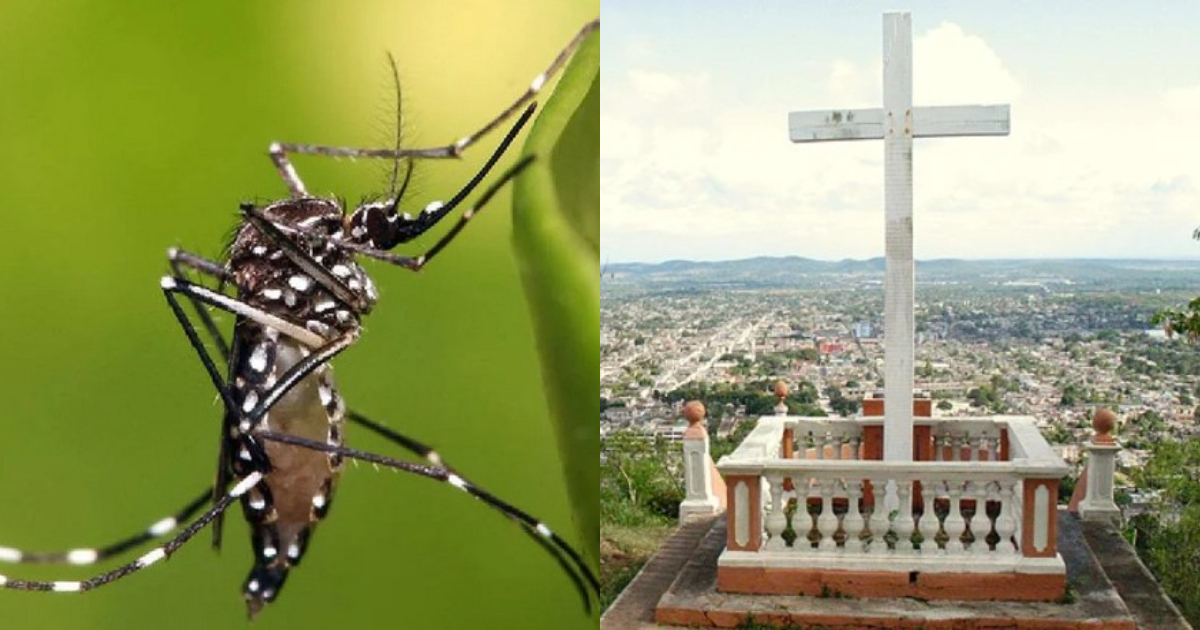
In Holguín, health officials have acknowledged a significant breakdown in preventive measures against the Aedes aegypti mosquito, renowned for transmitting dengue and chikungunya, as the province grapples with a severe epidemiological predicament. Currently, three municipalities are facing epidemic phases.
Dr. Geanela Cruz Ávila, head of the Provincial Center for Hygiene, Epidemiology, and Microbiology in Holguín, admitted to the shortcomings in vector control. "Prevention failed in general; the focus on prevention failed. In vector-borne diseases, the work must be against the vector. No mosquito focus, no transmission," she stated to the state-run newspaper ¡Ahora!
This admission comes as thousands of residents suffer from the debilitating effects of chikungunya and dengue. According to Dr. Cruz Ávila, by late October, the province saw an increase in cases of unspecified febrile syndrome, with dengue type four and chikungunya viruses confirmed.
The municipalities of Cacocum, Urbano Noris, and Cueto, severely impacted by Hurricane Melissa, are under epidemic alert. Although the provincial capital is not officially endemic, it is being treated as such due to high case numbers.
Community Impact and Response
The daily life of Holguín's residents has been dramatically affected. The greeting "How did you wake up today?" has become commonplace among neighbors, reflecting the widespread impact of these illnesses. Sufferers experience severe muscle and headache pains, high and persistent fevers, rash, nausea, fatigue, and other symptoms manifesting four to eight days post-infection from the infected female mosquito.
Chikungunya, a term meaning "bent over in pain" in African languages, progresses through acute, post-acute, and chronic phases. Many residents endure these stages amidst a healthcare system overwhelmed by the outbreak.
Efforts and Challenges in Disease Control
Dr. Cruz Ávila acknowledged underreporting of unspecified febrile cases and recoveries, primarily linked to chikungunya, prompting a house-to-house survey. This initiative involves not only the basic health teams but also educators, healthcare personnel from clinics, and medical students.
Local health officials have initiated adulticide treatments across all municipalities. In Holguín city, they are employing a quadrant strategy to ensure comprehensive home coverage. Additionally, efforts include focal destruction and outdoor fumigations using the TF-160 machine during early mornings and evenings.
Nonetheless, Dr. Cruz Ávila emphasized that these actions are insufficient without addressing household mosquito breeding sites and family compliance with self-monitoring practices. "We can kill the flying mosquitoes, but if we don't eliminate the larvae, eggs, and pupae, the aquatic phase of the mosquito, they will continue emerging and transmitting the disease," she explained.
The crisis is partly attributed to negligence in implementing preventive measures. The workforce for vector surveillance and control is stretched thin, yet they still manage to reach homes as planned. However, the prevention focus has faltered, necessitating consistent and conscious efforts to combat vector-borne diseases. The situation worsened following Hurricane Melissa.
These measures will persist until febrile syndrome cases suspected of dengue and chikungunya return to endemic levels and mosquito breeding indices fall below 0.05. Dr. Cruz Ávila warned of the current situation as a "red alert" to maintain vigilance in measures to curb mosquito proliferation.
Public Criticism and Government Response
Freddy Núñez Estenoz, a playwright and director of Teatro del Viento, criticized the official narrative, arguing that the arbovirus epidemic in Cuba is more due to neglect than the U.S. embargo. In August, residents of Máximo Gómez in Matanzas reported high fever, vomiting, and weakness affecting over 70% of the population, with scarce access to medication or medical care.
For weeks, the government downplayed these warnings, targeting activists and independent media with accusations of misinformation. Official outlets like Radio 26 attempted to discredit journalist Yirmara Torres, who exposed the health crisis, stating, "there are no deaths, but there are," highlighting the regime's concealment of epidemic-related fatalities.
Moreover, the Ministry of Public Health initially denied any deaths linked to the outbreak.
Understanding the Mosquito-Borne Disease Crisis in Holguín
What are the symptoms of chikungunya and dengue?
Both diseases can cause severe muscle and headache pain, high fevers, rash, nausea, and fatigue, typically appearing four to eight days after being bitten by an infected mosquito.
How are authorities responding to the health crisis in Holguín?
They have implemented adulticide treatments, focal destruction in homes, and fumigation. A comprehensive house-to-house survey is also underway to identify and treat affected individuals.
Why is the mosquito control effort failing in Holguín?
Failures in preventive measures, insufficient focus on eliminating mosquito breeding sites, and a stretched workforce are contributing to the ongoing crisis.