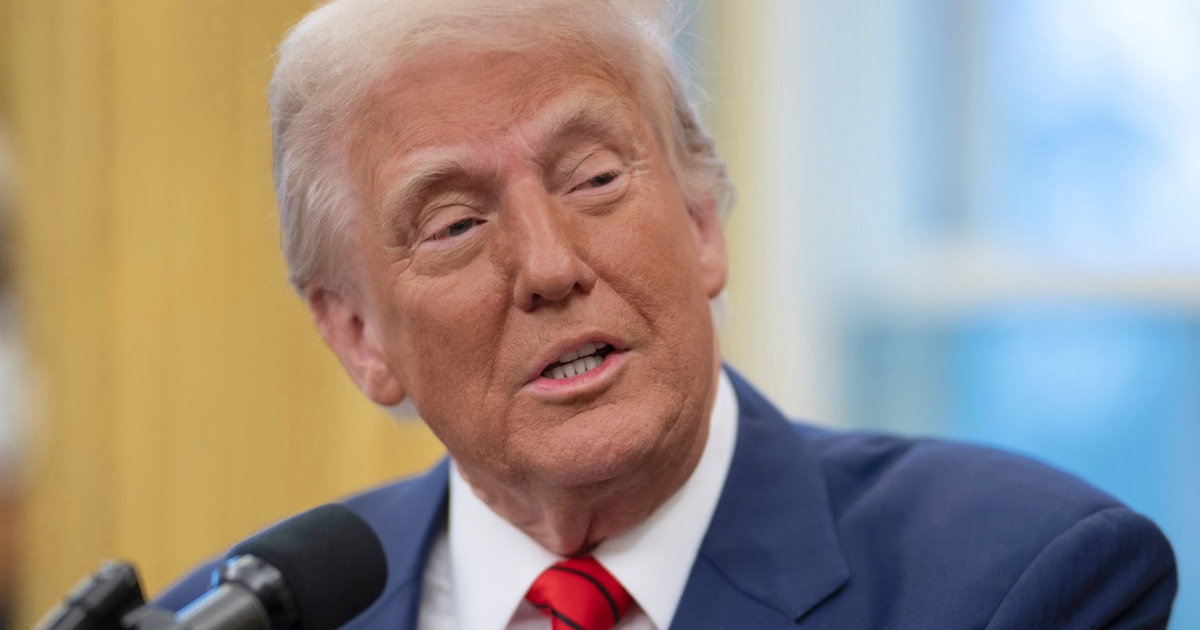
In a forceful statement shared on Truth Social during the Thanksgiving holiday, former U.S. President Donald Trump outlined a series of severe immigration policies that mark the most radical stance of his agenda to date.
Among the most controversial proposals is the mass deportation of foreigners labeled as a "public burden" or "incompatible with Western civilization."
This announcement, which quickly gained traction, is seen as an ideological escalation with serious implications for millions of migrants, including those who already hold legal residency in the United States.
Selective Immigration and Exclusion as a Principle
Trump was unequivocal in his approach, asserting his intent to permanently halt migration from all Third World countries. His aim, as he stated, is to allow the American system to "fully recover."
The former president sharply criticized Joe Biden's administration, accusing it of permitting the mass entry of foreigners through what he described as illegal channels:
"I will eliminate the millions of Biden's illegal admissions, including those signed by Sleepy Joe Biden's Autopen," he declared.
Trump also promised a systematic purge of the migrant population in the United States, starting with those who fail to meet his "net asset" standard for the country:
"I will expel anyone who is not a net asset to the United States or who is incapable of loving our country," he stated.
The most alarming assertion was his promise to deport any foreigner considered a public burden, a security risk, or incompatible with Western civilization.
Deportations, Denaturalizations, and Withdrawal of Social Benefits
Trump's new immigration plan includes the complete removal of federal benefits and subsidies for non-citizens, as well as the denaturalization of migrants who, in his view, threaten the country's internal stability.
"I will eliminate all federal benefits and subsidies for non-citizens in our country and denaturalize those migrants who undermine national tranquility," he proclaimed.
These policies, he claims, aim to achieve a "significant reduction of illegal and disruptive populations," a concept left vaguely defined but suggesting an unprecedented structural exclusion in recent U.S. history.
According to Trump, only "REVERSE MIGRATION" can fully remedy the situation.
Crime, Racism, and Fear as Political Tools
Trump’s rhetoric leans heavily on a fear-driven narrative linking immigration to crime, social disorder, and cultural decline.
He cited the recent murder of a National Guard soldier by an Afghan national who entered the country during the Afghanistan military withdrawal as an example.
"This is part of the horrific airlift from Afghanistan. Hundreds of thousands came into our country without any vetting or checks," he claimed.
Though isolated, this tragedy was used to illustrate what he describes as a systemic threat.
"We will fix it, but we will never forget what corrupt Joe Biden and his cronies did to our country," Trump warned.
Audit of Cuban, Venezuelan, and Other "Concern" Nationals
The administration has also begun reviewing all residencies granted to citizens from 19 countries deemed "of concern," including Cuba and Venezuela.
Joseph B. Edlow, the director of the U.S. Citizenship and Immigration Services (USCIS), confirmed that a comprehensive audit is underway, affecting asylum applications, humanitarian parole, and family reunification requests.
The consequences could include administrative delays, visa cancellations, and even the revocation of previously approved green cards.
In tandem, the Department of Homeland Security is reassessing asylum grants from previous administrations, prioritizing cases from countries considered "sensitive" in security terms.
Immigration as the Scapegoat: "Failing Schools, Crime, and Deficits"
In another post, Trump directly blamed immigration as the primary cause of the country's social ills:
"This refugee burden is the main cause of social dysfunction in the United States: failing schools, high crime, urban decay, overcrowded hospitals, housing shortages, and large deficits."
He added that the system economically rewards migrants over citizens: "A migrant earning $30,000 with a green card will receive approximately $50,000 in annual benefits for their family."
Conclusion: "Western Civilization" as an Ideological Boundary
Beyond the technical aspects of these measures, Trump's message draws an ideological boundary that places "Western civilization" as a criterion for inclusion and exclusion. Under this framework, it is not enough to abide by the law; one must culturally fit and be "productive" according to a standard unilaterally defined by political power.
The shift towards a "zero migration" policy for Third World countries, denaturalization as a coercive tool, and deportation as a cultural punishment reshape America's immigration landscape in draconian terms.
As civil rights organizations decry a regression towards extreme nativism, thousands of migrants, including Cubans, Venezuelans, and Haitians, face a future of uncertainty, exclusion, and possible expulsion, even after receiving legal protection under U.S. law.
Trump concluded with a foreboding message: "Happy Thanksgiving to all, except those who hate, steal, murder, and destroy everything America stands for! You won't be here for long!"
Key Aspects of Trump's Immigration Plan
What are the main points of Trump's new immigration plan?
Trump's plan includes deporting foreigners deemed a public burden, halting migration from Third World countries, and withdrawing federal benefits for non-citizens. It also involves denaturalizing migrants who threaten national stability.
How will Trump's policies affect legal residents?
The plan could impact legal residents by revoking benefits, delaying administrative processes, and potentially revoking green cards, especially for those from countries labeled as "of concern."
What is the ideological basis for Trump's immigration policy?
Trump's policy is grounded in an ideological framework that emphasizes "Western civilization" as a cultural and productive standard for inclusion, aiming to exclude those who do not meet this criteria.