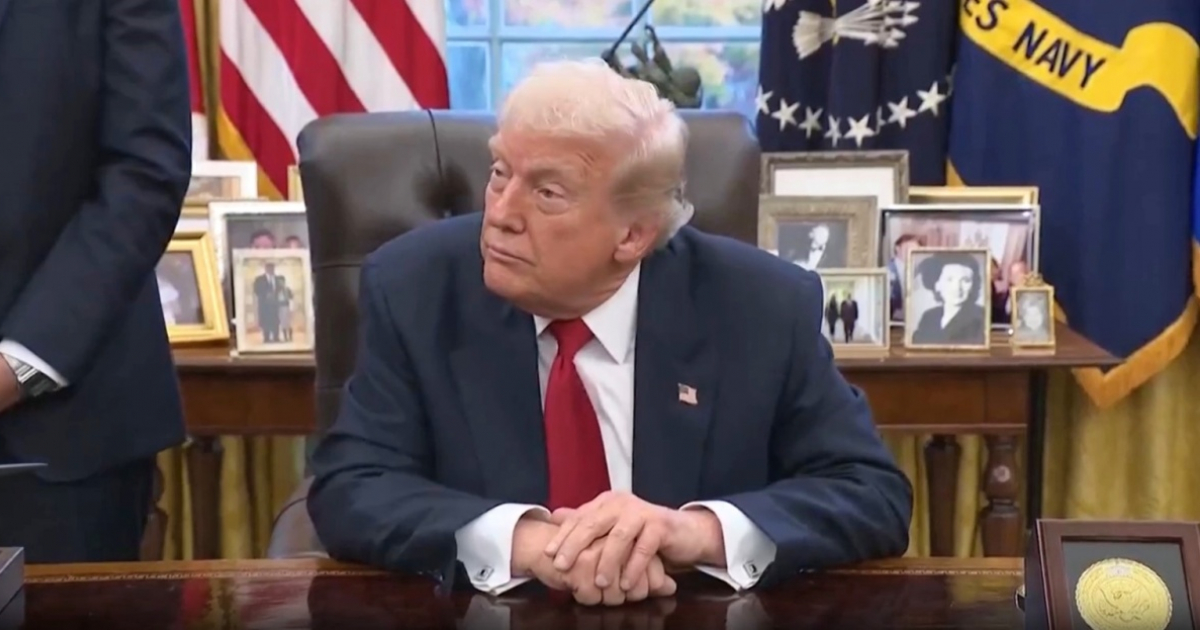
In a heightened move against immigration, former President Donald Trump has declared his intention to terminate all federal benefits and subsidies for non-citizens residing in the United States.
Announced via a message on his Truth Social platform during Thanksgiving, this initiative is part of a broader "reverse migration" strategy that he believes will counteract what he terms a "destructive invasion".
"I will remove all federal benefits and subsidies for non-citizens in our country," Trump asserted in his post, which analysts interpret as a bold stance against any form of state assistance to migrants, irrespective of their legal status.
Comprehensive Crackdown: Benefits, Deportations, and Denaturalizations
Trump’s rhetoric signals a sweeping crackdown on migration, both illegal and legal, with particular emphasis on populations from so-called "Third World" nations. According to Trump, migration has "undermined" America’s economic and social progress, necessitating a drastic rollback.
"I will permanently halt migration from all third-world countries to allow the American system to fully recover […] and will expel anyone who is not a net asset to the United States or is incapable of loving our country," he declared.
Within this framework, federal subsidies are viewed by Trump as incentives for individuals with no real ties to the nation. Thus, their elimination is deemed essential for "restoring functionality" to the American system.
In addition to withdrawing social benefits, Trump also threatens to denaturalize settled migrants who, in his words, "undermine national tranquility," and to deport "public charges," referring to individuals receiving public assistance or deemed "incompatible with Western civilization."
Targeted Subsidies: What's at Stake?
While Trump did not specify which federal subsidies are targeted, his administration has previously criticized migrant access to programs such as:
- Medicaid and other public health insurances.
- Food assistance (SNAP).
- Child Tax Credits.
- Subsidized housing assistance.
- Educational grants and subsidies.
Trump claims the current system "benefits migrants at the expense of citizens":
"A migrant earning $30,000 with a green card receives approximately $50,000 in annual benefits for their family," he stated in another post.
Beyond debating the accuracy of these figures, the message is clear: end all public assistance to non-native individuals, even those legally in the country.
Social Assistance Under Scrutiny
Trump associates migration with various societal issues: from collapsing public services to crime. In his narrative, migrant access to subsidies not only incurs costs but poses an existential threat to the nation.
"This refugee burden is the primary cause of social dysfunction in the United States: failing schools, high crime rates, urban decay, overcrowded hospitals, housing shortages, and large deficits," he enumerated.
His rhetoric does not distinguish between asylum seekers, refugees, permanent residents, or undocumented migrants. All are portrayed as burdens on the system, with the stated goal of eliminating them as recipients of any federal aid.
The Afghan Incident as a Catalyst
The president's hardened stance coincides with a recent incident used to bolster his narrative. An Afghan citizen, Rahmanullah Lakanwal, who entered via the 2021 humanitarian airlift, shot two National Guard members in Washington D.C., killing one soldier and injuring another.
"This is part of the horrific Afghanistan airlift. Hundreds of thousands entered our country without any vetting or checks," Trump denounced, sharing an image of Afghans crowded in a military aircraft.
He seized this opportunity to reinforce his skepticism towards humanitarian asylum and refuge processes, justifying a further tightening of his immigration policy.
Cubans, Venezuelans, and a "Blacklist" Under Review
As part of this crusade, his administration has ordered a review of thousands of Green Cards issued to citizens from 19 countries, including Cuba, Venezuela, Iran, Somalia, Haiti, and Afghanistan.
This move even affects cases of family reunification, asylum, and humanitarian parole, potentially leading to the revocation of granted residencies.
Simultaneously, the Department of Homeland Security is reassessing asylum cases approved under the previous administration, with particular scrutiny on "sensitive countries."
Trump’s statements crystallize an ideology viewing migration not as a human phenomenon but as a threat to be eradicated.
The suspension of visas, mass deportation, denaturalization, and now the elimination of federal subsidies for non-citizens point towards an unprecedented political trajectory.
Understanding Trump's Immigration Policy
What federal benefits does Trump plan to cut for non-citizens?
Trump's plan targets federal benefits such as Medicaid, SNAP, Child Tax Credits, subsidized housing assistance, and educational grants for non-citizens.
How does Trump view the impact of migration on the United States?
Trump believes migration undermines the economic and social progress of the U.S., contributing to issues like failing schools, high crime rates, and urban decay.
Which countries' Green Cards are under review in Trump's plan?
Green Cards from countries including Cuba, Venezuela, Iran, Somalia, Haiti, and Afghanistan are under review as part of Trump's immigration policy.