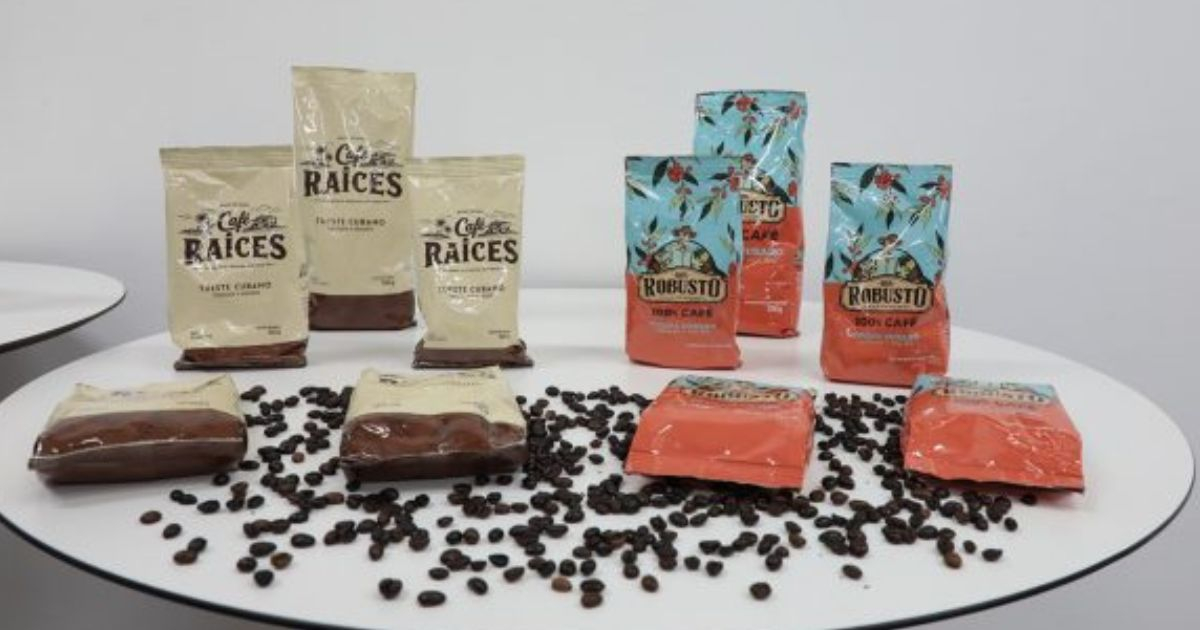
The audacity of Cuba's socialist regime has reached new heights as Nescor S.A., a Cuban-Swiss joint venture located in the Mariel Special Development Zone, unveiled two new coffee brands—Don Robusto and Raíces—at the Havana International Fair (FIHAV 2025).
According to the state-run media outlet Cubadebate, this launch is hailed as an "industrial achievement" and a milestone in the company's eighth year of operation.
Don Robusto is crafted from 100% robusta beans, offering a bold and dark flavor profile aimed at consumers who prioritize authentic strength. In contrast, Raíces aims to celebrate Cuban coffee heritage by blending robusta beans with caramel notes and a medium body.
The products are available in packaging ranging from 125 grams to 1 kilogram, targeting both retail and export markets, as anticipated.
However, the unveiling sparked more frustration than excitement among Cubans.
On social media, many highlighted the stark difference between the displays at Mariel and the empty shelves in local stores.
"We don't drink that coffee. But that's the least of it. The real issue: people are dying!" wrote Irina Diéguez Toledo on Cubadebate's Facebook post.
Elizabeth González Aznar shared her outrage, stating, "The lack of shame has reached its peak. What do those products matter to us if we don't have access to them? They flaunt what we can't have right in our faces."
In recent years, coffee—once a staple of Cuban culture—has become a luxury item.
The scarcity of domestic beans, low production levels, and the regime's focus on exporting or selling in foreign currencies have rendered coffee inaccessible to most Cubans through the state market.
The mixed coffee previously available through rationing has vanished, with a single package on the black market reaching up to 2,000 Cuban pesos or more, a price unaffordable for the majority of island workers.
"Great, and where's the coffee for the people?" questioned Alex Velázquez, while Mercedes Ramos demanded, "When will they make good coffee for the people? They always release brands for those abroad or with dollars."
Nescor, a joint venture between Nestlé and Corporación Alimentaria S.A. (Coralsa), adds these new brands to its portfolio, which includes snacks, seasonings, and instant beverages.
The narrative of industrial modernization stands in stark contrast to a nation where families have resorted to makeshift brews of toasted peas and other seeds in place of coffee.
Papita Sánchez captured this irony, writing, "Good morning, those coffees are for export. And the coffee for Cubans, the workers, where is it? It's shameful to display this when people pay thousands of pesos for a simple package."
Juan Omar Duharte pinpointed the core issue: "With all the demands to export more, they end up changing the companies' objectives to sell to the people only in currencies they're not paid in. So what kind of social system are they talking about?"
The discontent reflected on social media is nothing new. In Cuba, official announcements about new products or investments often provoke the same question: will it ever reach the people?
As Mayita Díaz, one of the most echoed voices on Cubadebate, put it: "Ask the top officials, they're surely drinking it every day. The people's right is only to the brew of any leaf."
FIHAV has not only been a showcase for gourmet coffee brands but also a platform for announcements highlighting the Cuban regime's attempts to revive strategic economic sectors.
During the opening, Miguel Díaz-Canel called for "creativity" and "courage" to sustain what's left of the Cuban economic model, implicitly acknowledging the country's structural crisis.
Amid this official narrative, the regime also announced its intention to leverage artificial intelligence as an economic development engine.
This ambition contrasts with the technological shortcomings the island faces but aligns with the optimistic announcements typical of such events.
Moreover, the government disclosed plans to allow full foreign company operations in the wholesale market, a move that breaks with years of restrictions and centralization, suggesting a limited yet significant opening in response to economic pressures.
Key Questions About Cuba's Luxury Coffee Launch
What are the new coffee brands introduced in Cuba?
The new coffee brands introduced are Don Robusto and Raíces, launched by Nescor S.A. at the Havana International Fair (FIHAV 2025).
Why are Cubans frustrated with the coffee launch?
Cubans are frustrated because the new coffee brands are not accessible to them, highlighting the disparity between government showcases and the reality of empty local store shelves.
What challenges does Cuba face regarding coffee availability?
Cuba faces challenges such as domestic bean scarcity, low production, and a focus on exportation, making coffee a luxury item for most Cubans.