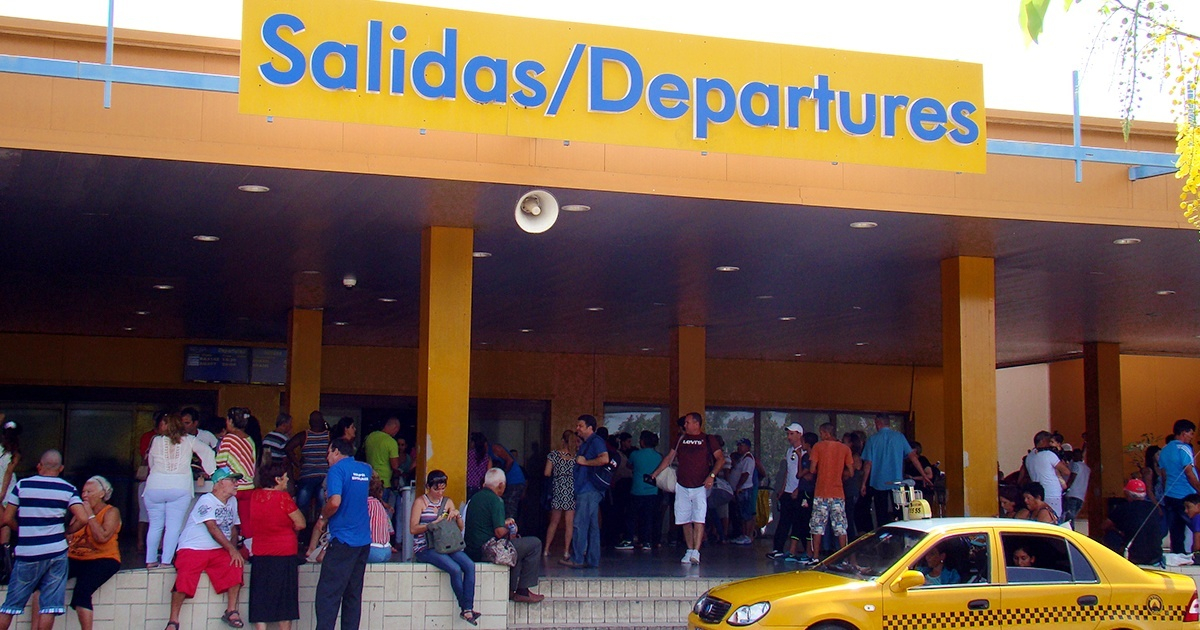
A U.S. law firm has initiated a federal lawsuit against Delta Air Lines Inc., accusing the company of unlawfully profiting from the use of Havana's José Martí International Airport. The plaintiff claims that the airport was seized without compensation by the Cuban regime following the 1959 Revolution.
This legal action, filed under Title III of the Helms-Burton Act, represents yet another chapter in the legal battle pursued by descendants of expropriated property owners in Cuba, who are seeking justice through American courts.
Claimant Asserts Inheritance Rights
The lawsuit has been brought by José Ramón López Regueiro, the son of Cuban businessman José López Vilaboy, who owned the airport before it was nationalized by Fidel Castro's government. López Regueiro asserts his status as the rightful heir to the property, alleging that Delta has conducted commercial flights—both cargo and passenger—without his permission or any form of compensation.
"This case is significant not only for Mr. Regueiro but for the entire Cuban-American community whose properties were confiscated and exploited by U.S. companies in collaboration with the Cuban communist dictatorship," said Jorge A. Mestre of Rivero Mestre LLP, representing the plaintiff, as reported by Telemundo 51.
Helms-Burton Act and "Trafficking" Allegations
The Helms-Burton Act, officially titled the Cuban Liberty and Democratic Solidarity Act, was enacted in 1996 to tighten the embargo on Cuba and provide legal avenues for U.S. citizens and Cuban-Americans whose properties were expropriated after the Revolution.
Although Title III of the Act was suspended by all administrations since its passage, the Trump Administration lifted the suspension in 2019, allowing such lawsuits to proceed for the first time.
Under this law, "trafficking" is defined as any unauthorized use or benefit derived from confiscated property. Delta is accused of continuing to exploit the José Martí Airport, a major expropriated asset, without compensating its original owners.
The lawsuit alleges Delta was previously warned about López Regueiro's property claim, triggering an aggravated provision of the law: the payment of treble damages, a penalty for benefiting from the asset after notification.
Legal and Symbolic Implications
Beyond Delta's individual responsibility, the case is emblematic within the broader context of Helms-Burton Act claims. Since Title III was activated, numerous descendants of former property owners have filed lawsuits against hotel chains, shipping companies, tech firms, and now airlines for operating on properties nationalized by the Cuban regime without compensation.
"We are proud to play a role in seeking justice under the Helms-Burton Act," Mestre stated, emphasizing the strategic nature of the lawsuit: more than an isolated case, it represents a judicial offensive with implications for any company conducting business with expropriated properties in Cuba.
Delta's Operations and Future Outlook
Delta is among several U.S. airlines that resumed flights to Cuba after the partial restoration of diplomatic relations between Washington and Havana during the Obama administration. Despite cooling bilateral relations under Trump, some commercial flights, particularly those with humanitarian, familial, or cultural purposes, continued.
The José Martí International Airport, located in Cuba's capital, is the country's most significant air terminal and a primary gateway for international travelers. It has been used by airlines worldwide, including several from the U.S., without facing such direct legal challenges until now.
The legal proceedings are just beginning, and Delta is expected to respond in federal court. The company has yet to make a public statement regarding the lawsuit.
This case will be closely monitored by other companies operating in Cuba and by Cuban exile groups, who view the Helms-Burton Act as a legitimate tool for seeking justice against decades of unchecked expropriations.
Ultimately, the lawsuit raises broader questions about the limits of corporate responsibility in complex geopolitical contexts and the real impact of a law that, despite being dormant for over two decades, has now been reawakened in U.S. courts.
Understanding the Helms-Burton Act and Recent Legal Developments
What is the Helms-Burton Act?
The Helms-Burton Act, formally known as the Cuban Liberty and Democratic Solidarity Act, was enacted in 1996 to tighten the embargo on Cuba and create legal avenues for U.S. citizens and Cuban-Americans to seek redress for properties expropriated by the Cuban government after the 1959 Revolution.
Why is Delta Air Lines being sued?
Delta Air Lines is facing a lawsuit for allegedly profiting from the José Martí International Airport in Havana, a property claimed to have been confiscated without compensation after the Cuban Revolution. The lawsuit accuses Delta of operating flights without the consent of the rightful heir.
What are the potential consequences for Delta?
If found liable under the Helms-Burton Act, Delta could face treble damages, which means they could be required to pay three times the amount of the damages claimed, due to continuing to benefit from the asset after being notified of the property claim.