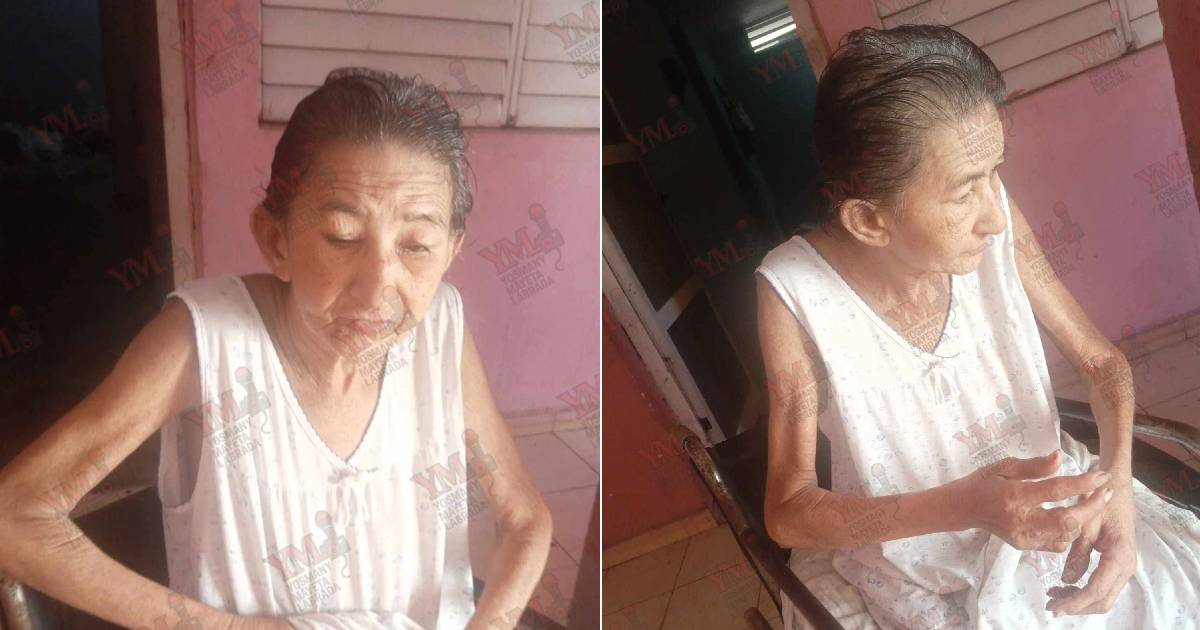
The story of Teresa Ramis Lora, a 70-year-old woman living in the José Martí District, Micro 9, highlights the harsh reality of institutional neglect experienced by countless Cubans.
From her apartment—FOCSA 8, next to the Abejita Childcare Center—Teresa fought a silent battle for survival until social media did what the authorities refused to do. It was independent journalist Yosmany Mayeta Labrada who brought attention to her plight through his timely Facebook post.
Teresa lives in solitude, ailing and without care, with two absent sons: one suffering from severe psychiatric disorders and wandering the streets, the other having spent much of his life in prison.
A Community's Struggle
A family member, who raised the alarm with the activist, cannot fully care for the elderly woman despite his efforts to bathe, feed, visit, and accompany her. His resources are stretched thin.
When the state fails, an elderly woman is left waiting. This Tuesday, the family requested urgent medical admission for Teresa. The ambulance never arrived. Neither did doctors, nurses, nor social workers. Teresa remained in her deteriorating home, without medication or care.
The Power of Social Media
It wasn't until Mayeta's report spread across social media that, suddenly, the authorities appeared. Doctors, nurses, and health area personnel showed up at her doorstep. The ambulance remains elusive, but the state machinery was set in motion... only after the case went public.
The unavoidable question arises: Why does the government only respond when social media noise becomes too loud to ignore, rather than when a citizen's life is at risk?
Santiago de Cuba: Neglect and Mismanagement
Teresa's case is not an anomaly; it is part of a broader pattern. In a country where the government boasts of being "humanitarian," yet institutions are conspicuously absent, those in dire need face a harsh reality.
Teresa occasionally ventures out in a wheelchair to seek food or companionship. Sometimes she returns without strength. Sometimes with nothing. In a state that prides itself on social sensitivity, a lonely, sick elderly woman finds no support until the scandal becomes unavoidable.
This scenario underscores a brutal truth: social media has become the only tool Cubans have to compel the government to act, within a system marked by an inept, indifferent state apparatus more concerned with controlling opinions than saving lives.
Teresa Deserves Humanity, Not Charity
Today, Teresa still awaits an ambulance and a genuine response from Social Assistance, Public Health, social workers, and local authorities. It's not about politics. It's not about bureaucracy. It's about a life that can't afford to wait any longer. Teresa's time is running out. Her health is fading. And what is lost in silence... hurts the most.
Frequently Asked Questions about Social Media's Role in Cuba
How did social media impact Teresa's situation?
Social media brought public attention to Teresa's plight, prompting authorities to take action after the issue was widely circulated online.
What are the broader implications of Teresa's case?
Teresa's situation reflects a systemic issue of institutional neglect in Cuba, where government response often depends on public exposure via social media.
Why is social media crucial for accountability in Cuba?
In a tightly controlled media environment, social media serves as a critical platform for citizens to voice concerns and demand government accountability.