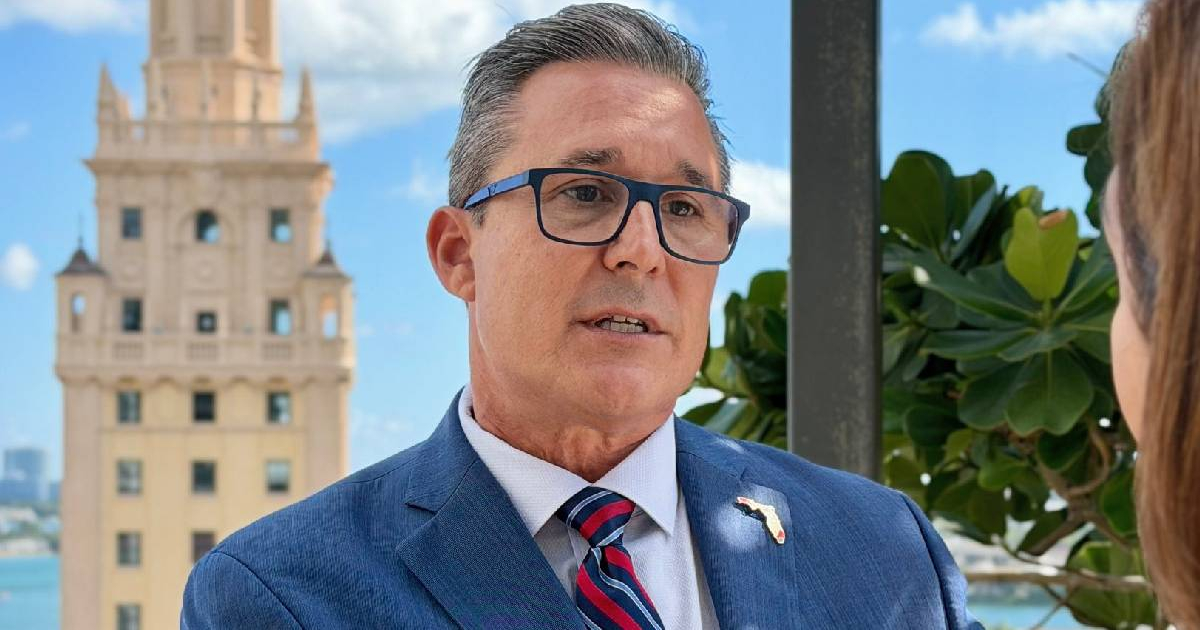
René García, a senator and Miami-Dade commissioner, made an appeal on Tuesday to the federal government under Donald Trump to cease deportations of immigrants who possess legal status, humanitarian permits, or active asylum applications.
During a press conference held in front of the Freedom Tower—a significant emblem for the Cuban exile community—García, a Republican legislator born in Hialeah to Cuban exiles, highlighted a "troubling pattern" of arbitrary detentions and retroactive enforcement of immigration laws that undermine due process.
Supported by members of the Cuban American Bar Association (CABA) and families of detained immigrants, García voiced his concerns. “While I respect the Trump administration’s efforts to secure our borders and remove criminals, it’s imperative that families with clean records and asylum seekers under legal protection are not detained or deported without the chance to defend themselves,” García asserted.
“As someone from a community built by exiles, refugees, and immigrants, I urge respect for due process and individual case assessment,” he added.
Legal and Humanitarian Concerns
The senator pointed out that individuals protected under legal programs like Temporary Protected Status (TPS) or Special Immigrant Juvenile status (SIJ) are being unjustly detained and deported. “We are witnessing the retroactive application of laws to individuals with legal status. This is profoundly un-American. We can do better,” he emphasized.
García called for a thorough review of each case, a halt to deportations to third countries, and the extension of TPS programs until a permanent solution is found for law-abiding immigrants.
Amanda Fernández, a lawyer representing CABA, warned that these actions are eroding public trust and tearing apart families who follow the rules. “People who abide by the law are being detained unexpectedly. This punishes those who comply with legal requirements,” Fernández stated.
Alarming Cases Highlight Systemic Issues
She also highlighted cases of minors under special protection status being detained without legal justification or adequate judicial review. One case involved Eduardo, a Guatemalan worker who stated, “I committed no crime. I spent 17 days at Krome and was then sent to Louisiana. We don’t know why.”
Another case involved Manny, whose nephew was arrested following a minor accident and has been imprisoned for two months without cause. Similarly, Madeleine, the mother of a Cuban deported to Mexico, lamented, “My son was deported without papers, without a chance to defend his case. It’s an injustice.”
García described these incidents as part of a “disturbing pattern” of immigration decisions made without upholding constitutional rights.
Emphasizing that his appeal was not politically motivated, García called for a moral stance in favor of transparency and humanity within the immigration system. “Our community was founded by exiles and immigrants. We must speak out to protect those who came seeking freedom. The United States can secure its borders without compromising its principles,” García declared.
According to the Department of Homeland Security (DHS), more than 527,000 immigrants have been deported since January 2025, with 1.6 million choosing voluntary departure. The DHS claims 70% of ICE arrests involve individuals with criminal backgrounds, a statistic questioned by human rights organizations for its transparency.
Common Questions About Immigration and Deportation
What is Temporary Protected Status (TPS)?
Temporary Protected Status (TPS) is a temporary immigration status granted to eligible nationals of certain countries experiencing problems that make it difficult or unsafe for their nationals to return there.
Who qualifies for Special Immigrant Juvenile (SIJ) status?
Special Immigrant Juvenile (SIJ) status is available to certain undocumented immigrants under the age of 21 who have been abused, abandoned, or neglected by one or both parents, and for whom returning to their home country is not in their best interest.
How can deportation affect families?
Deportation can separate families, disrupt lives, and cause emotional and financial stress. It can lead to loss of income and affect the mental health of all family members involved, especially children.