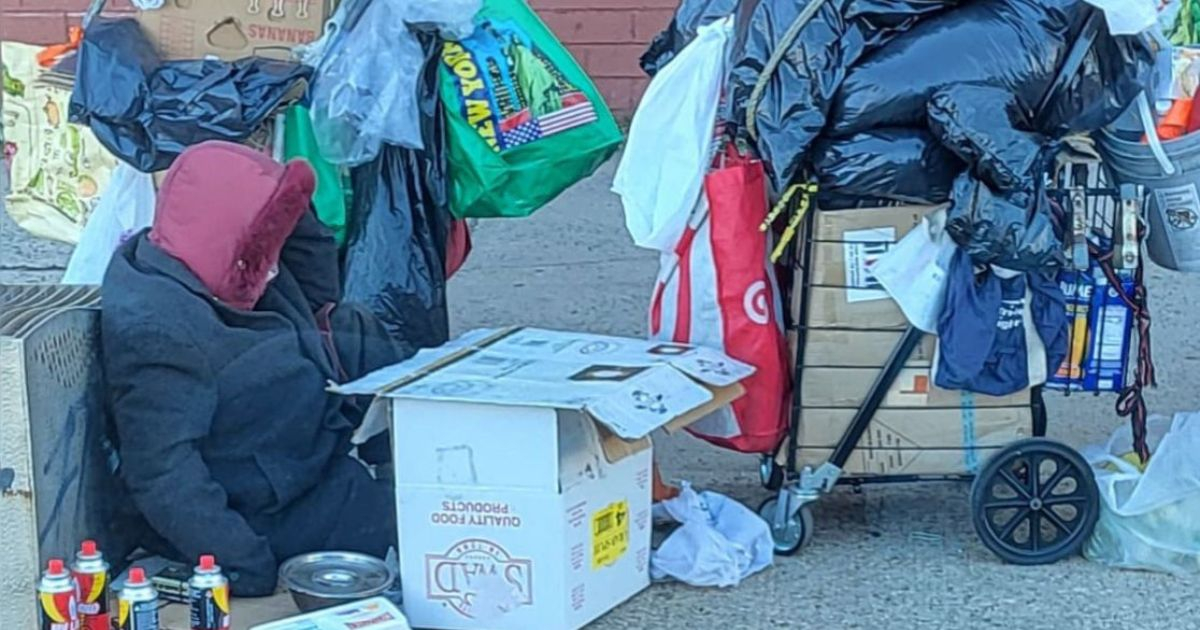
The audacity of former Cuban spy Gerardo Hernández, now the coordinator of the Committees for the Defense of the Revolution (CDR), was on full display when he attempted to divert attention from Cuba's worsening poverty by posting a photo of a homeless individual in New York City. He took a jab at Marco Rubio, urging him to do what Hernández himself cannot: look inward and acknowledge the issues within his own country.
In a Facebook post, Hernández commented, “A country with no blockade. Marco Rubio and his cohorts should focus more on their own country’s reality instead of meddling elsewhere...,” accompanying this with an image from Manhattan.
The backlash was swift. More than a thousand comments from Cubans both on the island and abroad slammed him for his hypocrisy, accusing him of using foreign poverty as a shield for Cuba’s economic collapse.
Journalist Iliana Hernández sarcastically noted, “And he has more than any Cuban on the island,” while Irina Diéguez Toledo added, “Throwing stones at green mangoes, Gerardo.”
Aristides Fernández was more direct: “How do so many immigrants succeed in the United States, including Marco Rubio, while you defend a system that has sunk Cuba? In the U.S., those who want to, advance.”
Roberto Carlos Frómeta called it “the height of cynicism,” and Yoel Cruz labeled Hernández as “the most unpleasant man in Cuba.”
Perhaps the most striking response came from Dr. Alexander Jesús Figueredo Izaguirre, who reminded Hernández: “In Cuba, there isn’t a single homeless person, but a whole country struggling to survive. In the U.S., poverty is an individual tragedy; in Cuba, it’s a government project.”
Figueredo ended with a personal attack: “And you, Gerardo of the Five, should worry about who your daughter’s real father is before ending up back in prison. You are the greatest disgrace to the word man.”
Criticisms continued to pour in: Janny Chiong stated, “Right now, that homeless person lives better than any doctor in Cuba,” while Maria Isabel Sánchez pointed out that in the U.S. “nobody imprisons you for speaking out or fires you for telling the truth.”
“I’d rather live in the U.S. under those conditions than in Cuba with all its luxuries; freedom is priceless,” asserted Yury Rivera.
Echoing this sentiment, Wendy Llanes San Martín replied, “Worry about the misery you’ve created in Cuba and stop interfering in what doesn’t concern you.”
This exchange laid bare the deep dissatisfaction of citizens who are no longer afraid to publicly challenge regime spokespersons, tired of the manipulation and political exploitation of foreign poverty to conceal the economic and moral failures of the Cuban system.
Hernández’s selective blindness resurfaces occasionally. Recently, he again incited Cuban outrage by comparing poverty in the United States to the misery endured by those on the island.
His statement — “The haters paint Yuma as a paradise on earth” — sparked a flood of responses that reveal a reality starkly different from the official narrative.
Questions and Answers about Cuban and U.S. Poverty
Why did Gerardo Hernández criticize poverty in the U.S.?
Gerardo Hernández criticized U.S. poverty in an attempt to divert attention from the economic issues in Cuba and challenge American politicians like Marco Rubio to focus on their own country’s problems.
How did Cubans react to Hernández's comments?
Cubans responded with strong criticism, accusing Hernández of hypocrisy and cynicism for using foreign poverty as an excuse to justify Cuba’s economic failures.
What was Dr. Alexander Jesús Figueredo Izaguirre's response to Hernández?
Dr. Figueredo reminded Hernández that in Cuba, the struggle is nationwide, unlike in the U.S. where it is an individual issue, and criticized him with a personal attack regarding his family.