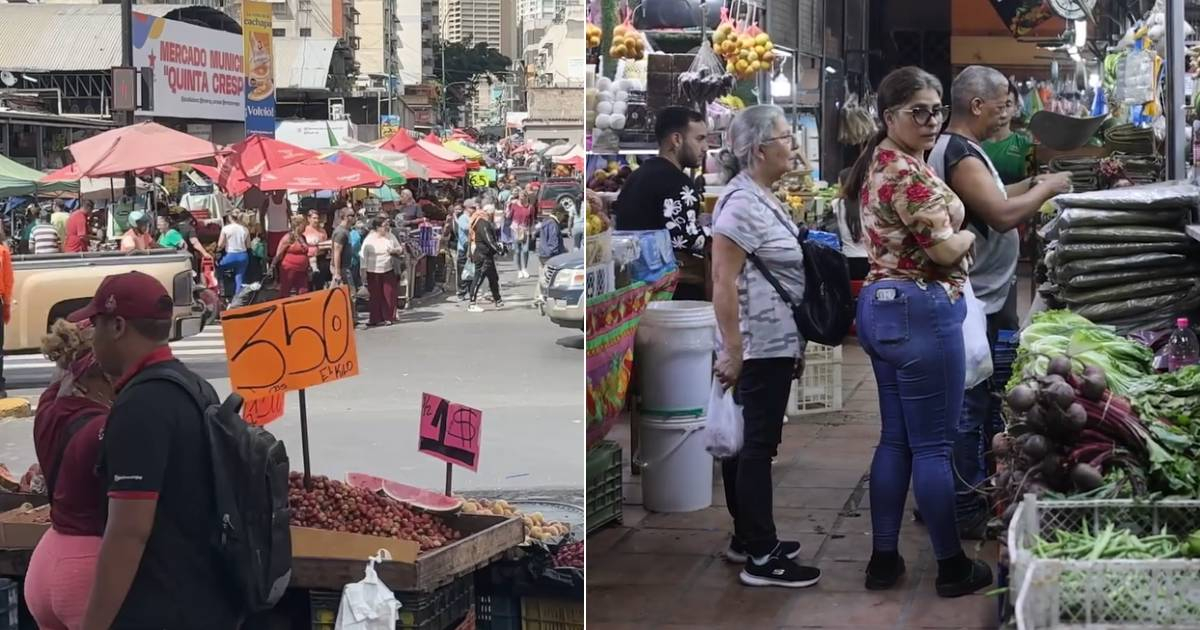
As Washington ramps up its military presence in the Caribbean and Nicolás Maduro's regime issues calls for "permanent alert," a different concern looms over the streets of Venezuela: securing daily sustenance.
The escalation in geopolitical tension pales in comparison to the relentless rise of the dollar, as reported by BBC Mundo. Their coverage of local markets and neighborhoods highlights how Venezuelans grapple with fear, silence, and an inflation rate that erodes their earnings.
At the bustling Quinta Crespo market in Caracas, vendor Alejandro Orellano struggles to sell vegetables. "What's really hurting us here is the rising dollar," he told the British outlet. The deserted aisles and ever-pricier goods paint a clearer picture of the internal crisis than any political speech. "Look at how empty this place is," he emphasized.
Despite the U.S. military deployment, which includes approximately 15,000 personnel and the USS Gerald R. Ford aircraft carrier, many Venezuelans remain skeptical that an attack is imminent.
However, uncertainty mingles with an unspoken fear. Following the 2024 protests over fraudulent elections that secured Maduro's victory and resulted in over two thousand arrests acknowledged by the government, many choose silence to avoid repercussions. According to Foro Penal, nearly 900 Venezuelans remain imprisoned for political reasons.
The BBC gathered accounts from citizens living amid rumors, anxiety, and a learned resignation. Consuelo, a 74-year-old teacher, admitted she doesn't stockpile goods because "you need a lot of money to shop," opting instead to focus on her health.
In Ciudad Bolívar, a merchant revealed she deleted critical posts about the government out of fear of being "sold out" by someone close. Silence has become a defense mechanism.
Personal fears clash with official propaganda. Recently, Maduro urged the populace to keep "a thousand eyes" on the lookout to defend the nation, accusing the CIA of financing attacks on Venezuela's economy. Meanwhile, monthly inflation hovers around 20%, with the International Monetary Fund projecting a price increase exceeding 500% this year.
As tensions rise, the deterioration of air traffic continues. More than half a dozen airlines have suspended flights following an FAA warning about "increased military activity" in Venezuelan airspace.
Washington asserts that its military presence aims to combat drug trafficking, while Caracas decries it as a maneuver to destabilize the regime.
Amid the clamor of military maneuvers and war rhetoric, life in Venezuela unfolds with a blend of fear and fatigue. "We're more worried about food," said Javier Jaramillo, 57, who searches for goods to resell during Christmas. "Venezuela is in a terrible state; inflation is consuming us." Between the threat of conflict and the everyday struggle, most seem to know which weighs more heavily.
Understanding Venezuela's Crisis Amid U.S. Military Pressure
Why are Venezuelans more concerned about inflation than a potential U.S. attack?
Venezuelans are primarily focused on the pressing issue of inflation because it directly impacts their daily lives, making it difficult to afford basic necessities. This immediate economic hardship overshadows the less tangible threat of a U.S. military attack.
How has the U.S. military deployment affected Venezuelan society?
The U.S. military's presence has added to the general atmosphere of anxiety and uncertainty in Venezuela. However, many citizens are more preoccupied with economic struggles and inflation than the potential for conflict.
What measures are Venezuelans taking to cope with economic challenges?
Venezuelans are adopting various survival strategies, such as focusing on health, minimizing expenditures, and remaining silent about political opinions to avoid repercussions from the government.